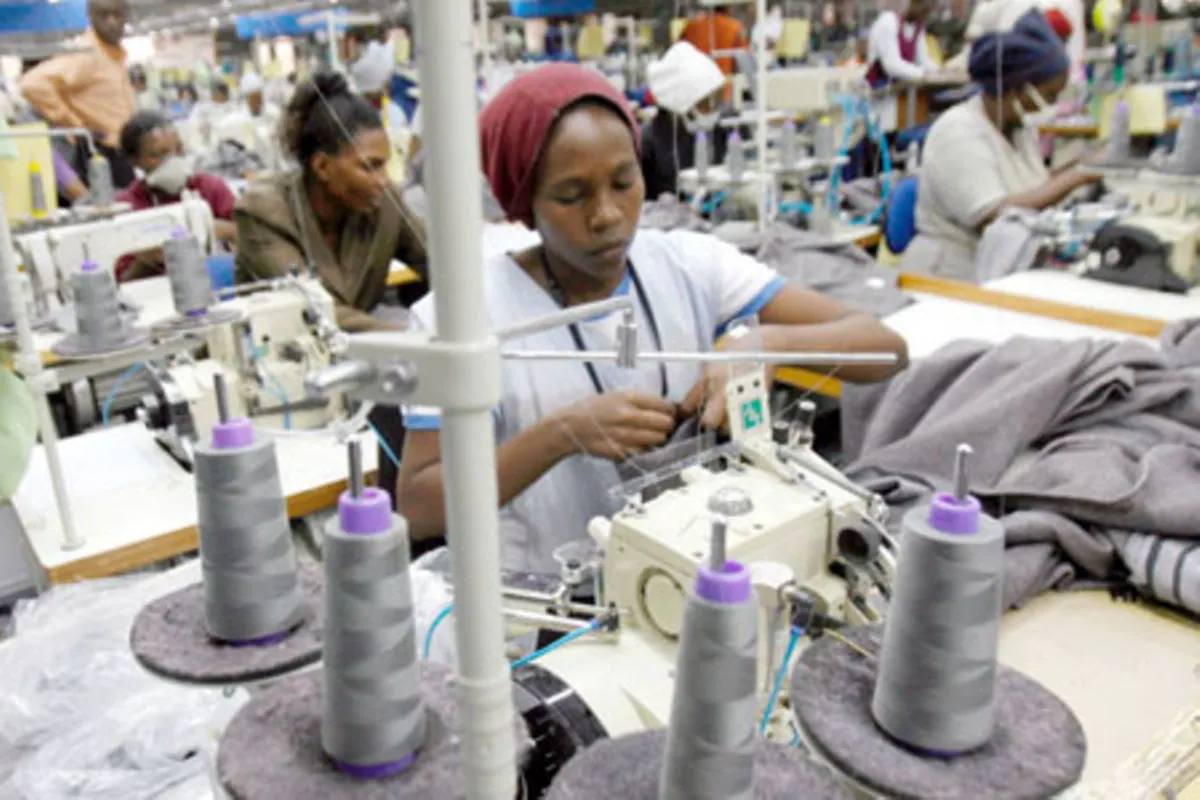
The African Growth and Opportunity Act (Agoa) has been extended through December 31, 2028, after US President Donald Trump signed H.R. 6500 into law on September 2, 2026. This development brings relief to African exporters, workers, and investors who had faced uncertainty about Agoa's future. However, experts warn that the extension should not be seen as a conclusion of the Agoa debate, but rather as an opportunity to rethink US trade ties with Africa.
The US Office of the Trade Representative has called for a modernized Agoa that provides greater market access for American businesses and more reciprocal trade. Congressional leaders have also emphasized the need for reform, strategic supply chains, critical minerals, and US economic and national security interests. Africa should take these signals seriously and engage in a conversation about the next US-Africa economic partnership.
For much of Agoa's history, the central negotiation has been about preferential access, including which countries qualify, which products enter duty-free, and how long the program will last. However, the period leading up to 2028 offers an opportunity for Africa to answer a bigger question: what should the next US-Africa economic partnership look like? This conversation cannot be left to Washington to answer alone.
Africa should approach the conversation with a focus on competitiveness, rather than just preferential access. While duty-free access is important, it does not necessarily make a firm competitive. African exporters face challenges such as high energy and logistics costs, limited trade finance, infrastructure gaps, standards challenges, weak supplier networks, and productivity constraints.
The next two years should be treated as an industrial competitiveness window, during which countries can identify sectors where US market access can support investment, jobs, and value addition. They should then address the constraints holding them back. The objective for Africa should not be simply to preserve today's exports but to enter 2028 with stronger industries.
Africa should also rethink how Agoa interacts with the African Continental Free Trade Area (AfCFTA). Agoa has historically operated largely through national eligibility, while Africa is simultaneously trying to build regional value chains and a continental market. The next framework should recognize this changing economic geography, allowing for greater regional production networks and value chains.
Africa needs to approach reciprocity differently, viewing Washington's calls for greater reciprocity as an opportunity to negotiate for investment in processing and manufacturing, technology transfer, stronger supply chains, trade finance, and greater participation by African firms in the value created from African resources. By 2028, Africa should be negotiating from a position of strength, with stronger industries, deeper regional markets, and a clearer proposition about the economic partnership it wants with the US.
Key points
- African countries should focus on competitiveness and reciprocal benefits in rethinking US trade ties under the extended Agoa.
- The next US-Africa economic partnership should prioritize investment in processing and manufacturing, technology transfer, and stronger supply chains.
- Africa should negotiate with a clearer understanding of what it wants and what it brings to the table, extending beyond market access for African commodities.