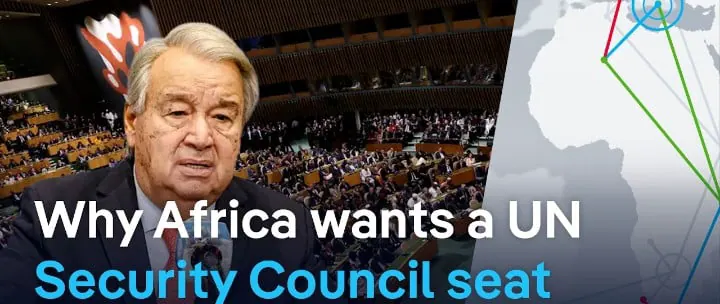
The African continent is reasserting its demand for a permanent seat at the United Nations Security Council as the 81st General Assembly commences. Currently, Africa holds three of the ten elected non-permanent seats, which rotate on two-year terms. However, the continent lacks a permanent seat, a category dominated by five countries, none of which are African. The African Union's common position, as outlined in the 2005 Ezulwini Consensus and Sirte Declaration, seeks at least two permanent seats with the same privileges as existing permanent members.
African leaders are vocal about their demands, with Kenya's President William Ruto stating that Africa can no longer wait at the margins of global governance. Sierra Leone's President Julius Maada Bio, who coordinates the AU's Committee of Ten on reform, pressed for full veto rights for any new permanent members. South Africa has also expressed its commitment to using ongoing intergovernmental negotiations to build support for Africa's permanent representation. UN Secretary-General António Guterres has described the absence of a permanent African seat as unjust.
The main obstacle to Africa's permanent seat is the structure of the UN Security Council itself. Analysts point to the veto-wielding permanent members, each of whom fears that reform could dilute its own influence. Russia and China are reportedly sympathetic to the Global South but reluctant to open the UN Charter to binding amendment. In contrast, France and the UK favour expanding the Council and have promoted limits on the veto in mass-atrocity cases.
Africa's own divisions are also a significant challenge. Twenty years after the Ezulwini Consensus, the continent has yet to agree on who would hold its permanent seats. Nigeria, South Africa, and Egypt are the usual contenders, with some sub-Saharan capitals expressing doubts about Cairo's commitment to AU priorities. One proposal is to tie the seats to the AU chair, while another sticking point is the insistence on veto rights.
The African Union's demand for permanent seats with the same privileges as existing permanent members, including the veto, is a critical aspect of its campaign. However, this demand is also a point of contention, as some argue that it would create a second-class membership. The AU's position is that if the veto exists, new permanent members must have it too.
The negotiations are expected to be slow, with no reform text having been agreed yet. The item is on the agenda, and talks continue, but the gap between recognising the injustice and changing the Charter remains wide. Analysts predict a prolonged negotiation process rather than a breakthrough.
Despite the challenges, African leaders remain committed to their campaign. The continent's push for permanent representation is driven by a desire for greater influence in global governance and a more equitable distribution of power. The outcome of the negotiations will have significant implications for Africa's role in international affairs.
Key points
- The African Union seeks at least two permanent seats with the same privileges as existing permanent members, including the veto.
- The main obstacle to Africa's permanent seat is the reluctance of veto-wielding permanent members to dilute their influence.
- Africa's own divisions, including disagreements over who would hold its permanent seats, are a significant challenge to its campaign.