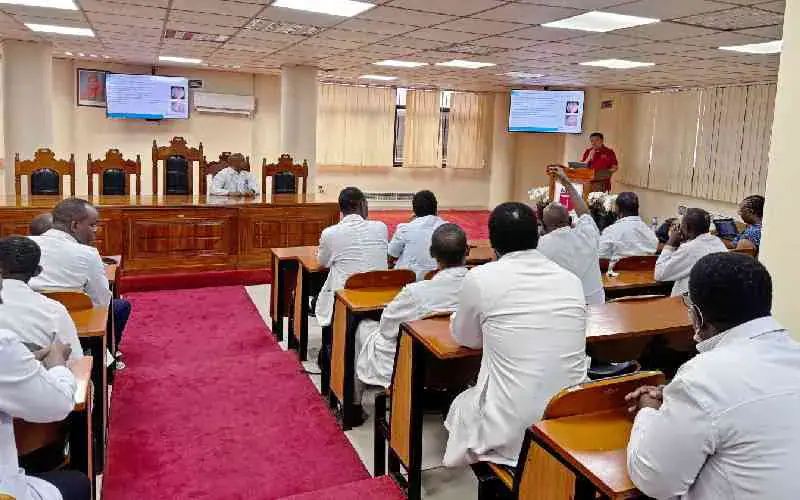
Africa faces a significant shortage of neurosurgeons, with only 0.11 specialists per 100,000 people, well below the global average of 0.93. This shortage poses a major challenge for patients requiring specialized treatment for complex neurological conditions. A new training programme aims to strengthen specialist expertise and improve access to quality neurosurgical care across the continent. The programme, hosted by Aga Khan University, brings together specialists for intensive clinical discussions, surgical training, and knowledge exchange.
The training course, supported by the European Association of Neurosurgical Societies, runs from November 9 to 13 and focuses on neuro-oncology, paediatric neurosurgery, and neuroendoscopy. These areas are increasingly important as specialists seek to keep pace with evolving disease classifications, treatment guidelines, and surgical techniques. Dr. Beverly Cheserem, Assistant Professor in the Department of Surgery at Aga Khan University Medical College, East Africa, emphasized that the programme comes at a critical time for the continent.
The programme seeks to equip early-career specialists with current scientific knowledge, practical surgical approaches, and the ability to manage complex neurological conditions within the realities of African healthcare systems. A major focus is on adapting international treatment guidelines and surgical protocols to African healthcare environments, where access to specialized equipment and infrastructure may be limited. Prof Edwin Mogere, Associate Professor at Aga Khan University Medical College, East Africa, stressed the importance of continuous professional development and exposure to emerging scientific evidence.
The training programme is a collaboration between African and European specialists, allowing participants to explore how international best practices can be adapted to local contexts. Prof Claudius Thome, President-Elect of the European Association of Neurosurgical Societies, noted that bringing specialists together provides an opportunity to assess the realities of neurosurgical practice across different healthcare systems. Dr. Christopher Musau, President of the East African Association of Neurological Surgeons, emphasized that the partnership should not be viewed as a one-way transfer of knowledge from Europe to Africa.
African specialists also have valuable experience and approaches shaped by the realities of practicing in resource-constrained environments. The partnership draws on EANS' experience in promoting standardized neurosurgical training across Europe while creating opportunities for African specialists to contribute their own clinical experiences. The programme aims to develop a highly competent pool of neurosurgeons capable of providing quality care within their respective countries.
Despite the progress made, sustaining a skilled neurosurgical workforce will require continued investment in specialist education, training institutions, modern surgical infrastructure, and healthcare systems capable of retaining qualified specialists. As the demand for neurological care grows, building local expertise remains critical to ensuring that more patients can access timely and specialized treatment closer to home. The training programme is a step towards addressing the shortage of neurosurgeons in Africa.
A 2024 study published in the Journal of Neurosurgery found that Africa has the lowest neurosurgeon density globally, at 0.11 per 100,000 people, compared with 0.93 worldwide and 2.44 in high-income countries. The figures underscore the scale of the challenge facing African health systems, where a growing population and increasing demand for specialized healthcare continue to place pressure on the available workforce.
Key points
- The Pan-African neurosurgical training programme aims to address the continent's critical shortage of neurosurgeons by strengthening specialist expertise and improving access to quality neurosurgical care.
Reporting sources
- New push to boost Africa's neurosurgical experience · The Standard