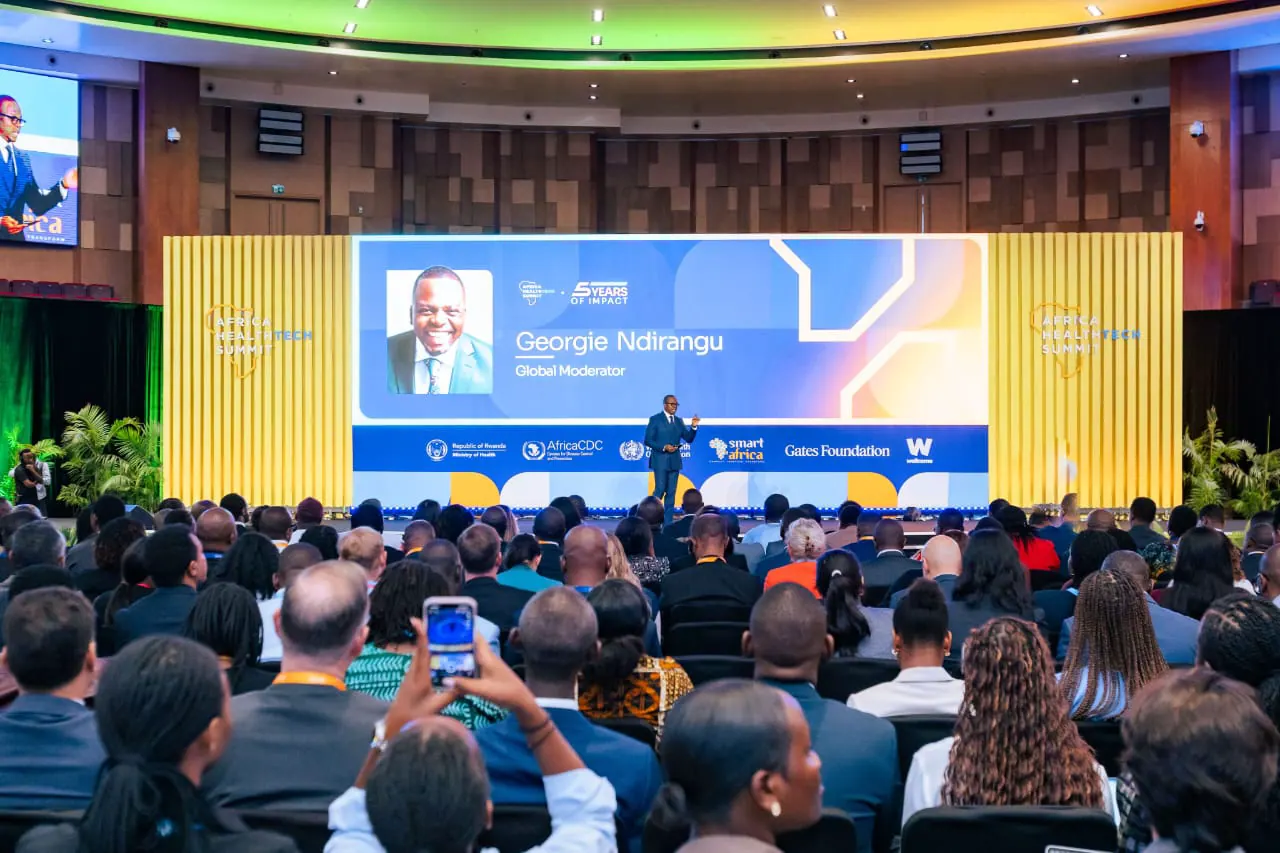
The fifth Africa HealthTech Summit opened in Kigali, Rwanda, on September 30, bringing together policymakers, investors, technology companies, health experts, and development partners. The three-day summit, themed "Wellness for All: Powered by Intelligent Health Systems," aims to transform healthcare delivery by turning innovation and investment into scalable solutions. The summit's chairman, Jean-Philbert Nsengimana, emphasized that the value of the gathering should be measured by its impact.
Nsengimana highlighted the success of connections made through the health-tech ecosystem, citing a $3.1 million investment deal that emerged from discussions between an investor and an African company. To help companies grow, organizers are now taking a more deliberate approach, including scale-up training, investor engagement, and structured meetings between entrepreneurs and potential financiers. The summit chairman noted that Africa's next challenge is to build health systems that can use technology to anticipate disease outbreaks, strengthen data systems, improve payments, and make healthcare more accessible.
Boniface Njenga, Deputy Director for Africa at the Gates Foundation, stressed that technological progress must translate into better outcomes for ordinary people. He emphasized the need to address preventable deaths, infectious diseases, and ensure that investments in artificial intelligence and digital technologies tackle Africa's specific challenges. The Gates Foundation plans to invest $1 billion in artificial intelligence over the next two years, with $400 million allocated to healthcare and 10% supporting work involving local languages.
The World Health Organization's (WHO) Regional Director for Africa, Professor Mohamed Yakub Janabi, urged governments, innovators, investors, and development partners to rethink how digital health solutions are designed and deployed. He emphasized that solutions must be built for African realities, designed with Africans, governed by Africans, and rooted in local realities. The WHO warned that technology alone cannot compensate for weak health systems or replace accountability.
Speakers at the summit emphasized the need to move from individual projects to interconnected systems capable of serving entire populations. Potential applications include using artificial intelligence and data to predict disease outbreaks, helping health workers make faster decisions, and improving access to care in underserved communities. The summit comes at a time when governments and development institutions face pressure to deliver more healthcare with limited resources.
The Africa HealthTech Summit aims to ensure that health technology follows the same trajectory as Africa's digital economy, which continues to expand. Nsengimana sees an opportunity to turn promising ideas into sustainable businesses and systems. The challenge now is whether investments can be multiplied to create companies and health systems capable of serving millions.
As delegates gathered in Kigali, the central question was whether Africa can develop health technology that can be financed, institutionalized, and deployed at the scale required to improve healthcare outcomes across the continent. The summit's focus on scaling up health-tech solutions reflects a growing concern that numerous digital-health projects struggle to secure financing, infrastructure, and institutional support needed to reach national or regional scale.
Key points
- The Africa HealthTech Summit aims to move beyond pilot projects and build technology-driven health systems capable of reaching millions.
- The Gates Foundation plans to invest $1 billion in artificial intelligence over the next two years, with $400 million allocated to healthcare.
- The WHO emphasizes that digital health solutions must be designed with Africans, governed by Africans, and built for African realities.