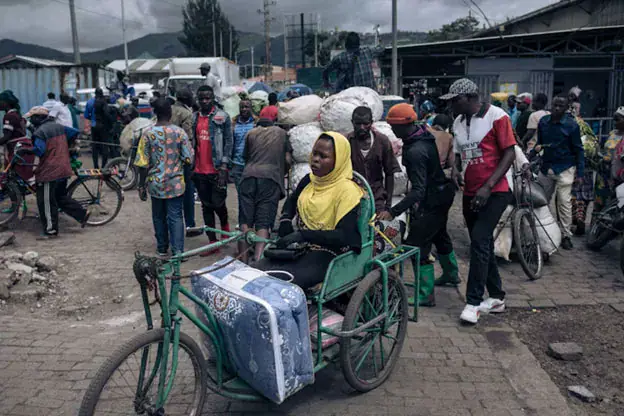
Small-scale cross-border traders play a vital role in connecting local markets and sustaining household incomes across Africa. These traders, often operating informally, exchange goods across national borders, contributing significantly to regional economic activity. The African Continental Free Trade Area aims to create a single, borderless continental market, but its policies have largely overlooked the needs and realities of these small-scale traders. As international development assistance comes under growing pressure, it is essential to strengthen economic activity and ensure that more people can benefit from regional markets.
The scale of informal cross-border trade in Africa is substantial, estimated to be worth between $10 billion and $24 billion annually. This activity is equivalent to about 30-72% of formal trade between neighbouring African countries. In the Southern African Development Community, informal cross-border trade has been estimated at $17.6 billion. Women account for around 70% of traders, and this trade provides a route into entrepreneurship for many women and young people. However, informal trade is not without problems, including tax evasion, customs bypassing, and exploitation.
The African Continental Free Trade Area offers an important opportunity to expand trade between African countries and strengthen regional economic integration. To achieve this, it is essential to move beyond diplomatic agreements and focus on practical realities. This includes cutting border delays, simplifying customs rules, standardizing product checks, and building shared infrastructure. However, reducing barriers for formal businesses does not automatically make cross-border trade accessible to everyone, particularly small-scale traders who face complicated customs procedures and limited access to affordable finance.
Small-scale traders face significant challenges, including complicated customs procedures, unpredictable border requirements, corruption, harassment, and limited access to affordable finance. These challenges make formal trading arrangements costly or impractical, particularly for people with limited capital. To address this, governments and regional institutions should make trade information and border procedures more accessible, including clear guidance on customs requirements and simplified procedures for eligible small consignments.
Better data is needed to understand the scope and nature of informal cross-border trade. Harmonized methods for measuring informal cross-border trade would help governments understand what is being traded, where economic activity takes place, and which traders face the greatest barriers. This would build on work by the African Union Commission, the African Export-Import Bank, and the United Nations Economic Commission for Africa.
Traders themselves should have a voice in designing trade policy, particularly small-scale traders and women traders. Associations representing these traders can help policymakers identify which procedures create unnecessary costs and which protections are most urgently needed. Appropriate financial services, including digital payments and credit, could also help traders. However, formalization should be approached carefully to avoid pushing traders out of cross-border commerce altogether.
The African Continental Free Trade Area must be inclusive and consider the practical realities of informal traders. By making trade information and border procedures more accessible, improving data, and giving traders a voice in policy design, the agreement can be more effective in promoting regional economic integration and lifting millions out of poverty. Ultimately, the goal is to create a single, borderless continental market that benefits all Africans, including small-scale cross-border traders.
Key points
- The African Continental Free Trade Area must consider the needs and realities of small-scale cross-border traders to be effective in promoting regional economic integration.
- Informal cross-border trade in Africa is estimated to be worth between $10 billion and $24 billion annually.
- Women account for around 70% of informal cross-border traders in Africa.
Reporting sources
- Free trade across Africa? · The Independent magazine