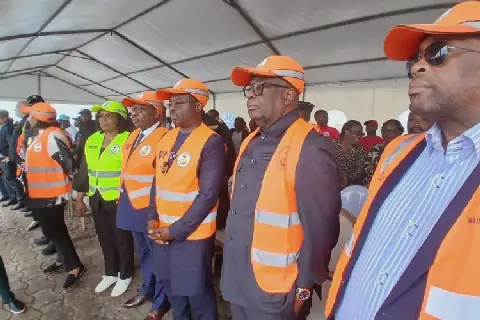
The Africa Energy Bank has reached a significant milestone with its formal establishment on October 31, as announced by the African Export-Import Bank (Afreximbank) and the African Petroleum Producers' Organisation (APPO) at an inaugural general meeting in Abuja. Helmy Ghazi has been named as the bank's first president, and its board has been constituted. The bank's authorized capital stands at $5 billion, a notable achievement for an institution that has been in the works for years.
However, the authorized capital figure does not necessarily translate to readily available funds for lending. It represents the maximum amount of capital the institution is permitted to issue under its capital structure. The actual amount of capital available for deployment is yet to be disclosed, although APPO's secretary-general had previously mentioned an estimated $500 million available for financing decisions in 2027.
The establishment of the Africa Energy Bank comes at a time when Africa's energy investment needs are substantial, yet not uniform across the continent. According to the International Energy Agency's 2025 analysis, North and South Africa account for a disproportionate share of energy investment and installed electricity capacity, while much of sub-Saharan Africa remains short of reliable power. The IEA also reported that private investment in African clean energy rose to almost $40 billion in 2024.
The Africa Energy Bank's mandate is broad, encompassing various energy projects, including oilfields, cross-border gas pipelines, refinery upgrades, transmission lines, and clean-cooking businesses. However, a wide mandate is not an investment strategy. The bank will need to explain which projects it will prioritize, how it will balance commercial returns against development benefits, and how it will work alongside existing African and international lenders.
An African-led lender like the Africa Energy Bank could respond to high financing costs with longer tenors, local knowledge, guarantees, co-financing, or a greater willingness to take defined risks. The OECD estimated the weighted average cost of capital for infrastructure projects at about 13% in Africa, compared with 10% in developing Asia and 8% in OECD economies. African ownership alone does not make a financing decision additional or worthwhile.
For the Africa Energy Bank to be successful, it must show that it is enabling projects that would otherwise not proceed, improving their terms, or generating greater development value than the financing available elsewhere. The bank should disclose why public or concessional support is justified, what outcomes are expected, and who bears the risk if the project underperforms. This transparency is crucial in ensuring that risk is assessed and allocated clearly.
The next phase of the Africa Energy Bank's operations will be judged against evidence of its performance, including the amount of capital subscribed and paid in, the amount available for financing, and the lending and risk policies governing its decisions. The bank's impact will depend on whether it can mobilize additional capital, take risks that produce demonstrable public value, and account clearly for who benefits and who bears the exposure.
Key points
- The Africa Energy Bank has been established with $5 billion in authorized capital to finance energy projects across the continent.
- The bank's success will depend on its ability to mobilize additional capital, take risks that produce public value, and ensure transparency in its operations.
- The bank's impact will be judged against evidence of its performance, including the amount of capital available for financing and the lending and risk policies governing its decisions.