Africa is maintaining its economic momentum despite a slower global environment, with new data showing that the continent's real gross domestic product grew faster than the global economy during the second quarter of 2026. According to the International Monetary Fund (IMF), Africa's real GDP increased by 1.6% in the second quarter, up from 1.3% in the first quarter. This growth is a positive indication of the continent's economic resilience.
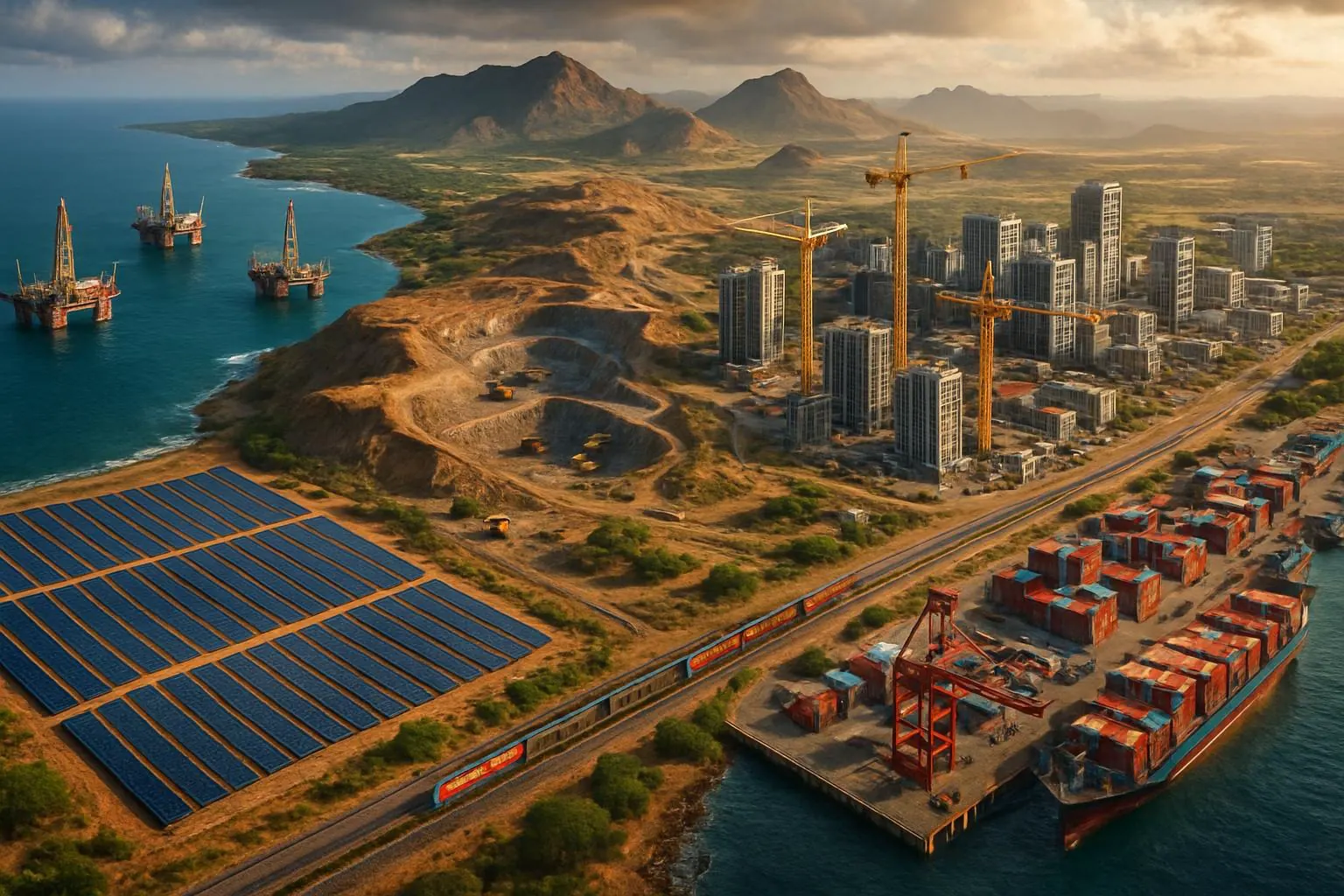
The global economy, on the other hand, saw a real GDP growth of 0.7% during the same period. Africa's growth is being driven by increasing investment in areas such as energy, transport, digital infrastructure, and strategic industries. Recent reporting by Africanews points to a rise in capital mobilisation across the continent, with $22 billion in capital mobilised in Africa with World Bank support in 2026, compared to approximately $9 billion in 2022.
Infrastructure remains a crucial aspect of Africa's economic growth, with the continent's expanding population, urbanisation, and industrial ambitions requiring major investment in electricity, transport networks, logistics, telecommunications, and productive industries. Better infrastructure can reduce business costs, improve market access, and strengthen connections between African economies. Recent projects across the continent illustrate this trend, including the construction of a $16 billion refinery in Lamu, Kenya.
The refinery in Lamu is designed to strengthen regional fuel supply and industrial capacity, while in Côte d'Ivoire, the 52.4MW Ferké Solar project is expanding renewable electricity generation and is expected to produce more than 90 gigawatt-hours of electricity annually. Such investments are significant because they can create economic activity beyond the infrastructure itself, supporting manufacturing and digital businesses.
Despite the positive growth figures, Africa's investment story remains one of both opportunity and unfinished work. The continent attracted only around 4% of global foreign direct investment in 2025, and the African Development Bank has estimated that more than $1.3 trillion is required annually to meet Africa's development goals. UN Trade and Development reported that Africa attracted about $70 billion in foreign direct investment in 2025.
The challenge for Africa is not simply attracting more capital but ensuring that investment contributes to productive capacity, skills, jobs, technology transfer, and stronger African value chains. The current growth figures suggest that the continent has a foundation on which to build, and the combination of economic expansion, rising capital mobilisation, and infrastructure development could strengthen Africa's position in the global economy.
The next phase of Africa's economic transformation will depend not only on how much capital enters the continent but on how effectively that capital is converted into infrastructure, businesses, skills, and opportunities. The latest numbers point to a continent continuing to build despite global headwinds, with investment and infrastructure increasingly central to the next chapter of Africa's growth story.
Key points
- Africa's real GDP grew faster than the global economy in 2026, driven by investment and infrastructure development.
- The continent requires more than $1.3 trillion annually to meet its development goals.
- Africa attracted about $70 billion in foreign direct investment in 2025.