The African continent has renewed its demand for a more representative presence on the United Nations Security Council. On Sunday, the African Committee of Ten on UN Security Council Reform, meeting in Tripoli, Libya, adopted the "Tripoli Document 2026." This document reaffirms Africa's call for two permanent seats with full powers, including veto rights, and five non-permanent seats on the Security Council. The committee comprises representatives from Algeria, the Congo, Equatorial Guinea, Kenya, Libya, Namibia, Senegal, Sierra Leone, Uganda, and Zambia.
The African Committee of Ten was established in 2005 under the African Union to advocate for the continent's interests in UN Security Council reform. Sierra Leone currently coordinates the committee's activities. According to the UN, the current co-chairs of the international governmental negotiations on Security Council reform are the permanent representatives of Kuwait and the Netherlands to the UN. The committee's demand for permanent seats is based on the "Ezulwini Consensus" and the "Sirte Declaration," which emphasize the need for equitable representation.
The Ezulwini Consensus and Sirte Declaration are foundational documents that outline Africa's common position on UN Security Council reform. They call for two permanent seats with full powers, including veto rights, and five non-permanent seats for Africa. The African Union will determine which countries will occupy the five non-permanent seats. The committee's meeting in Tripoli resulted in the adoption of the Tripoli Document 2026, which reaffirms Africa's commitment to achieving equitable representation on the Security Council.
The Tripoli Document 2026 emphasizes the need to address the historical injustice faced by the African continent and ensure its adequate representation on the Security Council. The document also highlights the importance of coordination among African countries and intensified diplomatic efforts to garner international support for Africa's position. Furthermore, the committee proposed developing follow-up mechanisms and strengthening communication with influential countries to drive the reform process.
Currently, Africa holds three non-permanent seats on the UN Security Council, which will be occupied by Liberia, the Democratic Republic of Congo, and Somalia in 2026. The African Union and its member states continue to advocate for a more representative presence on the Security Council, reflecting the continent's significant contributions to global affairs. The committee's efforts aim to ensure that Africa's voice is heard and its interests are represented at the highest levels of international decision-making.
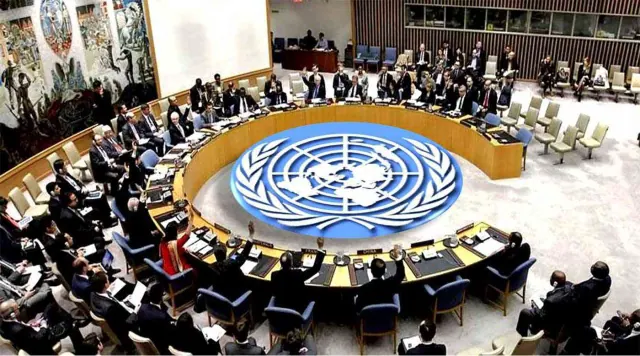
The push for UN Security Council reform has been ongoing for several years, with Africa and other regions seeking greater representation and influence. The UN Security Council currently consists of five permanent members and ten non-permanent members elected for two-year terms. The African continent's demand for permanent seats is part of a broader effort to make the UN more representative and inclusive.
The international community has taken note of Africa's demands, and discussions on UN Security Council reform are ongoing. While there is no clear timeline for reform, the African Committee of Ten remains committed to pushing for equitable representation and adequate voice for the continent on the Security Council. The committee's efforts will continue to focus on building international support and achieving a more representative presence for Africa on the UN Security Council.
Key points
- Africa demands two permanent and five non-permanent seats on the UN Security Council.