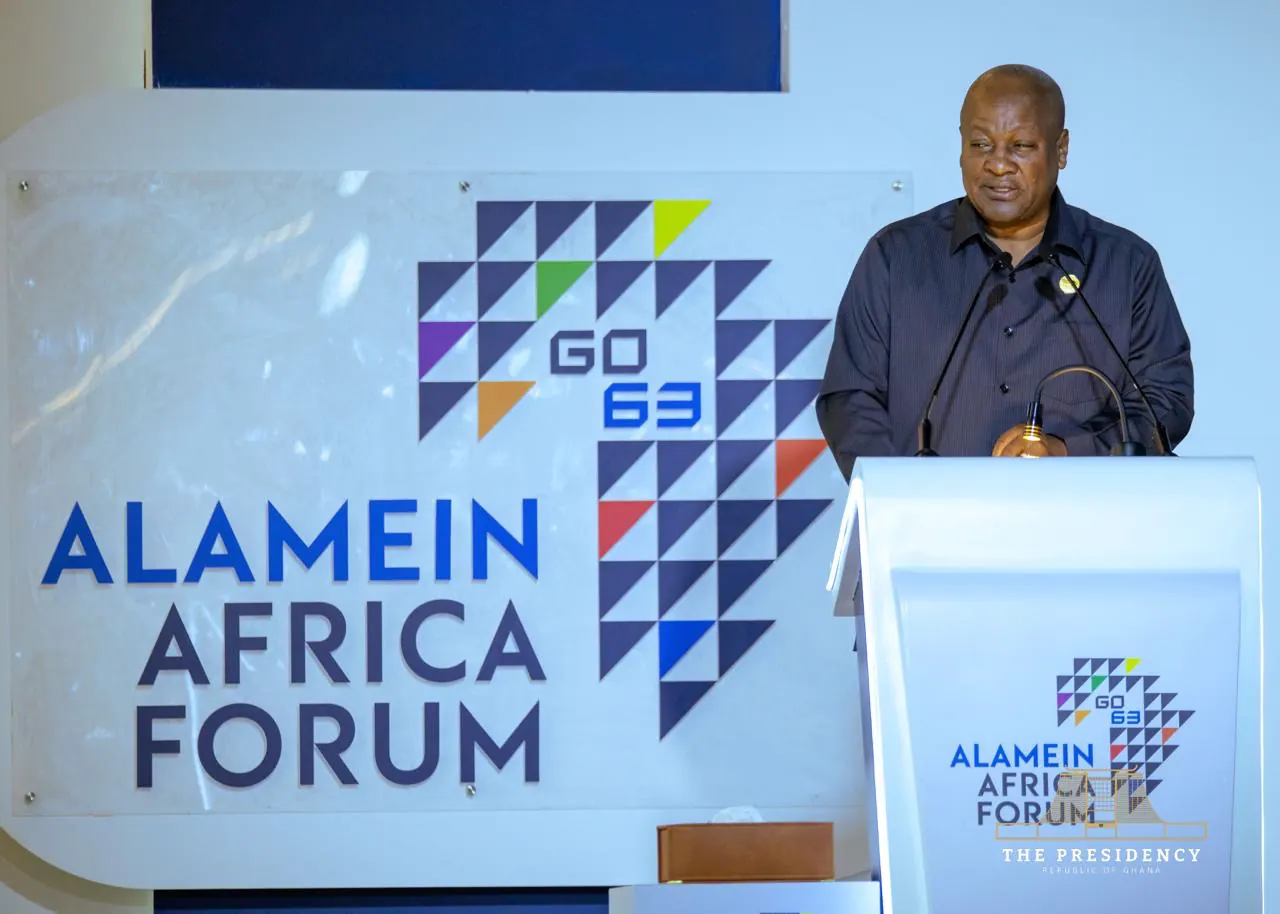
President John Dramani Mahama has urged Africa to rethink its dependence on traditional donor support for healthcare, emphasizing the need for the continent to mobilize domestic resources and private capital. He made this call at the Health Plenary of the Alamein Africa Forum in Egypt, highlighting the vulnerability created by excessive reliance on external assistance. According to President Mahama, recent funding shortfalls experienced by major global health initiatives demonstrate the urgent need for a new approach.
The recent replenishment efforts by Gavi and the Global Fund fell significantly below their respective targets, leaving substantial funding gaps. Gavi had targeted raising slightly above $11 billion but secured about $9 billion, resulting in a shortfall of approximately $2.9 billion. The Global Fund had targeted $18 billion but raised about $12 billion, resulting in a funding gap of roughly $5 billion. These shortfalls have direct implications for African countries that depend on international support to finance critical health programs.
Ghana, like many other African countries, has been affected by the withdrawal of international support. President Mahama disclosed that Ghana previously received $154 million in annual support for its health and education budgets, with $74 million allocated to health programs, including HIV research, PEPFAR, and antiretroviral treatment. The withdrawal of this support has compelled Ghana to find alternative resources to fill the resulting gap. President Mahama linked this challenge to the broader case for health sovereignty.
President Mahama argued that African countries must develop stronger domestic systems for financing and producing essential health products. He emphasized that Official Development Assistance (ODA) is dwindling and that Africa can no longer afford to wait for external donors to determine the availability of resources for essential healthcare programs. According to President Mahama, international partners will continue to have an important role to play, but their resources should complement rather than substitute domestic investment.
To achieve health sovereignty, President Mahama called for closer collaboration between governments and the private sector to mobilize sustainable financing for Africa's health systems. He emphasized the need for African countries to take greater control of their health outcomes and to build the capacity required for self-sufficiency. The Accra Reset and related continental initiatives aim to achieve this goal.
President Mahama's call for health sovereignty is not a new idea, but it has gained urgency in the face of declining international assistance. He recounted a conversation with former Nigerian President Olusegun Obasanjo that influenced his decision to champion health sovereignty. According to President Mahama, Africa must be proactive in addressing its healthcare needs rather than relying on external assistance.
The President's proposal has significant implications for Africa's healthcare landscape. By mobilizing domestic resources and private capital, African countries can reduce their dependence on external assistance and take greater control of their health outcomes. This approach requires a fundamental shift in how African countries approach healthcare financing and underscores the need for a more sustainable and self-sufficient healthcare system.
Key points
- President Mahama calls for Africa to end reliance on foreign health aid.
- Recent funding shortfalls by Gavi and the Global Fund highlight the need for a new approach.
- Ghana has been affected by the withdrawal of $154 million in annual support for its health and education budgets.