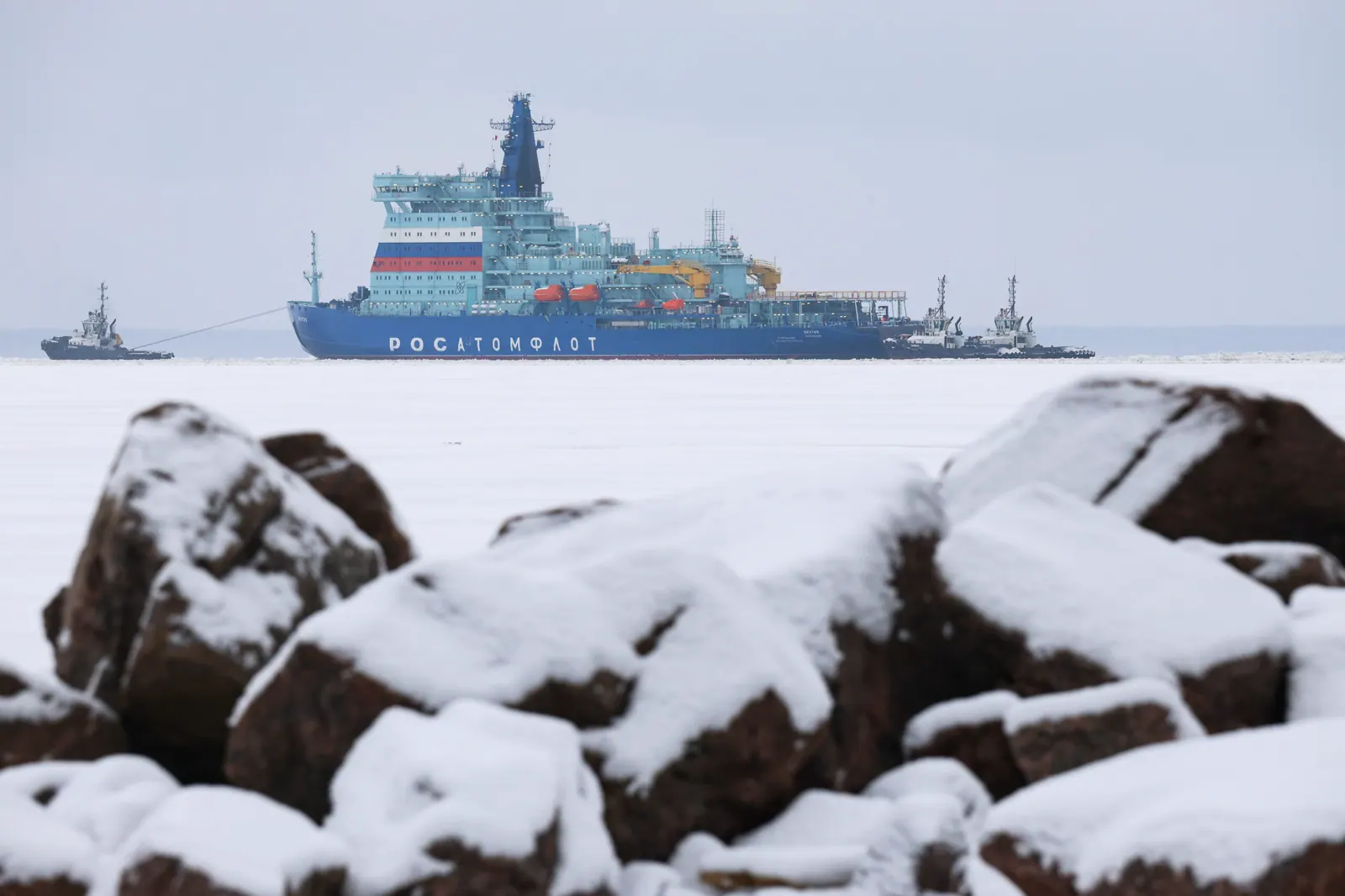
The Northern Sea Route, which connects Asia to Europe via the Arctic, is becoming increasingly commercially viable due to global warming and rising sea surface temperatures. A container ship, the Dubai Tower, recently traveled from China's Ningbo port to Britain's Teesport in 24 days, showcasing the potential of this shorter route, also known as the Ice Silk Road. This development has significant implications for Africa, particularly in terms of global maritime trade and the continent's economic prospects.
The Northern Sea Route offers several advantages over traditional routes, including the Suez Canal and Cape Route. It is approximately 40% shorter, avoiding chokepoints such as the Strait of Malacca and Bab al-Mandab, which are vulnerable to maritime insecurity and navigation disruptions. The World Shipping Council reported 120 attacks globally between November 2023 and January 2026, with the Bab al-Mandab Strait being a hotspot. This has led to growing insurance costs, with major insurers repricing their risk, in many cases tenfold.
The impact of climate change on the Arctic is a double-edged sword. While warming reduces sea ice cover, making routes like the Northern Sea Route more accessible, it also reshapes navigation risks. Retreating ice leaves larger areas of open water, contributing to rougher seas, while thinner ice is more easily broken up and displaced by Arctic cyclones. This has significant implications for the Arctic's geopolitical importance, with Russia's infrastructure and icebreaker capacity playing a crucial role in the route's development.
The Northern Sea Route's impact on Africa is less clear, with some experts warning that African ports may be sidelined in the movement of cargo between China and Europe. Currently, the Suez Canal and Egypt could stand to lose the most, while other African countries may experience a lesser economic impact. The current uptick in shipping diverted around the Cape of Good Hope has led to increased investments and demand for bunkering and services in a few countries, specifically Namibia and Mauritius.
However, the evidence suggests that more traffic has not delivered economic opportunities for African economies more broadly. Rounding the Cape does not generate transit revenue, and vessels tend to obtain supplies, fuel, and maintenance elsewhere without stopping at African ports. This lack of revenue makes it difficult to cover the increased costs of surveillance, search-and-rescue, and pollution monitoring due to higher traffic around the Cape.
African states may not be entirely disadvantaged by the Northern Sea Route, as major trade players could invest in alternative maritime routes to reduce their dependence on any single corridor. China, for example, has signed agreements with Egypt to expand Chinese investment in the Suez Canal Economic Zone, positioning itself across several maritime corridors. Other countries could well do the same, with the Suez's strategic importance likely to endure.
To avoid remaining on the sidelines as the global shipping system adjusts to the Northern Sea Route, African states should become part of the logistics networks that develop around these routes. This requires a proactive and systemic approach to maritime governance, with investment in sea-based logistics and port development. By doing so, African states can determine whether they benefit from the changes the Northern Sea Route brings and achieve the continent's Agenda 2063 ambitions.
Key points
- The Northern Sea Route's viability poses both opportunities and risks for Africa's economic prospects and global maritime trade.
- African states must adopt a proactive approach to maritime governance to benefit from the changes brought by the Northern Sea Route.
- The development of the Northern Sea Route highlights the need for investment in sea-based logistics and port development in Africa.