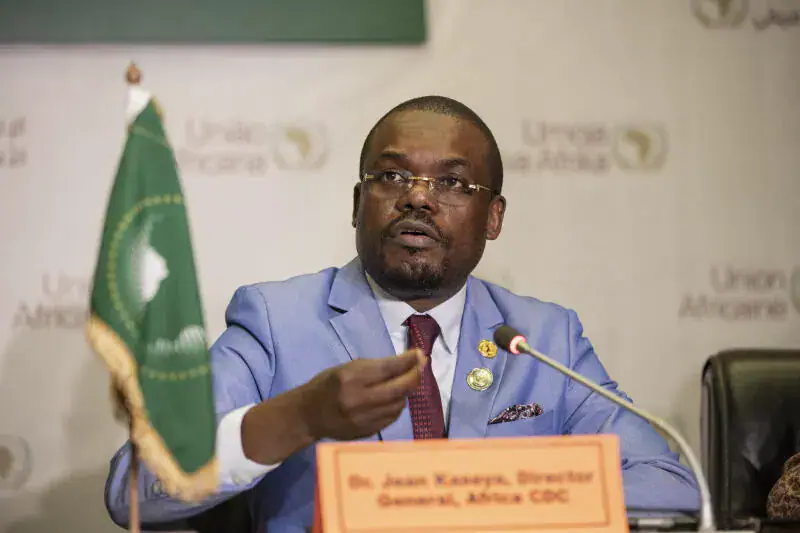
Africa CDC Director-General Dr. Jean Kaseya has highlighted Rwanda and Uganda as examples of effective preparedness and response to public health emergencies. Speaking during a virtual media briefing, Kaseya emphasized the importance of stronger government leadership, greater community involvement, and closer cooperation between African countries to contain diseases. He cited the ongoing Ebola outbreak in the Democratic Republic of Congo, six months after its declaration.
Kaseya stressed that governments must take ownership of outbreak responses by investing in preparedness, training health workers, and strengthening public health systems. International partners should coordinate their support under national government leadership. Controlling an outbreak requires more than medical supplies and treatment facilities; it also depends on strong institutions, public confidence, and coordination across all levels of society.
The briefing also highlighted the role of communities in controlling Ebola. Kaseya advocated for a village-centered approach that places local leaders and residents at the heart of the response. Public health interventions must reflect local realities and address the concerns of the people most affected. Building trust is essential, as communities must understand why health authorities introduce particular measures and what they can do to protect themselves and others.
Regional cooperation was another key issue discussed during the briefing. Kaseya called for stronger cross-border surveillance, faster detection of suspected cases, and better coordination between neighboring countries. With people constantly moving across national borders, no country can treat epidemic preparedness as an isolated national responsibility. Timely information-sharing and coordinated action are essential to limiting the spread of infectious diseases.
The role of journalists in public health emergencies was also emphasized. Kaseya urged media organizations to provide accurate and timely information, challenge misinformation, and help communities understand how to protect themselves. Journalists can help bridge the gap between health authorities and communities by translating technical information into accessible reporting while ensuring that public concerns reach decision-makers.
The situation in the DRC, alongside the experiences of Rwanda, Uganda, Kenya, and Nigeria, underscores the importance of preparedness and public trust in protecting populations against infectious disease threats. Kenya and Nigeria have entered the 42-day countdown towards declaring their respective Ebola outbreaks over, offering grounds for cautious optimism. However, Kaseya warned against shifting attention away from the DRC, where the outbreak remains a major concern.
Kaseya thanked Africa CDC's media partners for their continued engagement and encouraged them to maintain regular communication with the continental health agency. His central message was that controlling Ebola requires more than an emergency response; it calls for sustained political leadership, prepared health systems, trusted community partnerships, and cooperation across national borders.
Key points
- Africa CDC Director-General Dr. Jean Kaseya cites Rwanda and Uganda as models for effective Ebola response.
- Kaseya emphasizes the importance of community involvement, government leadership, and regional cooperation in controlling outbreaks.
- The DRC Ebola outbreak continues, while Kenya and Nigeria near the end of their 42-day Ebola outbreak countdown.