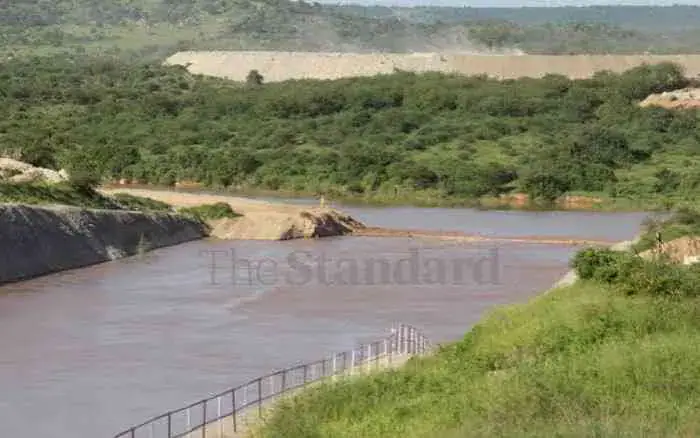
The Thwake Dam project, located at the confluence of the Athi and Thwake rivers along the Makueni-Kitui border, has reached 94.2% completion. The government aims to impound water by April 2027. Principal Secretary for Water and Sanitation Julius Korir informed the National Assembly Departmental Committee on Blue Economy, Water and Irrigation about the project's progress. The dam is designed to provide water for domestic use, irrigation, and electricity generation.
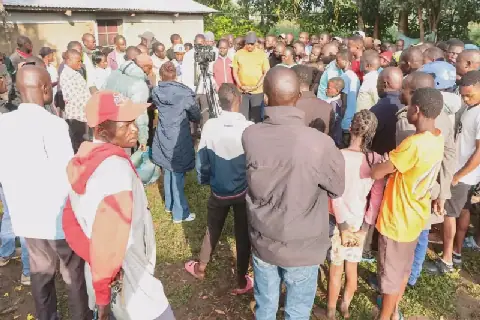
Residents in the region have expressed mixed views about the project. Martin Kimeu, a resident of Wote, believes the dam will improve access to water for farming, which has been a major impediment to realizing the region's agricultural potential. He defended the compensation process, saying it was conducted properly. In contrast, some households have complained that construction-related blasting damaged their homes, citing cracks in walls, windows, and foundations, as well as dust, noise, and ground vibrations.
In August 2026, residents from villages in Mavindini Ward, organized under the Thwake Dam Blasting-Affected Community Committee, sought an independent review by the African Development Bank (AfDB). They alleged that some properties were left out of assessments and compensation. The residents requested access to assessment reports, photographs, measurements, valuation records, and estimates for repairs or reconstruction. Agile Consulting was selected to conduct an independent assessment of properties potentially affected by blasting.
The AfDB conducted a field mission to the project between September 21 and 25, publishing its report on October 21, 2026. The bank's team, led by project task manager Nancy Ogal, met residents whose homes were affected by blasting and identified outstanding health, safety, environmental, and social issues. The bank called for timely compensation and continued monitoring of the project's environmental and social performance.
During a stakeholder engagement visit to Mavindini in October, Korir announced that the government had secured additional funding after the project experienced cash-flow constraints. The AfDB approved additional financing of €68.39 million in June 2026 to support completion of the first phase, alongside funding from the Kenyan government. The financing will support engineering refinements and safety works, including strengthening foundations and constructing two additional saddle dams.
The Thwake Dam project has four phases, with the first phase involving construction of the dam. The subsequent phases cover hydropower generation, water supply and sanitation infrastructure, and irrigation. Once completed, the dam is expected to provide 150,000 cubic metres of treated water daily to an estimated 1.3 million people in Makueni and Kitui counties and Konza Technopolis in Machakos County.
The project is designed to generate 20 megawatts of hydropower and cover 40,000 hectares of agricultural land with an irrigation scheme. The water supply, irrigation, and hydropower components require infrastructure beyond the dam structure, including treatment and distribution networks and power generation facilities. The dam's safety department invited competitive bids for an independent assessment of properties potentially affected by blasting, which was conducted by Agile Consulting.
Key points
- The Thwake Dam project is 94.2% complete and aims to impound water by April 2027.
- Residents have raised concerns about construction-related blasting damage and compensation.
- The African Development Bank has called for timely compensation and continued monitoring of the project's environmental and social performance.