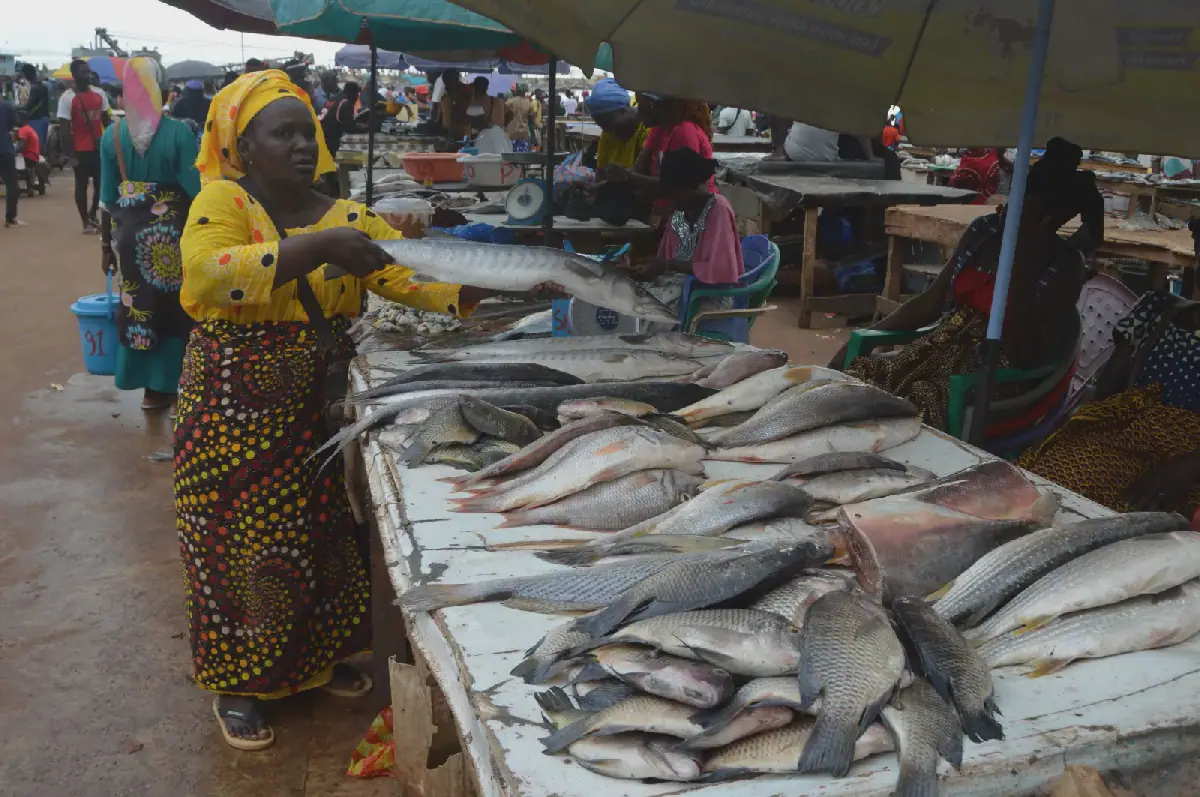
Women are essential to Africa's fisheries sector, making up over a quarter of the 12.3 million people employed in the industry and 58 percent of its fish processors. They work tirelessly to smoke, dry, salt, or ferment fish, using skills passed down through generations, and carry it to market. Despite their significant contributions, women in fisheries face substantial challenges, including limited access to credit and a lack of recognition in policy-making processes.
The African Union has recognized the importance of women's participation in the blue economy, with ministers meeting in Luanda in July pledging to ensure women, youth, and local communities have at least 40 percent representation in blue economy advisory bodies and financing programs. The African Union Commission has been tasked with drafting a roadmap to deliver on this promise. However, unless the roadmap specifically names women fish processors and traders and addresses the rules that prevent them from accessing credit, the promise may not be fulfilled.
One of the significant barriers women face in accessing credit is the requirement for land titles, which few women fish processors have, as land in many communities passes through men. This makes it difficult for women to access loans and other forms of financing, limiting their ability to invest in their businesses and grow their operations. Alternative forms of collateral, such as group guarantees, stored stock, or mobile-money records, could be accepted instead of title deeds.
Women in fisheries are not just important for the industry; they also play a critical role in food security and cultural preservation. They feed their children with the day's catch and help keep traditional cuisine and culture alive in markets. Additionally, women are often the first to notice changes in fish populations, water quality, and other environmental issues, making them essential partners in conservation efforts.
Climate change and overfishing are significant threats to Africa's fisheries, with the UN Food and Agriculture Organization projecting that most African countries will lose fish this century if emissions stay high and climate change continues to escalate. Massive fishing vessels and bottom trawlers from around the world are also scooping up fish off Africa's coasts, with illegal fishing alone estimated to cost West Africa up to $9.4 billion a year.
Despite these challenges, there are examples of successful women-led initiatives in fisheries. In The Gambia, women oyster harvesters won exclusive rights to manage their fishery in 2012 and have since restored mangroves and introduced an eight-month seasonal closure, protecting breeding grounds and the coastline. Similar initiatives have been implemented in Ghana and other countries, demonstrating the potential for women-led conservation efforts.
To unlock the full potential of women in fisheries, policymakers must prioritize their needs and concerns. This includes ensuring that women have a distinct voice in the blue economy, that access to national blue funds is not dependent on land titles, and that women are counted in the new blue economy accounts across the entire value chain. By working with women in fisheries, Africa can build a more sustainable and equitable blue economy that benefits everyone.
Key points
- Women make up 58 percent of Africa's fish processors and play a crucial role in the industry, but face significant barriers to accessing credit and participating in the blue economy.
- The African Union has pledged to ensure women have at least 40 percent representation in blue economy advisory bodies and financing programs, but a roadmap must be developed to deliver on this promise.
- Alternative forms of collateral, such as group guarantees or mobile-money records, could be accepted instead of land titles to help women access credit.
Reporting sources
- Africa Can’t Build a Blue Economy Without the Women Who Bring Its Fish to Market · African Arguments