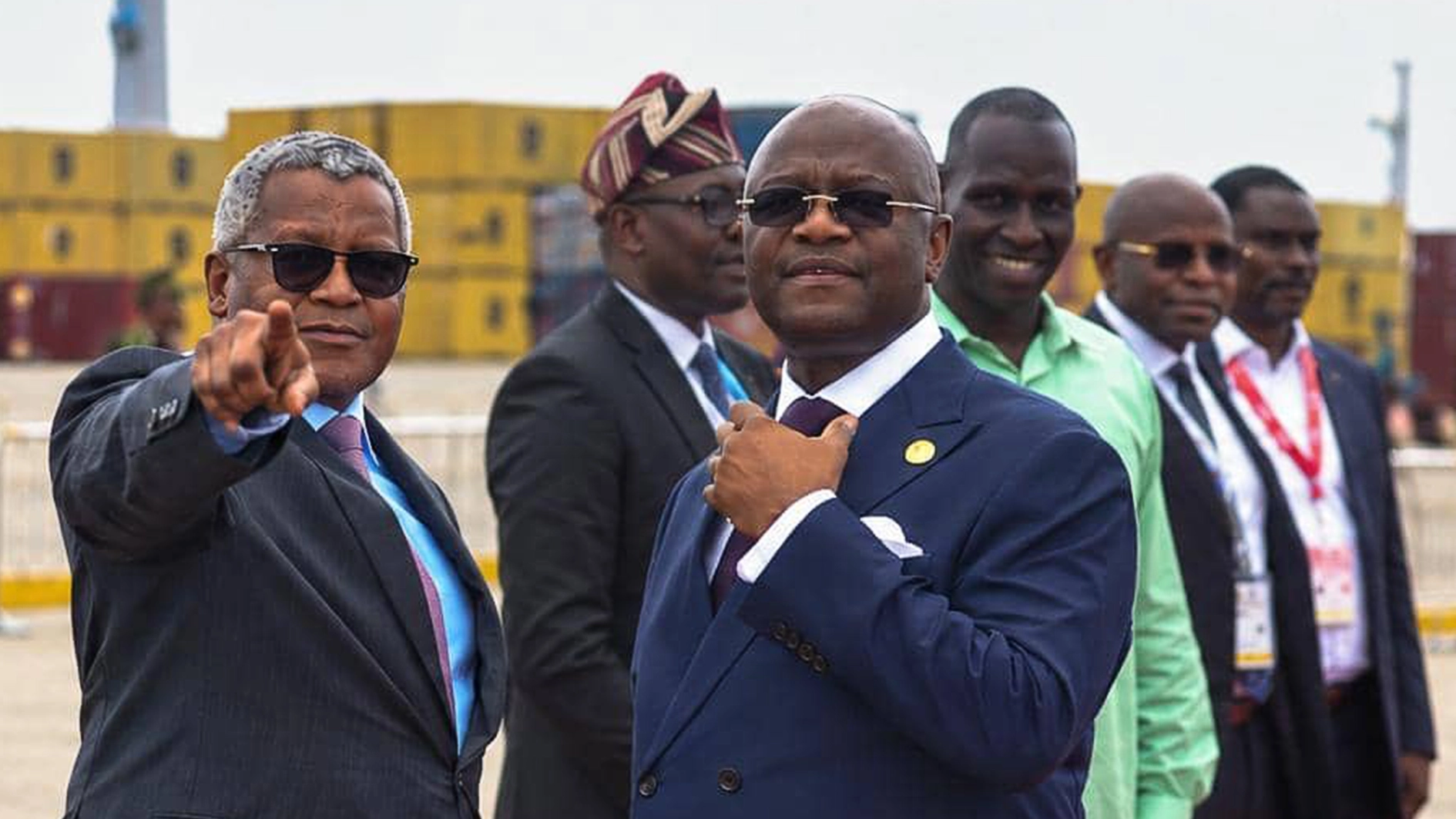
The African Export-Import Bank (Afreximbank) has congratulated the Government and people of Kenya, led by President Dr William Samoei Ruto, on the groundbreaking of the Dangote oil refinery in Lamu. This landmark investment is expected to significantly expand Africa's refining capacity, strengthen regional energy security, and accelerate the continent's transition from exporting raw materials to trading value-added products. The project is a major milestone in Kenya's industrial and trade infrastructure expansion.
The approximately $16 billion refinery is planned to have a capacity to process 700,000 barrels of crude oil per day and is expected to create around 60,000 jobs. Its intended regional ownership and market reach underscore its potential as an East African industrial asset. The refinery will process crude sourced from African producers, including Uganda, while supplying refined petroleum products to Kenya and the wider regional market. This project is expected to retain more value within Kenyan and African economies.
The economic significance of establishing large-scale refining capacity is substantial. A project of this scale presents an opportunity to deepen local industrial supply chains, generate employment and associated services, reduce exposure to imported refined products, and create a new platform for regional exports. The project also comes at a consequential moment for Africa's energy security, as recent disruptions affecting the Strait of Hormuz and continuing instability around the Red Sea and Bab el-Mandeb have demonstrated the vulnerability created when African economies depend heavily on distant supply chains.
President and Chairman of the Board of Directors of Afreximbank, Dr George Elombi, said that the significance of this investment extends well beyond the construction of a refinery. It demonstrates Africa's capacity to conceive, finance, and build major industrial assets that respond directly to the needs of its economies. By refining more of what is produced on the continent, Africa can retain greater value from its natural resources, create jobs, and strengthen trade links between African economies.
Afreximbank has been a long-term partner to the Government of Kenya, launching a $3 billion Country Programme in 2023 to support priority public and private-sector projects. The programme encompasses industrial development and export manufacturing, climate adaptation and irrigation, trade infrastructure, support for small and medium-sized enterprises, and initiatives designed to connect Kenyan businesses more effectively to regional and continental markets. This includes an $800 million Kenya Climate Change Adaptation Facility supporting irrigation development and broader agricultural productivity.
Afreximbank is also supporting the development of the Dongo Kundu Integrated Industrial Park in Mombasa and the Naivasha Special Economic Zone II, with approximately $1 billion earmarked for development of the two integrated industrial parks. These developments are expected to strengthen export manufacturing, attract domestic and international investment, and enhance Kenya's position as an industrial and logistics gateway into East and Central Africa. Government projections have associated the two developments with around 140,000 jobs once fully developed.
Afreximbank congratulates Mr Aliko Dangote, President and Chief Executive of Dangote Industries Limited, and the Dangote Group, for continuing to make large-scale commitments to Africa's industrial development. Afreximbank and Dangote Group have built a longstanding partnership focused on industrialisation, value addition, and expanding Africa's productive capacity. Since 2015, Afreximbank has invested around $15 billion in the Dangote Group, including major financing for the Dangote Petroleum Refinery and Petrochemicals Complex in Nigeria.
Key points
- The Lamu refinery project is expected to create around 60,000 jobs and process 700,000 barrels of crude oil per day.
- Afreximbank has invested around $15 billion in the Dangote Group since 2015.
- The project is a major milestone in Kenya's industrial and trade infrastructure expansion.