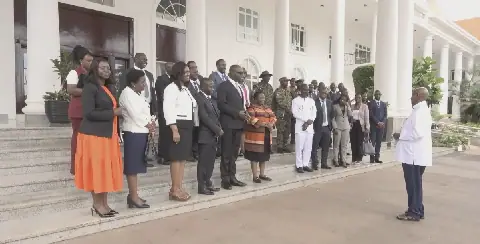
Ghana has reached a significant milestone in its 24-Hour Economy agenda with the signing of a Joint Project Preparation Facility Framework Agreement between the African Export-Import Bank, the Ghana Infrastructure Investment Fund, and the 24-Hour Economy Authority. This agreement marks a crucial step in transforming the country's economic priorities into productive assets, industrial capacity, export opportunities, and sustainable employment. The 24-Hour Economy and Accelerated Export Development Programme has a US$11.5 billion investment pipeline.
The Joint Project Preparation Facility is designed to accelerate the preparation of selected priority projects under Ghana's 24-Hour Economy and Accelerated Export Development Programme. Afreximbank and GIIF will each contribute an initial US$5 million to finance eligible technical, financial, legal, and advisory work. This funding is for project preparation, not construction financing, and aims to address technical, financial, legal, commercial, and structuring issues that can prevent projects from becoming bankable.
In development finance, a significant obstacle to infrastructure and industrial investment is the lack of well-prepared, properly structured, and investment-ready projects. The Joint Project Preparation Facility addresses this critical upstream stage by bringing together Afreximbank's project-development and capital-mobilisation expertise, GIIF's local project origination and infrastructure-investment capabilities, and the 24-Hour Economy Authority's strategic project development and government stakeholder coordination.
The three institutions will jointly screen and prioritise projects for support, creating a framework for policy priorities, project development, and investment expertise to converge before projects reach the market for financing. This institutional architecture is crucial for Ghana's development ambitions, as it enables the conversion of ambitious economic priorities into bankable projects that can withstand technical, financial, commercial, legal, and institutional scrutiny.
The sectors targeted by the facility demonstrate the breadth of Ghana's economic ambitions, including energy and infrastructure, logistics and digital connectivity, industrial parks, manufacturing and agro-processing, minerals beneficiation, tourism, creative industries, and healthcare. These investments can form interconnected economic corridors and productive value chains, supporting Ghana's economic development and growth.
The partnership also includes training, knowledge transfer, capacity building, and staff secondments designed to strengthen GIIF's internal project-preparation capabilities. This capacity-building component can help deepen GIIF's institutional capabilities and contribute to the development of a stronger national project-preparation ecosystem, enabling Ghana to sustainably develop and implement complex projects.
The ultimate measure of success for Ghana's 24-Hour Economy agenda will be whether projects move successfully through the project lifecycle, from concept to financing, procurement, construction, commissioning, and operations. The Joint Project Preparation Facility represents an opportunity to strengthen the project-development pipeline before billions of dollars of capital are committed, ensuring that Ghana's development ambitions are converted into bankable projects that can drive economic growth and sustainable employment.
Key points
- The Joint Project Preparation Facility Framework Agreement marks a significant milestone in Ghana's 24-Hour Economy agenda, with a US$11.5 billion investment pipeline.
- The facility aims to address the lack of well-prepared, properly structured, and investment-ready projects, a significant obstacle to infrastructure and industrial investment in Ghana.
- The partnership includes training, knowledge transfer, and capacity building to strengthen GIIF's internal project-preparation capabilities and contribute to the development of a stronger national project-preparation ecosystem.