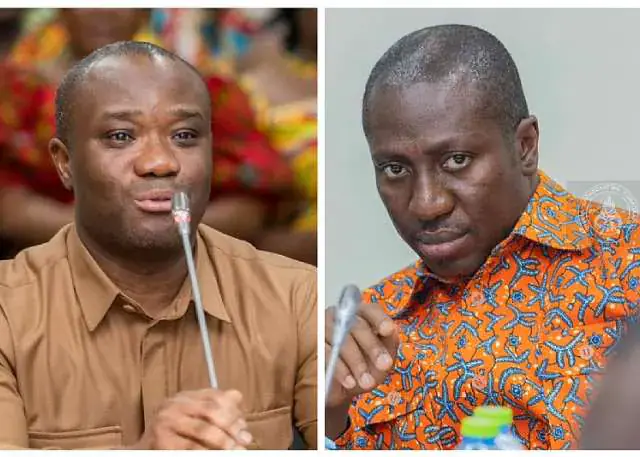
Minority Leader Alexander Afenyo Markin has called on President John Dramani Mahama to exercise his constitutional power to pardon Camila Alhassan, a TikToker currently serving a one-year prison sentence. Alhassan was convicted in July 2026 by an Accra Circuit Court for pleading guilty to offensive conduct conducive to a breach of the peace. Her offense was a TikTok video containing derogatory remarks directed at President Mahama and his family members.
Afenyo Markin's appeal was made during the 30th Ghana Journalists Association (GJA) Media Awards in Accra, where he emphasized the importance of protecting freedom of expression in a democratic society. He argued that criminal sanctions should not create an atmosphere of fear that prevents citizens from expressing their opinions or criticizing political leaders. According to him, democratic governance depends on the protection of divergent opinions.
The government, however, has taken a different stance on the matter. Minister of State in charge of Government Communications, Felix Kwakye Ofosu, speaking on behalf of President Mahama, warned against defending threats of violence under the guise of freedom of expression. He stated that threatening to kill a president and his children is not free speech but brazen criminality.
Kwakye Ofosu emphasized that political leaders must demonstrate consistency in defending freedom of expression, particularly when journalists face intimidation, threats, and persecution for publishing reports that challenge powerful individuals or institutions. He recalled instances in Ghana's history when journalists were forced to flee the country due to threats to their lives.
The government's position highlights the delicate balance between protecting citizens' constitutional right to free expression and preventing the use of digital platforms to promote threats, intimidation, and violence. Kwakye Ofosu stressed that efforts to confront hate speech and threatening communications must not become convenient justifications for suppressing legitimate criticism, dissenting opinions, or investigative journalism.
The central issue now is where Ghana should draw the line between protecting freedom of expression and regulating online content that could be considered threatening or offensive. The contrasting interventions by Afenyo Markin and Kwakye Ofosu have brought two related questions into the national conversation: whether criminal sanctions imposed over offensive online publications are proportionate and whether threats of physical violence can legitimately enjoy the protection afforded to freedom of expression.
President Mahama has the constitutional prerogative of mercy under Article 72 of the 1992 Constitution, which provides a mechanism for him to grant a pardon, respite, or substitute a less severe punishment. Afenyo Markin's appeal focuses on presidential clemency and the possible implications of imprisonment for social media expression, while Kwakye Ofosu's position emphasizes the responsibility of political leaders to condemn genuine threats to human life.
Key points
- Afenyo Markin urges President Mahama to pardon Camila Alhassan, a TikToker serving a one-year prison sentence for a video deemed offensive.
- The government warns against defending threats of violence under the guise of freedom of expression, emphasizing the need to protect human life.
- The issue raises questions about the balance between protecting freedom of expression and regulating online content that could be considered threatening or offensive.