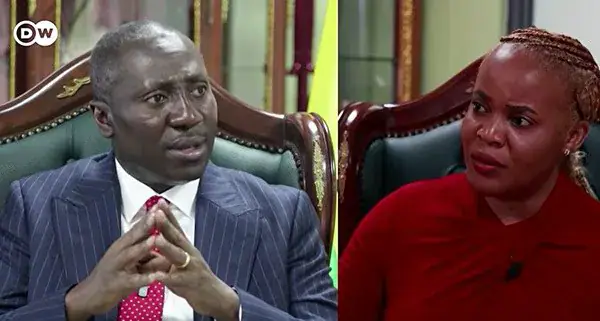
In a recent interview with DW Africa, Ghana's Minority Leader Alexander Afenyo-Markin acknowledged that the New Patriotic Party's (NPP) economic policies, particularly the domestic debt exchange programme and the decision to seek a bailout from the International Monetary Fund (IMF), contributed to the party's loss in the 2024 elections. Afenyo-Markin's comments mark a departure from the party's earlier stance that blamed external factors for their defeat. According to him, the NPP's handling of Ghana's economic troubles left many Ghanaians dissatisfied, leading them to abandon the party at the ballot box.
The domestic debt exchange programme, launched under the Akufo-Addo government, required bondholders, including pension funds and individual investors, to accept extended maturities and lower interest payments on government debt. This move was deeply unpopular with sections of the public, including pensioners and investors who saw their returns cut. Afenyo-Markin explained that the government turned to the IMF to restore confidence in Ghana's battered economy and to the domestic debt exchange programme to restructure the country's debt burden.
Afenyo-Markin also pointed to external shocks, such as the COVID-19 pandemic and the Russia-Ukraine war, as factors that strained economies across both developing and advanced nations, not just Ghana. However, he accepted responsibility for the government's own policy choices, stating that people were not happy with the economic situation and some decided to punish the NPP government. When asked if he would have managed the economy differently given another chance, Afenyo-Markin declined to answer hypothetically, saying it depends on the facts.
The Minority Leader emphasized the need for a deliberate policy to strengthen Ghana's private sector, which he believes is essential to creating lasting jobs. He also stressed the importance of investing in technical and vocational training, saying the country needs to equip young people with practical skills rather than relying mainly on academic qualifications. Afenyo-Markin noted that the previous NPP administration had introduced free skills training programmes to help close that gap and widen opportunities for young Ghanaians.
Afenyo-Markin's comments signal a shift in the NPP's stance on their 2024 election loss. Previously, senior figures in the party described their loss as the product of a "storm of adversity" that swept through the economy, blaming forces largely beyond their control. However, Afenyo-Markin's admission that the party's economic policies contributed to their defeat marks a notable departure from this line.
The NPP's loss in the 2024 elections has been attributed to various factors, including the country's economic troubles. The party must now take lessons from its defeat and demonstrate stronger commitment to policies that directly improve the lives of Ghanaians. Afenyo-Markin's comments suggest that the NPP is willing to acknowledge its mistakes and move forward with new policies that address the needs of the Ghanaian people.
As the NPP looks to the future, Afenyo-Markin's emphasis on private sector growth and skills training is likely to be a key part of their strategy. The party must now work to regain the trust of Ghanaians and demonstrate its commitment to improving the economy and the lives of its citizens. With a renewed focus on practical policies and programmes, the NPP may be able to recover from its 2024 defeat and return to power in the future.
Key points
- Afenyo-Markin admits NPP's economic decisions contributed to 2024 defeat
- Domestic debt exchange programme and IMF deal led to voter dissatisfaction
- NPP must focus on private sector growth and skills training to regain voter trust