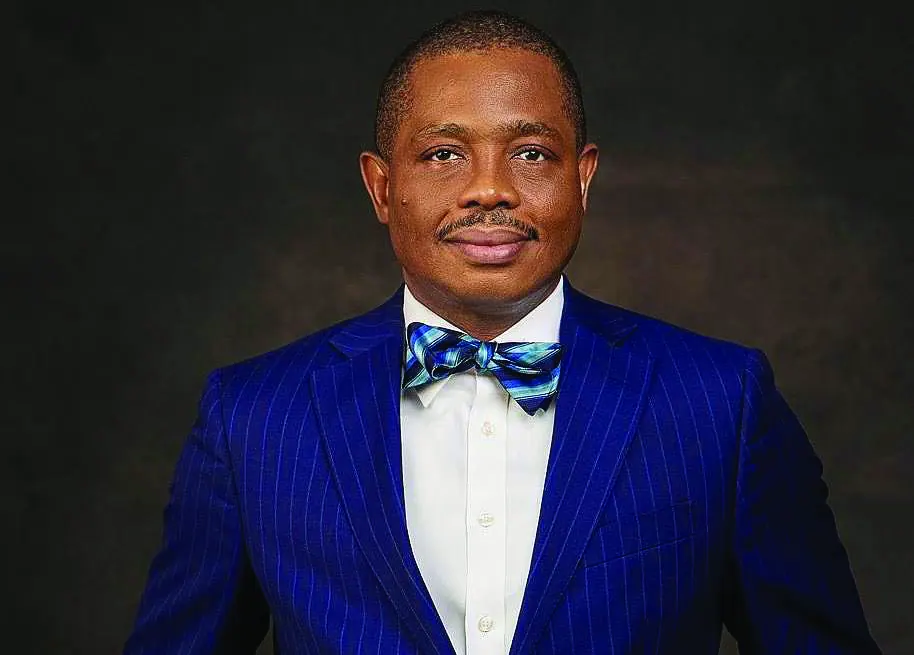
Immediate Past President of the Nigerian Bar Association, Afam Osigwe, SAN, has advocated for electoral reforms to ensure that election outcomes are determined by voters at polling units, rather than through prolonged litigation. He made this call at the 22nd All Nigeria Editors Conference held in Enugu. Osigwe presented a paper titled, “Election Petition in the Digital Age: Independence, Evidence, BVAS”, where he expressed concerns over the increasing involvement of courts in determining electoral outcomes in Nigeria.
Osigwe noted that Nigeria has one of the highest numbers of election petitions, which he attributed to difficulties in proving alleged electoral malpractice and non-compliance with electoral laws within the limited period for election petitions. This, he said, has led to the growing dependence on litigation in the electoral process. The development has been described as the “judicialisation of the electoral process”, with courts increasingly being drawn into questions that should primarily be settled through the ballot.
The former NBA President also raised concerns about the independence of the Independent National Electoral Commission (INEC), particularly the process for appointing its members. He noted that public confidence in the Commission could be affected by perceptions about its autonomy. Osigwe’s comments come at a time when the credibility of INEC and the electoral process in Nigeria are being scrutinized.
Osigwe questioned the evidentiary requirements surrounding the Bimodal Voter Accreditation System (BVAS) and the INEC Result Viewing Portal (IREV). He argued that while these electoral technologies were introduced to improve transparency, they should not create additional difficulties for Petitioners seeking to establish alleged irregularities. The use of these technologies has been a subject of debate in the context of election petitions.
The former NBA President criticised the growing “go to court” culture following disputed elections. He linked declining voter participation partly to perceptions that votes may not ultimately determine electoral outcomes. This sentiment is shared by many Nigerians who feel that the electoral process is often marred by irregularities and disputes.
Osigwe urged stakeholders to strengthen electoral institutions and improve the handling of electronic evidence ahead of the 2027 general elections. He emphasized the need for reforms to ensure that the electoral process is transparent, credible, and accountable. This, he believes, will help to restore public confidence in the electoral process.
Key to achieving this is ensuring that electoral outcomes are determined by voters at polling units, rather than through litigation. Osigwe’s call for reforms is timely, given the concerns about the credibility of the electoral process in Nigeria.
Key points
- Afam Osigwe calls for electoral reforms to ensure election outcomes are determined by voters at polling units.
- Osigwe expresses concern over the increasing involvement of courts in determining electoral outcomes.
- He urges stakeholders to strengthen electoral institutions and improve the handling of electronic evidence.