Alternative Dispute Resolution (ADR) is increasingly proving to be an effective way of transforming conflict into dialogue while promoting peace, justice, and the restoration of relationships within communities in Uganda. ADR training has equipped mediators with skills to help disputing parties resolve their differences without necessarily resorting to lengthy litigation. This approach has been successfully applied in various disputes, including cultural conflicts.
Recently, Bugisu experienced a cultural dispute that was resolved through mediation conducted by the court. The Bugwere Cultural Institution is also registering commendable progress in resolving its cultural dispute, which is now estimated to be about 80 percent resolved. This progress demonstrates the effectiveness of ADR in resolving disputes and promoting peace within communities.
The training has equipped mediators with practical skills and methodologies to confront disputes constructively rather than shy away from them. Mediators have witnessed members of the Bugisu Cultural Institution shake hands in court following the mediation process, a demonstration of how dialogue can help restore relationships. ADR refers to processes of resolving disputes through non-adversarial means, where disputing parties are guided by a court-trained and accredited mediator.
ADR is supported by the law, particularly Article 126(2)(d) and (e) of the Constitution, as well as various pieces of legislation in Uganda, including the Conciliation and Arbitration Act. Several laws also contain provisions that provide for mediation and other forms of dispute resolution, including laws governing labour disputes and cultural institutions. This legal framework provides a foundation for ADR to be a viable alternative to litigation.
The advantages of ADR are numerous. It can help resolve conflicts more quickly, reduce costs, and restore broken relationships by reopening communication channels between disputing parties. Mediation also provides a higher level of confidentiality because the proceedings are generally not conducted in public in the same manner as ordinary litigation. This approach has made ADR an attractive option for dispute resolution.
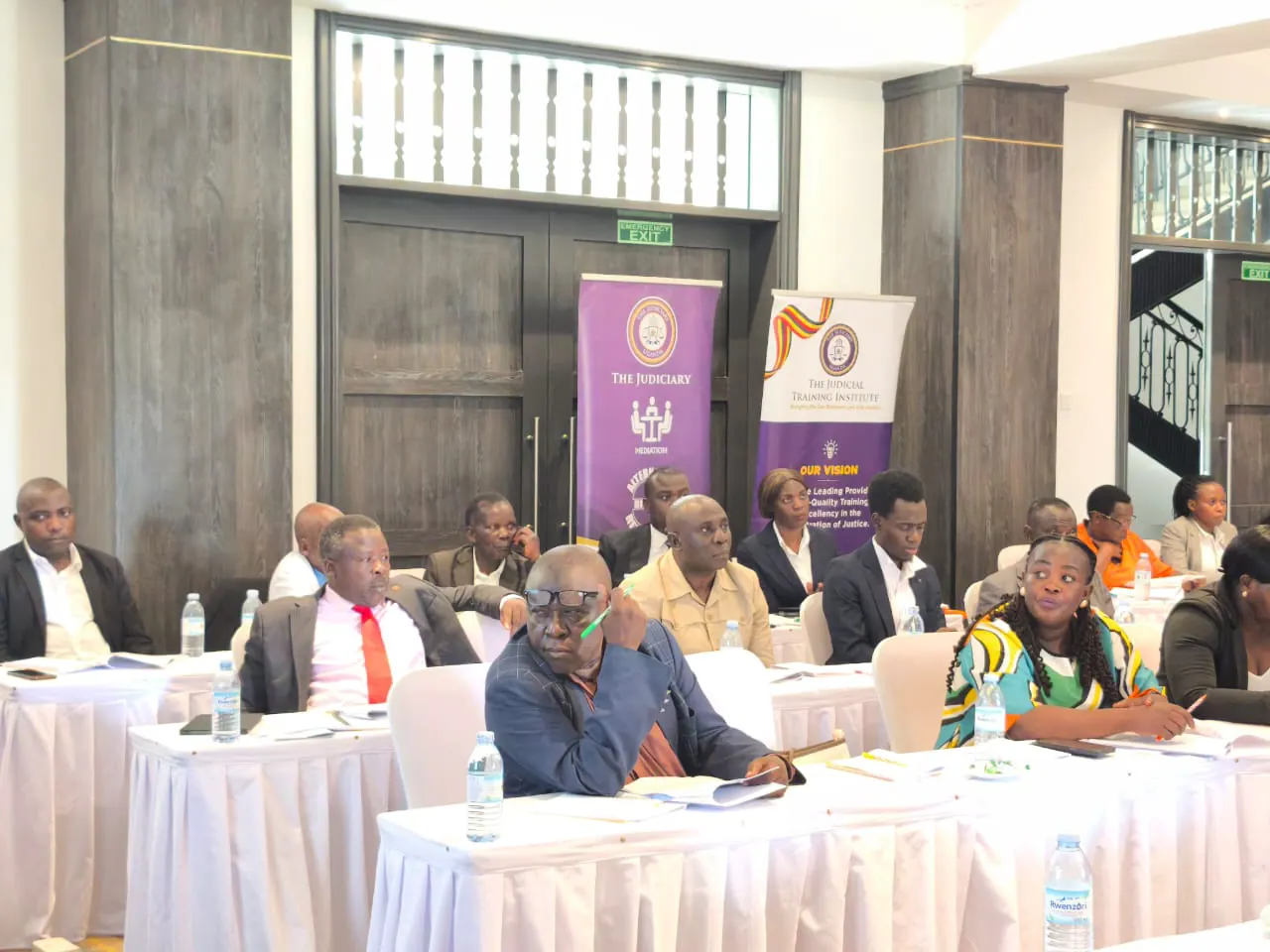
Under the Judiciary’s current ADR protocols, mediation services are provided free of charge to parties. The Government of Uganda and its development partners, including the International Development Law Organization (IDLO), have supported the process. Recently, the Judiciary brought together participants from Eastern Uganda in Mbale City for training and further retooling in mediation, covering the practical stages of conducting mediation.
The training involved rigorous instruction and assessment throughout the one-week programme, and participants were awarded a mediation certificate by the Judiciary and its partners. The skills acquired through ADR training are an important foundation for developing a professional mindset capable of transforming conflict into dialogue. Mediators are now equipped to play an important role as peacebuilders within their communities, facilitating dialogue and helping parties clarify their positions and understanding of the issues before they reach a mediation agreement.
Key points
- ADR provides an effective way of transforming conflict into dialogue while promoting peace, justice, and restoration of relationships within communities.
- ADR is supported by the law, particularly Article 126(2)(d) and (e) of the Constitution, as well as various pieces of legislation in Uganda.
- Mediation services are provided free of charge to parties under the Judiciary’s current ADR protocols.