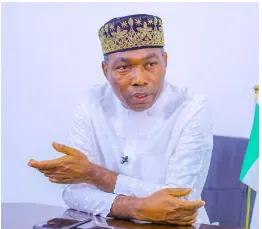
Prince Adewole Adebayo's Farewell to Poverty and Insecurity blueprint outlines a significant departure from Nigeria's traditional governance culture. Adebayo emphasizes the need for government to deliver, measure, and account for its promises. His proposed Presidential Delivery and Performance Office, baseline audits, and quarterly milestones aim to ensure government interventions produce measurable improvements in citizens' lives. This approach seeks to change the relationship between government and the people.
Adebayo's model envisions the President as both the country's chief political figure and chief delivery officer. Ministers and government agencies would be held accountable for clearly defined objectives, with measurable outcomes in areas such as agriculture, electricity, healthcare, education, employment, and security. Citizens would have a means of tracking progress, shifting the emphasis from activity to impact. A ministry could spend billions of naira without improving Nigerians' lives, but Adebayo's model aims to address this.
The baseline audit is a crucial element of Adebayo's proposal. Before promising to transform a sector, the government must establish its actual condition. This includes determining the number of Nigerians with reliable electricity, the real employment situation, and the condition of federal roads. A baseline creates a reference point for measuring progress, giving citizens a basis for verification. This approach prevents governments from claiming success based on selective statistics.
Adebayo's quarterly performance system changes the rhythm of Nigeria's political culture, which often operates on four-year electoral cycles. Governments make promises at the beginning of an administration and are judged near the end of their tenure. A quarterly system allows for early detection of problems, enabling the government to identify and correct issues within months. This approach treats public policy as something that must be continuously monitored and adjusted.
Public reporting is a vital dimension of Adebayo's model. If performance information is made available to Nigerians, citizens become participants in the accountability process. They can ask questions about agricultural targets, business environments, education, healthcare, and electricity supply. Transparency becomes more than publishing government documents; it involves putting government's performance before the people, continuously and measurably.
Adebayo's proposed corrective mechanism is also important. No government will get every policy right, and economic conditions can change. A mature system of governance should be able to identify failure early enough to correct it. Adebayo's approach shifts the culture from explaining away failure to treating it as information requiring correction. This allows for a more responsive and adaptive government.
Adebayo's proposition aims to turn good intentions into an institutional system of governance. By proposing a delivery and performance architecture around the presidency, he attempts to create a system that will survive individual administrations. The system would constantly remind government of its promises, progress, and responsibilities, ensuring a more accountable and effective governance model.
Key points
- Adebayo's governance model focuses on measurable outcomes and accountability.
- The proposed Presidential Delivery and Performance Office would oversee the implementation of Adebayo's model.
- Adebayo's approach seeks to change the relationship between government and the people in Nigeria.