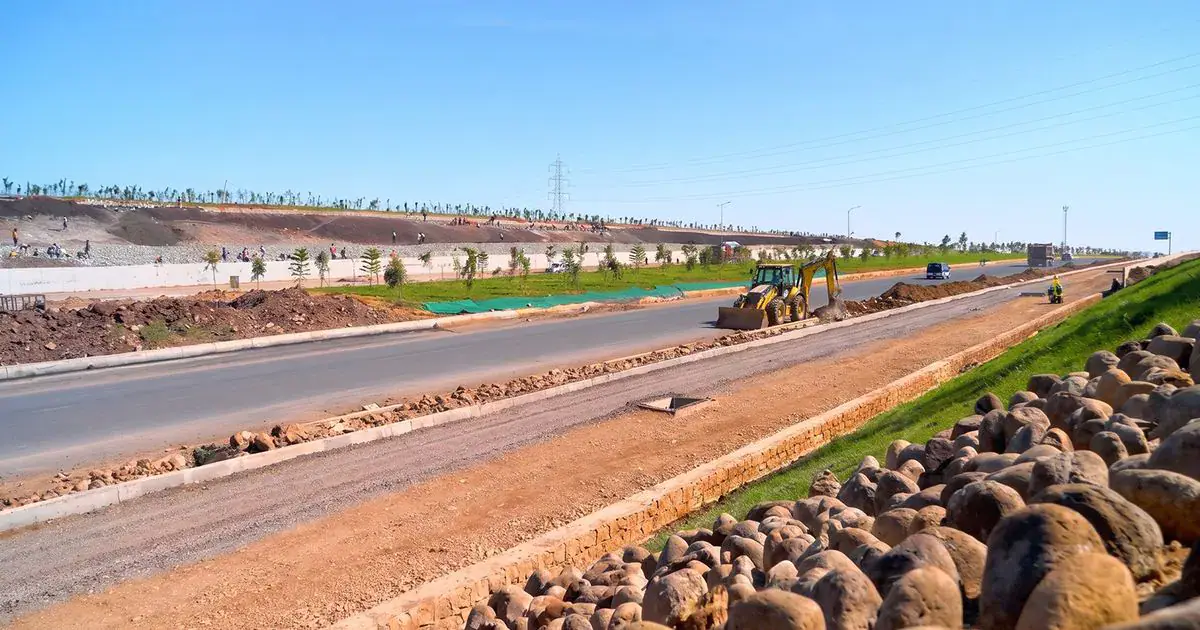
The third phase of Addis Ababa's Corridor Development is underway, aiming to improve infrastructure in the city's southern and eastern outskirts. The project includes a 15km, 114m-wide road from Goro to Tulu Dimtu, capable of carrying 8 lanes of traffic. The corridor also features wide pedestrian walkways and dedicated bicycle lanes. A 30m-wide strip for roadside greening covers 70 hectares, cooling the road surface and absorbing rainwater runoff. This development is part of a larger effort to enhance the city's infrastructure and services.
The project also involves installing heavy water and sanitation utilities upfront. Crews are drilling 12 deep water wells designed to pump 106,000 cubic meters of clean drinking water daily. This will boost the capital's total daily water production by more than 11 percent. A dedicated wastewater treatment plant connected to 206km of new underground sewage lines will ensure safe waste treatment. This sanitation network will protect local streams and waterways from pollution.
The corridor development also includes a 22km riverside project from the Kara–Bole Airport Road to Akaki. This project aims to stabilize the waterway and prevent soil erosion, upstream waste, and seasonal flash flooding. Civil engineers are executing heavy structural protections across 324 hectares of riverbank land, including environmental restoration and greening. The project involves constructing 4,100 cubic meters of stone-filled wire gabion retaining walls and 1,500 cubic meters of stepped hillside terracing.
The city's approach to building infrastructure is noteworthy, as it involves installing utilities upfront rather than building roads first and digging them up later. This approach is rare in many African cities. By putting utilities in place from the start, the city can ensure that residents have access to essential services like clean water and sanitation.
The project is expected to have a significant impact on the daily lives of hundreds of thousands of residents living in the southern and eastern outskirts of Addis Ababa. The new road network and water supply will improve living conditions and provide better services. The city's authorities are now calling on private developers to speed up their construction projects along the Goro–Tulu Dimtu corridor.
The third corridor development is part of a larger effort to turn Addis Ababa's southern residential and industrial belt into a fully serviced, modern urban district. The project includes 394 combined hectares of green space, which will help to cool the urban environment and improve air quality. By coordinating the build of roads, pipes, and river parks, the city is creating a comprehensive and sustainable urban development.
The project's progress is significant, with public crews working around the clock to finish the roads, pipes, and river parks. The city's authorities are confident that the project will be completed on time and will have a lasting impact on the city's development. The project's success will be closely watched by residents, developers, and city officials.
Key points
- The project pairs an 8-lane road with 12 deep water wells and 206km of new sewer lines.
- The corridor development includes a 22km riverside project to stabilize the waterway and prevent soil erosion.
- The project is expected to boost the city's daily water production by more than 11 percent.