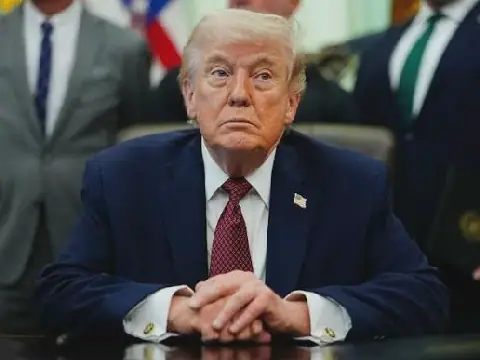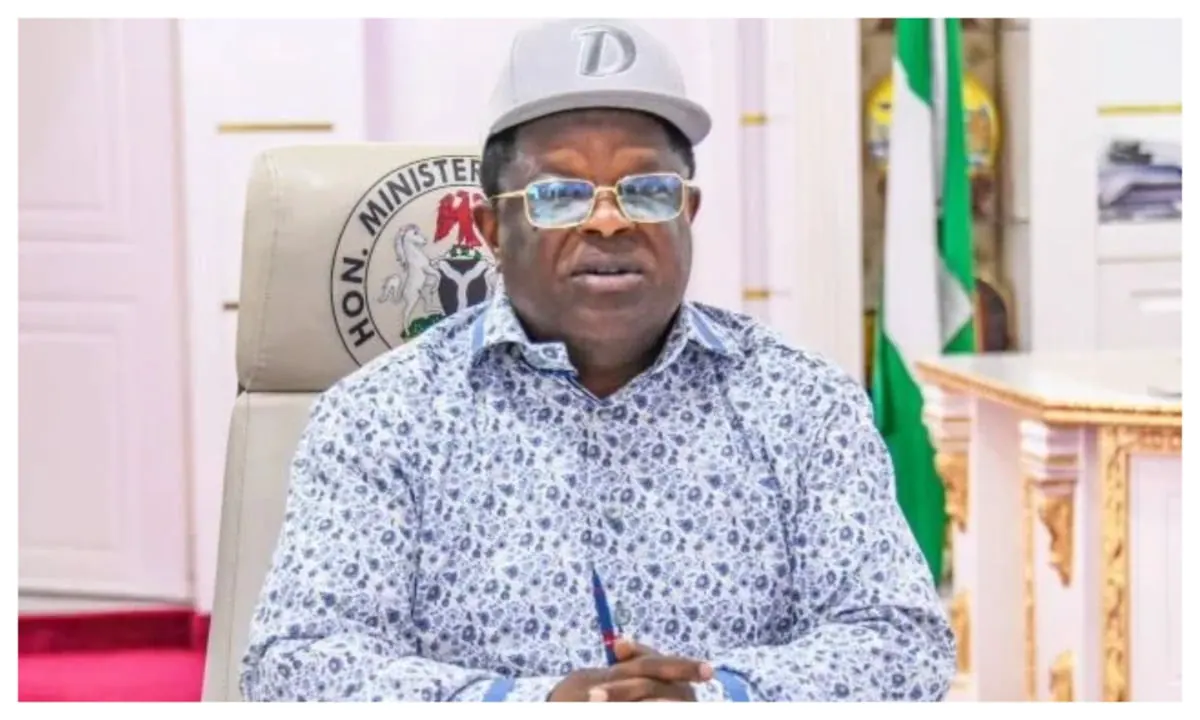
A chieftain of the African Democratic Congress in Anambra State, Ndubuisi Nwobu, has expressed his disapproval of the Minister of Works' directive to display President Bola Tinubu's pictures on the First Niger Bridge. Nwobu described the move as an excessive display of sycophancy. He argued that the funds used for the bridge's rehabilitation belong to the Nigerian people, not the President.
According to reports, the Minister of Works, Dave Umahi, had ordered that the pictures of President Tinubu be pasted on the bridge upon its completion. This decision has sparked controversy, with many questioning the rationale behind it. Nwobu's criticism is the latest reaction to the directive, with the ADC chieftain emphasizing that such actions will not provide any political advantage to the ruling party.
Nwobu stated that decorating the bridge with Tinubu's picture would not influence the voting decisions of Nigerians. He emphasized that the government used public funds to build the bridge, and therefore, it is not a personal achievement of the President. The ADC chieftain's comments reflect a wider debate about the use of public resources for political campaigns and the blurring of lines between governance and politicking.
The First Niger Bridge is a critical infrastructure project that has undergone significant rehabilitation. The project has been widely reported and monitored by the public, with many stakeholders eager to see its completion. However, the decision to display the President's pictures on the bridge has shifted attention from the project's importance to a controversy over political self-promotion.
Nwobu's statement highlights concerns about the use of public resources for political purposes. He argued that the money used for the bridge's maintenance is not the President's personal funds, but rather belongs to all Nigerian citizens. This perspective underscores the need for a clear separation between public service and political campaigns.
The development has sparked reactions from various stakeholders, with some supporting Nwobu's position and others defending the Minister of Works' directive. The controversy reflects a broader debate about the role of politics in governance and the limits of political self-promotion. As the public continues to engage with the issue, it remains to be seen how the government will respond to criticisms.
The ADC chieftain's criticism of Umahi's directive is a significant development in the lead-up to future elections. As politicians and parties intensify their campaigns, issues like this are likely to arise, highlighting the need for clear guidelines on the use of public resources for political purposes. The controversy over the Niger Bridge pictures is a test case for the government's commitment to transparency and accountability.
Key points
- The ADC chieftain, Ndubuisi Nwobu, criticizes the Minister of Works' directive as "sycophancy taken too far".
- The controversy reflects a broader debate about the use of public resources for political campaigns and governance.
- The issue has sparked reactions from various stakeholders, highlighting concerns about the separation of public service and political campaigns.