The Agricultural Development Bank PLC (ADB) of Ghana has seen its assets grow substantially over the years, from approximately GH¢734.6 million in 2009 to GH¢1.789 billion in 2025. This more than 24 times growth in assets has not, however, translated into sustainable profitability. The bank's financial trajectory has raised questions about its governance and ability to support Ghana's agricultural sector effectively.
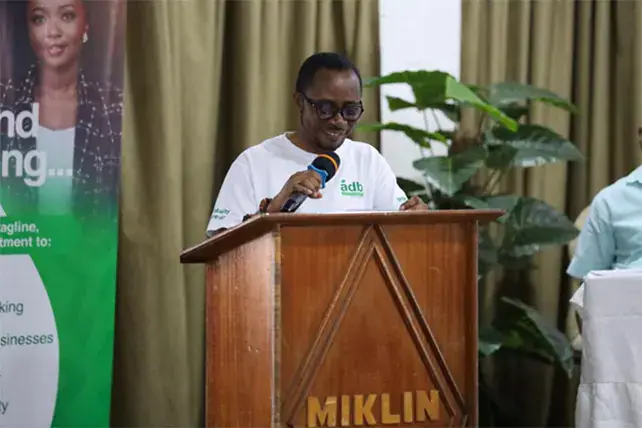
According to the Chairman of the Professional and Managerial Staff Union (PMSU) of ADB, Mr. James Obeng-Gyan, the bank's expansion has been accompanied by years of financial difficulties. He presented financial figures at the National Executive Council meeting of PMSU/Local Union, highlighting that retained earnings of GH¢54.3 million in 2014 deteriorated into accumulated losses from 2015, reaching approximately GH¢2.056 billion in 2024.
The bank's financial performance has shown some improvement, with a net loss of GH¢828.8 million in 2023, followed by a profit before tax of GH¢580.8 million and a net profit of GH¢367.3 million in 2025. Accumulated losses improved to approximately GH¢1.747 billion in 2025. Despite this encouraging performance, Mr. Obeng-Gyan emphasized that sustained recovery requires prudent lending, stronger risk management, effective internal controls, and accountability.
Mr. Obeng-Gyan also raised concerns about historical asset disposals and credit arrangements, alleging that some transactions involving properties, rental arrangements, and other strategic assets warrant closer examination. He called for credible investigations where necessary, stressing that allegations should be assessed based on documentary evidence rather than speculation.
The PMSU chairman recalled the union's opposition to proposed divestiture arrangements and other ownership changes over the years, highlighting the significant sacrifices made by PMSU and the Local Union to protect ADB. He urged the government, the Bank of Ghana, and ADB's Board to support a comprehensive recovery program covering loan recovery, asset quality, capital adequacy, digital transformation, revenue generation, and operational efficiency.
Mr. Obeng-Gyan emphasized the importance of transparency and independent valuation in any proposed share disposal, arguing that ADB's strategic importance to agriculture and rural enterprise should inform decisions about its ownership and future. He also called for meaningful consultation over restructuring, improved conditions of service, and fair treatment of employees, including addressing outstanding promotions, salary structure implementation, and pensioners' medical care.
The PMSU chairman concluded that ADB's recovery should be treated as a national responsibility, requiring professional management, independent oversight, and constructive engagement with organised labour. He stressed that the bank's future should be measured not merely by asset growth but by its financial resilience, responsible governance, and capacity to support Ghana's agricultural and economic development.
Key points
- ADB's substantial asset growth has not translated into sustainable profitability.
- The bank's financial trajectory has raised questions about its governance and ability to support Ghana's agricultural sector effectively.
- A comprehensive recovery program is needed to address ADB's financial woes and ensure its institutional sustainability.