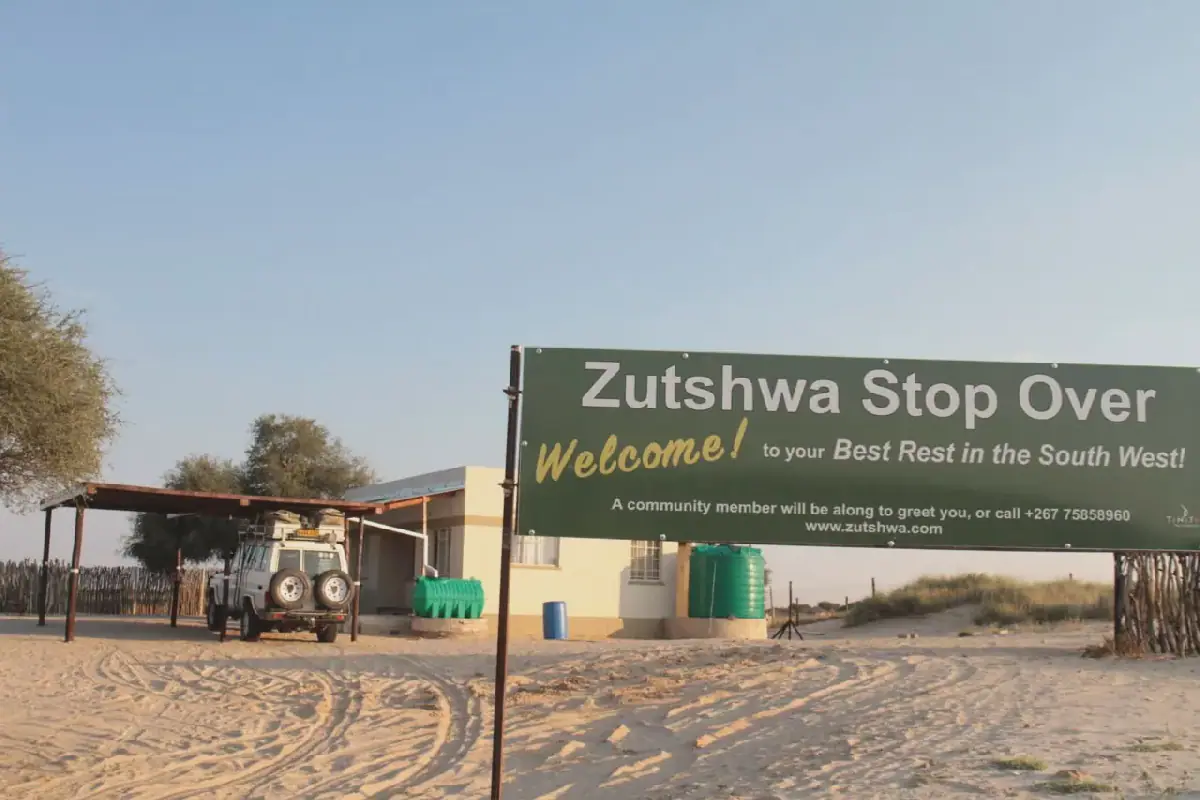
Residents of Zutshwa, a settlement in Botswana's Northern Kgalagadi, are grappling with a severe and persistent water crisis. The community's water woes stem from naturally hyper-saline groundwater, rendering underground water sources unhealthy for human or animal consumption. This has left residents in a state of chronic water distress, struggling to access this basic necessity. The situation has been exacerbated by an unreliable water supply, forcing the community to rely on water brought in from Ngwatle village, 56kms away.
The water shortage in Zutshwa has severe consequences for residents, with some households forced to go without water for days. This has turned the basic human need for drinking, cooking, and sanitation into a daily struggle for survival. Keeme Peelelo, a local youth resident, has firsthand experience of the water scarcity. She notes that while they appreciate efforts by local authorities to supply water from Ngwatle, it is not enough to sustain residents and their livestock. The community's reliance on water from Ngwatle has also led to instances where households go without water for extended periods when the borehole in Ngwatle breaks down.
The water crisis in Zutshwa has also had a devastating impact on the community's agricultural backbone. Small-scale livestock farmers in Zutshwa, already struggling with harsh desert temperatures and scarce grazing vegetation, are reporting financial losses due to the water crisis. Local livestock farmer Tshotlego Kgomo, who breeds cattle, goats, horses, and donkeys, says it is a challenge being a livestock farmer in Zutshwa. He is forced to foot the bill to buy water for his livestock on a monthly basis, which has become unsustainable.
Kgomo's struggles are a stark reminder of the economic impact of the water crisis in Zutshwa. He is considering selling all his animals and starting a business that will not cost him as much as this one. The financial strain of buying water for his livestock has taken a toll on his livelihood, highlighting the need for sustainable solutions to the community's water crisis. The situation in Zutshwa underscores the importance of addressing the root causes of the water shortage to mitigate its impact on residents and the local economy.
In response to the water crisis in Zutshwa, Tanate Sustainable Development has implemented interventions aimed at providing practical relief to the community. The organization's Director of Conservation and Community Development, Mompoloki Morapedi, explains that their work in Zutshwa has focused on providing local water projects and infrastructure support to help the community access water. One such initiative is the rain harvest water project, which aims to capture rainwater by any means possible.
The rain harvest water project involves connecting Jojo tanks to the roofing of buildings in Zutshwa, such as the salt mine, to collect rainwater. Tanate has already purchased four 5000-liter Jojo tanks as part of this initiative. Depending on the availability of funds, the organization plans to start a water conservation program in the area to encourage residents to proactively conserve water and preserve water infrastructure for the benefit of the community.
The Botswana Society for Human Development (BSHD) recently organized a field trip to Zutshwa as part of a specialized climate and biodiversity reporting fellowship for local journalists. The trip aimed to strengthen reporting on biodiversity loss, environmental degradation, and sustainable solutions. The visit highlighted the severity of the community's water crisis and the need for collaborative efforts to address this challenge. Key stakeholders, including local authorities and NGOs, must work together to find sustainable solutions to Zutshwa's water crisis.
Key points
- The water crisis in Zutshwa is caused by hyper-saline groundwater and an unreliable water supply.
- Residents of Zutshwa rely exclusively on water brought in from Ngwatle village, 56kms away.
- Tanate Sustainable Development has implemented a rain harvest water project to help alleviate the water crisis in Zutshwa.