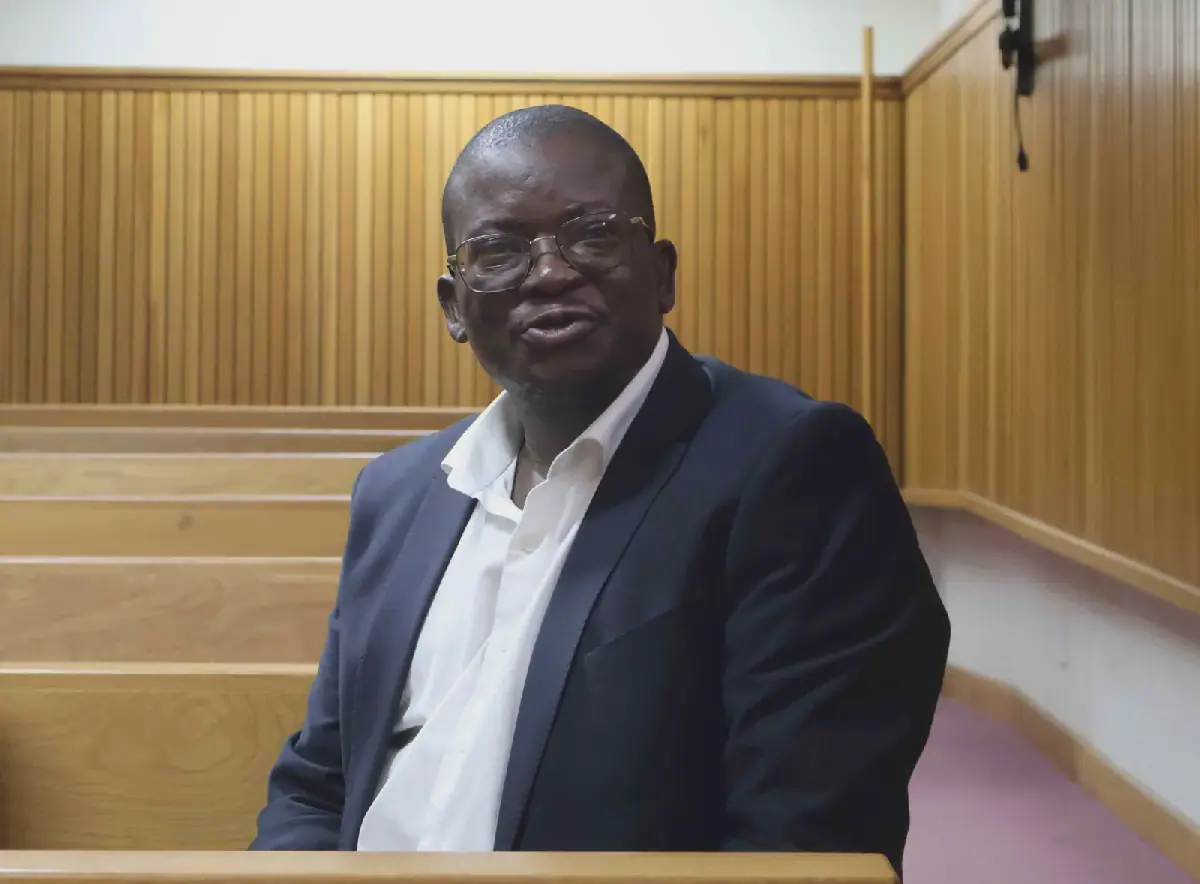
The Crown has cited a social media audio recording as justification for concealing the identities of some witnesses in the murder trial of Mashumi Shongwe. The recording, which went viral, allegedly contains a request to eliminate witnesses. Prosecuting Counsel Ngcebo Lukhele told the High Court that the prosecution had information suggesting some witnesses faced potential danger.
Shongwe, charged with murdering his wife, Tigezile Magongo, a police officer, appeared in court for the start of his trial. Magongo was shot at their home in Nhlangano on November 30, 2022. Lukhele explained that the prosecution had obtained the audio recording through open-source intelligence. The recording features a speaker requesting a traditional healer to eliminate witnesses and a High Court judge.
The prosecution's submission arose during arguments over statements served on the defence, some of which had been redacted to conceal witness identities and addresses. Lukhele said the Crown would file an application seeking authority from the court to redact the statements. The defence would respond before the matter proceeded. Judge Sabelo Masuku directed that the case return on November 3, 2026.
The trial had been scheduled to proceed, but Lukhele informed the court that the defence had received two statements the previous day and needed time to study them and consult Shongwe. The statements were obtained outside Eswatini, and protocols had to be followed in sourcing material from South African counterparts. Shongwe's attorney, Ben J Simelane, indicated that he needed time to examine the statements and consult his client.
Simelane objected to the prosecution's practice of serving statements in instalments and redacting identifying information without court permission. He argued that the redactions could interfere with Shongwe's ability to challenge witnesses' credibility and confront them with previous inconsistent statements. Simelane referred to the case of Phindile Gwebu, which established that an accused person or their legal representative was generally entitled to the contents of a police docket.
Simelane told Judge Masuku that Section 89 of the Criminal Procedure and Evidence Act requires statements to reflect witness information, such as names and addresses. Without identifying information, the defence could face difficulties establishing whether a witness appearing in court was the same person who made the statement. Judge Masuku asked Simelane whether he had examined the statements served on the defence.
Lukhele reiterated that the redactions were intended to protect witnesses, citing exceptions that could justify withholding information. He claimed that some witnesses were in danger and that there had been communication involving the accused and one of the witnesses concerning the case. The court will consider the prosecution's application for redactions on November 3, 2026.
Key points
- The prosecution cited a social media audio recording as justification for concealing witness identities.
- The defence objected to the prosecution's practice of serving statements in instalments and redacting identifying information.
- The court will consider the prosecution's application for redactions on November 3, 2026.