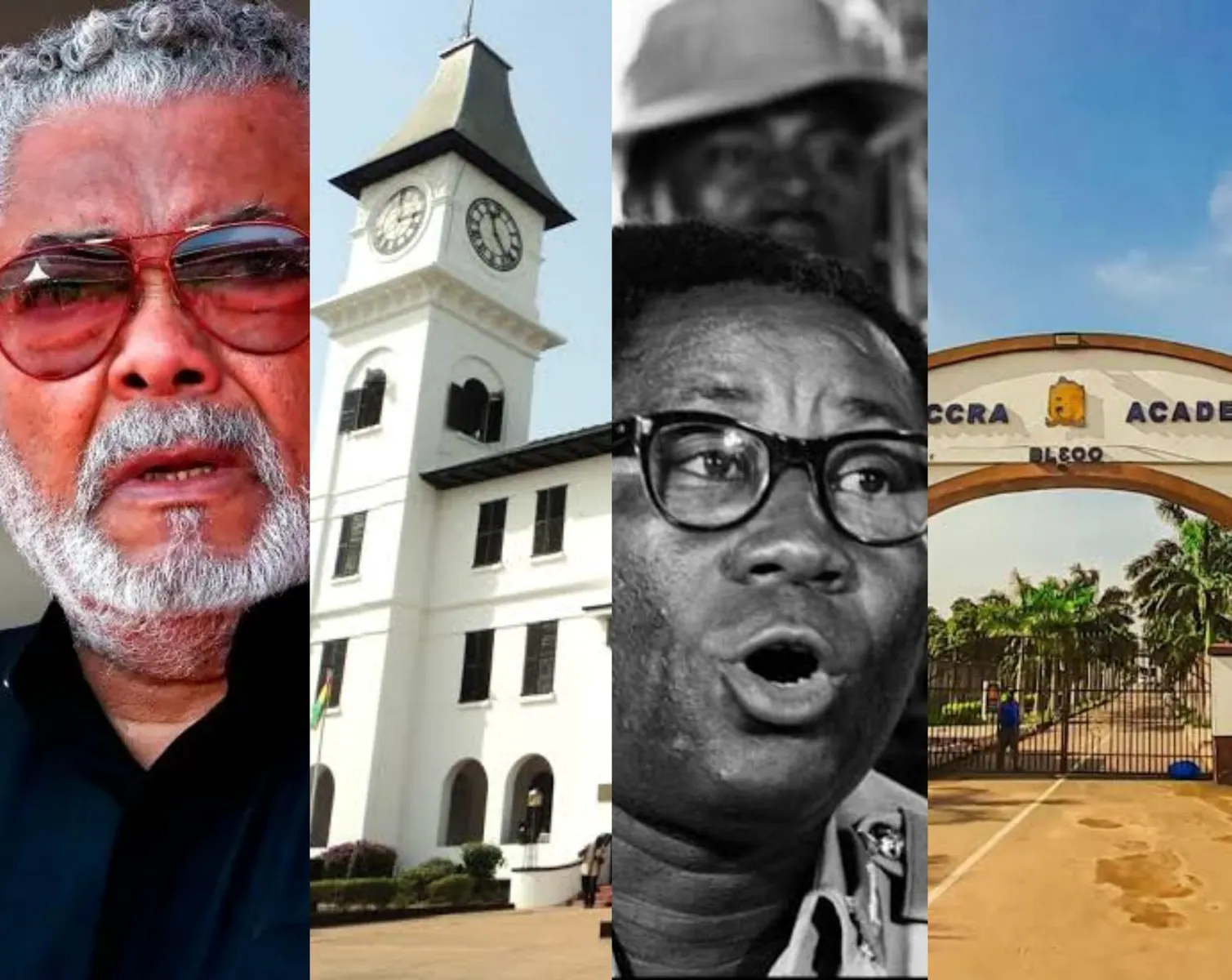
Achimota School in Accra, Ghana, has a notable connection to the country's leadership, with four of Ghana's presidents having attended the school. Kwame Nkrumah, Ghana's first president after the 1960 republic declaration, graduated from Achimota College in 1930. He later worked as a teacher and led the country to independence. Nkrumah's time at Achimota laid the foundation for his future in politics and governance. The school's influence on Ghana's leadership is a significant aspect of the country's history. Achimota's role in shaping Ghana's leaders is a topic of interest and discussion. The school's legacy continues to be felt in Ghanaian politics.
The list of Ghanaian presidents who attended Achimota School includes Edward Akufo-Addo, who served as president from 1970 to 1972. Akufo-Addo joined Achimota in 1929 and went on to study at St Peter's College, Oxford. His educational background at Achimota and Oxford prepared him for his future in politics and leadership. Jerry John Rawlings, who first seized power in 1979 and later led the country as an elected president under the Fourth Republic, also completed his secondary schooling at Achimota. Rawlings' time at Achimota was a crucial part of his early life and education.
John Evans Atta Mills, president from 2009 until his death in July 2012, was likewise an Achimota graduate. The fact that four Ghanaian presidents attended Achimota School highlights the school's significant impact on the country's leadership. Since Ghana became a republic in 1960, the country has had 12 post-monarchy heads of state. Of those 12, four passed through Achimota's gates alone. This pattern is striking given how few schools account for so much of Ghana's political history. Achimota's influence on Ghana's leadership is a notable phenomenon.
Beyond Achimota, other schools recur in the biographies of Ghana's leaders. John Agyekum Kufuor, president from 2001 to 2009, attended Prempeh College in Kumasi. Akwasi Amankwaa Afrifa, head of state from 1969 to 1970, went through Adisadel College in Cape Coast. Joseph Arthur Ankrah, who took power after the 1966 coup, was educated at Accra Academy in Accra. These schools, like Achimota, have a connection to Ghana's leadership and governance. The educational backgrounds of Ghana's leaders are diverse, yet some schools stand out.
Not every leader followed the same path. Hilla Limann, president during the Third Republic before being overthrown in 1981, attended Tamale Secondary School, now Tamale Senior High School. Current President John Dramani Mahama, who first took office in 2012 and returned to the presidency in January 2025, also attended a school in Tamale — Ghana Secondary School — before studying history at the University of Ghana. Nana Akufo-Addo, president from 2017 to 2025, stands out as the only leader on the list to have completed secondary education abroad, at Lancing College in Sussex, England.
The concentration of leaders from a handful of schools feeds into ongoing conversations in Ghana about access to quality secondary education and whether it still shapes who rises to national leadership. The issue of access to quality education is a pressing concern in Ghana. The country's education system plays a significant role in shaping the future of its leaders. Achimota's role in producing national leaders is a topic of discussion and debate.
Pulse ghana's list does not indicate whether any timeline exists for further research or official recognition of these schools' role in producing national leaders. No government or educational body has announced plans tied to the findings. The list provides valuable insights into the educational backgrounds of Ghana's leaders and highlights the significance of Achimota School in shaping the country's leadership.
Key points
- Four Ghanaian presidents attended Achimota School.
- Achimota School has a significant impact on Ghana's leadership.
- The concentration of leaders from a handful of schools raises concerns about access to quality secondary education.