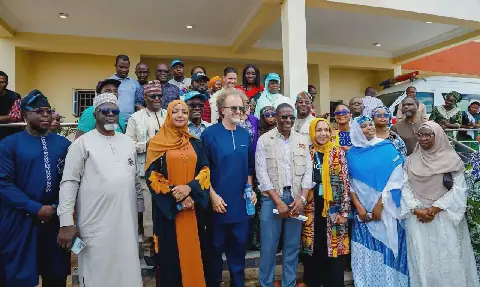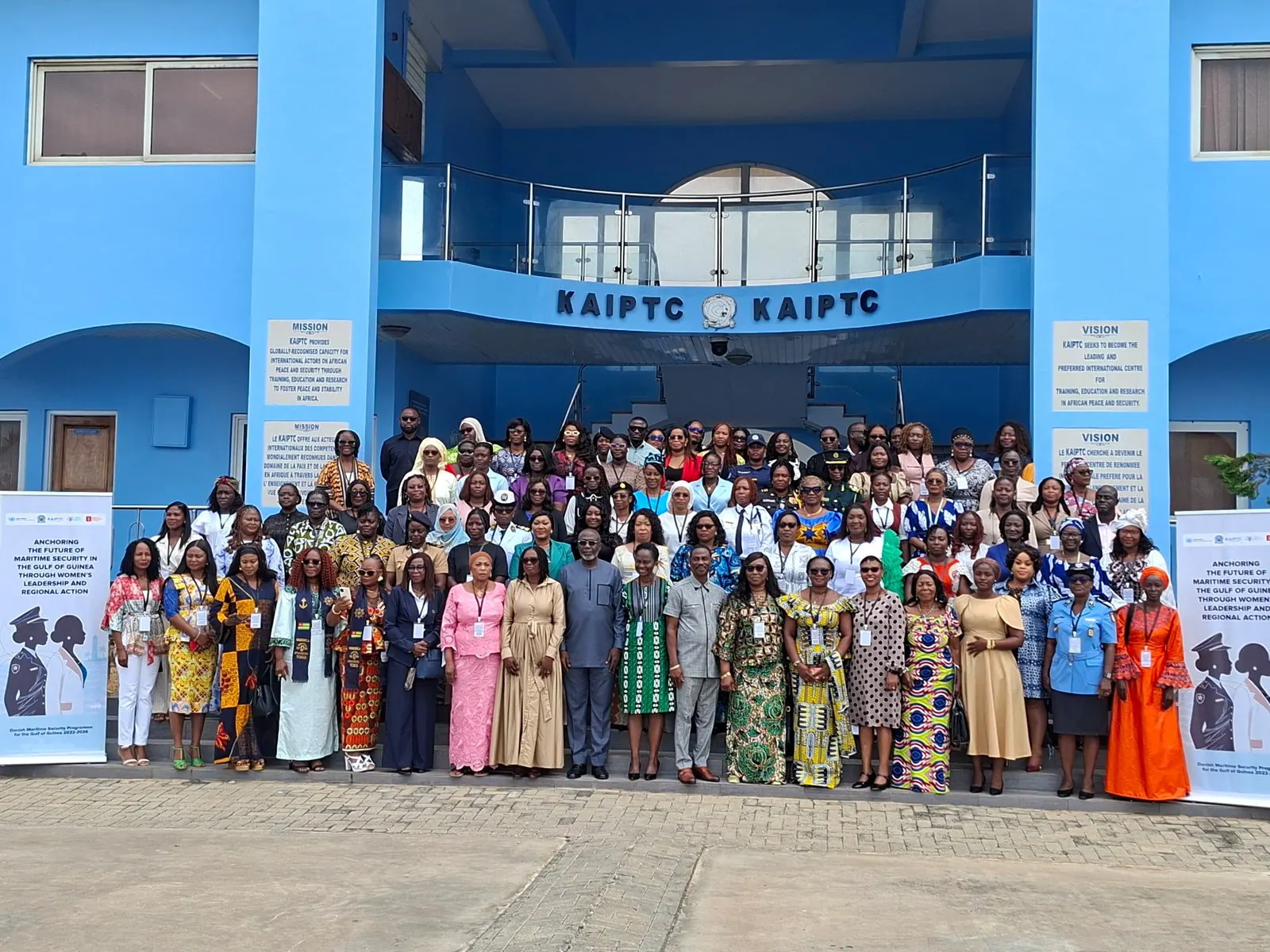
Delegates from West and Central Africa converged in Accra this week for a conference centered on the role of women in maritime security. The Second Women in Maritime of West and Central Africa (WIMOWCA) Regional Conference on Women, Peace and Security opened on 25 September 2026. The event, held at the Kofi Annan International Peacekeeping Training Centre (KAIPTC), was organized by WIMOWCA in partnership with the United Nations Office on Drugs and Crime (UNODC) and supported by the Government of Denmark.
The conference aims to strengthen women's representation in maritime institutions and embed gender-responsive approaches into maritime governance and security. WIMOWCA's Regional President, Sylvia Asana Owu, stated that sustainable maritime security is unlikely without more women in leadership and decision-making roles. She emphasized that maritime crimes such as piracy, trafficking, and illegal fishing demand tighter collaboration between governments, security agencies, and development partners.
Denmark's Ambassador to Ghana, Jacob Linulf, commended WIMOWCA and UNODC for building a platform that advances women's leadership in the sector. He described greater female participation in maritime governance as both a development and a security imperative. The Gulf of Guinea remains vital to international trade and economic development, making regional cooperation essential to tackling mounting maritime security threats.
Ghana's coastal economy relies heavily on fisheries, port trade through Tema and Takoradi, and shipping traffic through the Gulf of Guinea. The waters are one of Africa's most valuable maritime resources, underpinning trade, fisheries, and economic growth. However, they continue to face threats from piracy, human trafficking, and illegal, unreported, and unregulated fishing.
Eric Tetteh-Addison, Director of Policy Planning at the Ministry of Transport, reaffirmed Ghana's commitment to regional efforts to improve safety in the Gulf of Guinea. He stressed that no single nation can address these challenges alone and called for wider inclusion of women in maritime security institutions. Women already play vital roles in fisheries, coastal trade, and maritime communities yet remain underrepresented in leadership positions.
The conference was expected to validate a regional action plan, strengthen institutional partnerships, and launch a regional maritime mentorship initiative for women professionals. Discussions also focused on promoting inclusive workplaces in shipping, ports, fisheries, and maritime law enforcement. The event forms part of a busier calendar of maritime security engagements hosted by Ghana this year.
The conference aimed to produce key recommendations to address maritime security challenges in the region. The outcomes of the conference are expected to contribute to the development of effective strategies for securing the Gulf of Guinea. The involvement of women in maritime security is seen as a crucial element in addressing the complex challenges facing the region.
Key points
- Women's leadership is crucial in addressing maritime security challenges in the Gulf of Guinea.
- The conference aimed to strengthen women's representation in maritime institutions and embed gender-responsive approaches into maritime governance and security.
- The event was organized by WIMOWCA in partnership with the United Nations Office on Drugs and Crime (UNODC) and supported by the Government of Denmark.