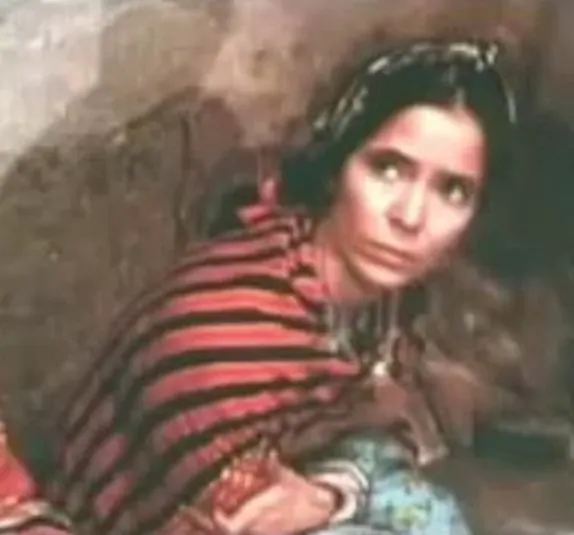
Marie-José Nat, a renowned French-Algerian actress, has died at the age of 79 in a Paris hospital. Born Marie-José Benhalassa on April 22, 1940, in Bonifacio, Corsica, she was the daughter of an Algerian father from Kabylie and a French mother. Nat's impressive career in French cinema spanned several decades, during which she appeared in numerous films that showcased her talent. Her legacy in the film industry is marked by her memorable performances.
Nat's breakthrough role came in 1956 when she was cast in 'Crime et Châtiment' by director Georges Lampin, alongside Bernard Blier. Her first major role was in 'Rue des prairies' (1960), directed by Denys de La Patellière. Her collaboration with director Michel Drach, whom she later married, marked a significant turning point in her career. The couple had a son together, and Nat appeared in several of Drach's films, including 'Safaris diamants,' 'la bonne occase,' and 'Amélie ou le temps d’aimer.'
Throughout her career, Nat demonstrated her versatility as an actress, taking on a wide range of roles in various films. In 1970, she starred in Michel Drach's 'Elise ou la vraie vie,' followed by 'Les violons du bal' in 1974, for which she received the Best Female Interpretation award at the Cannes Film Festival. Her performance in 'L'Opium et le bâton' (1971), directed by Ahmed Rachedi, as Feroudjia, showcased her connection to her Kabyle heritage.
Nat's filmography includes other notable films such as 'Dis-moi que tu m’aimes' (1974) and 'Le Passé simple.' Her last film appearance was in 'Le cadeau d’Elena' (2003), directed by Frédéric Graziani. After retiring from cinema, Nat returned to her first love, theater. She had been married to Serge Rezvani, a composer and songwriter, since 2005 and had been living a quiet life in Corsica.
Marie-José Nat's passing has been met with tributes from the film industry, acknowledging her significant contributions to French cinema. Her legacy as a talented actress will be remembered through her extensive body of work. Born to a Kabyle father and French mother, Nat's unique heritage influenced her performances and endeared her to audiences worldwide.
Nat's early life in Bonifacio, Corsica, and her subsequent move to Ajaccio, laid the foundation for her future in the arts. She began her career in cinema with a small role in a photo novel before attending the prestigious Cours Simon in Paris. Her talent was soon recognized by prominent directors, leading to her successful film career.
The French-Algerian actress is survived by her husband, Serge Rezvani, and her legacy in the film industry. Marie-José Nat's remarkable journey, marked by her passion for cinema and her connection to her heritage, has left an indelible mark on French cinema. Her performances continue to inspire new generations of actors and filmmakers.
Key points
- Marie-José Nat died at 79 in a Paris hospital, leaving behind a legacy in French cinema.
- She was known for her role as Feroudjia in 'L'Opium et le bâton' and won the Best Female Interpretation award at the 1974 Cannes Film Festival for 'Les violons du bal.'
- Nat's film career spanned several decades, during which she appeared in numerous films that showcased her talent and versatility as an actress.