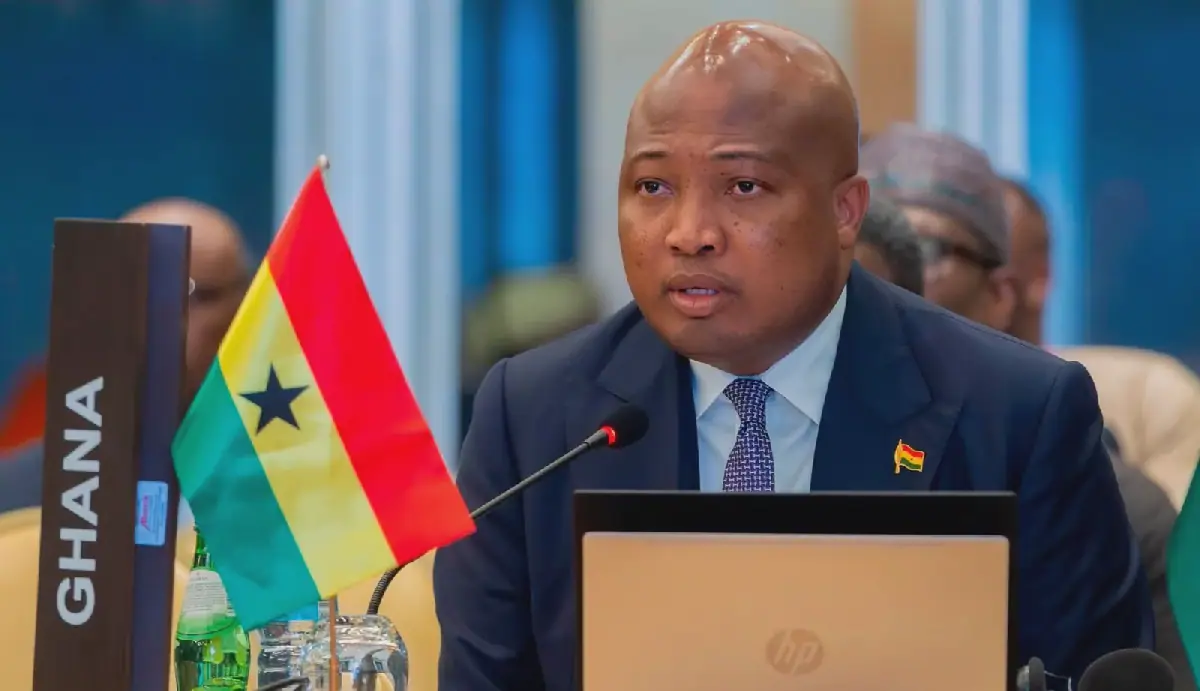
Ghana's Minister of Foreign Affairs, Samuel Okudzeto Ablakwa, has urged Commonwealth member countries to push for reforms in the global financial architecture. He made the call at the Commonwealth Foreign Ministers' Roundtable in St. John's, Antigua and Barbuda. The goal is to address systemic inequalities faced by developing countries, particularly in the Global South. Ablakwa emphasized the need for collective action to build a stronger and more responsive Commonwealth.
Ablakwa highlighted that African countries face disproportionately high borrowing costs. Access to credit is more than eight times as expensive as that available to countries in the Global North. This situation worsens the continent's debt burden and constrains development. He noted that the global financial system is structurally skewed against developing economies. Sovereign credit ratings and high-risk premiums contribute to borrowing costs and limit Africa's ability to attract investment.
The Minister referenced the Highly Indebted Poor Countries (HIPC) Initiative introduced in 2000. Despite the debt relief achieved, many African countries have returned to similar debt difficulties barely two decades later. Ablakwa stressed that fundamental reforms are needed to enable African countries to mobilize affordable capital for infrastructure, education, healthcare, industrialization, and job creation. This is crucial for creating sustainable economic opportunities for young people, given Africa's youthful population, with a median age of 19.
Ablakwa expressed Ghana's support for the Bridgetown Initiative, championed by Barbados. He urged the Commonwealth to prioritize proposals to reform the international financial system and improve access to development financing. He also called for greater resource sovereignty, urging African countries to move beyond extracting and exporting raw materials towards local value addition and industrialization. This approach is in line with President John Dramani Mahama's Accra Reset Initiative.
The Minister cited growing global demand for critical minerals, particularly those needed for artificial intelligence and other emerging technologies. This presents significant opportunities for Africa but also carries risks. Ablakwa cautioned against partnerships that prioritize access to the continent's resources without guaranteeing commensurate benefits. Such arrangements could perpetuate historical patterns of exploitation. He emphasized the need for engagements with international partners to promote local processing, technology transfer, industrialization, and employment creation.
Ablakwa also addressed governance, urging Commonwealth countries to prioritize local government reforms in response to rapid urbanization challenges. Ghana is undertaking constitutional reforms to ensure that local government officials are elected rather than appointed. This aims to deepen democracy and strengthen grassroots participation. The proposed reforms would give citizens greater influence over decisions affecting their communities, including the management of local resources.
The Minister commended the Commonwealth Parliamentary Association for supporting Ghana in capacity building and strengthening parliamentary institutions. He reaffirmed Ghana's commitment to working with Commonwealth partners to advance shared development priorities through equitable partnerships, democratic governance, and mutual respect. Ablakwa's call for action emphasizes the need for collective efforts to address global financial inequalities and promote sustainable development.
Key points
- - Ablakwa calls for global financial reforms to address systemic inequalities faced by developing countries. - He urges Commonwealth countries to prioritize local government reforms in response to rapid urbanization challenges. - The Minister emphasizes the need for greater resource sovereignty and local value addition in Africa.