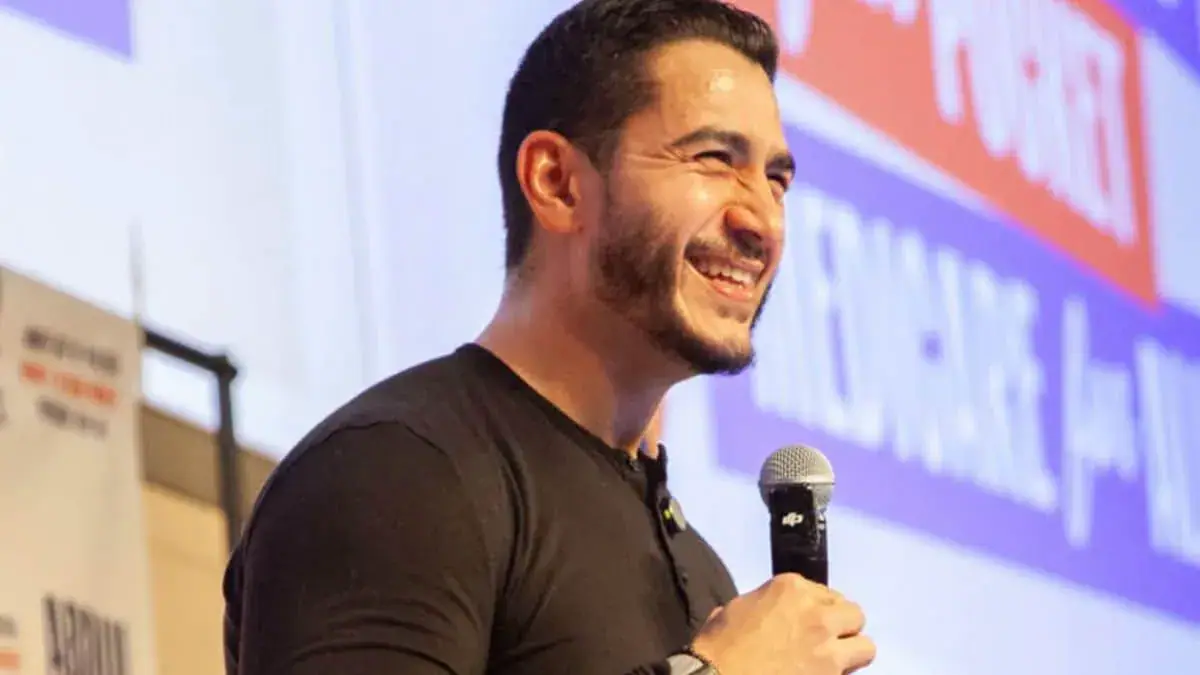
In a historic midterm election, Democrat Abdul El-Sayed has won the Michigan Senate seat, becoming the first Muslim to serve in the US Senate. El-Sayed, a 42-year-old doctor of Egyptian origin, secured 52.52% of the votes, defeating his Republican rival Mike Rogers who garnered 45.48%. This significant victory marks a milestone for Muslim representation in US politics.
El-Sayed's win is seen as a significant upset, despite last-minute support from Democrat Haley Stevens for Republican Mike Rogers. El-Sayed, a vocal pro-Palestinian and critic of US support for Israel, ran on a left-wing platform, aligning with the growing progressive movement within the Democratic Party. His campaign was not without controversy, as he faced a fierce backlash from President Donald Trump, who labeled him a "jihadist".
As a medical doctor and director of Detroit's health department since 2015, El-Sayed brings a unique set of skills to the Senate. His entry into politics is part of a broader trend of left-wing candidates gaining traction in the US. This shift was also seen in the election of Zohran Mamdani as mayor of New York, reflecting a growing appetite for progressive politics.
The midterm elections saw a significant shift in control of Congress, with Democrats reclaiming both the House of Representatives and the Senate. The Democratic Party now holds 54 Senate seats, including seven new gains, while the Republicans have 44 seats. In the House of Representatives, Democrats secured 228 seats, compared to 139 for the Republicans.
The outcome of the midterm elections has significant implications for President Trump's legislative agenda, as the Democratic-controlled Congress can now act as a check on his policy initiatives. The Senate also has the power to launch investigations, further limiting the President's maneuverability. Many observers have characterized the election as a "vote of sanction", reflecting widespread concerns about the economy and US foreign policy.
El-Sayed's campaign was marked by significant opposition from powerful lobbies, including the American Israel Public Affairs Committee (AIPAC), which spent millions of dollars attempting to block his candidacy. Despite this, El-Sayed persevered, leveraging his grassroots support to secure a narrow victory. His success has been hailed as a milestone for Muslim-American representation in politics.
The election outcome has sparked reflection on the evolving US political landscape, with many analysts pointing to growing discontent with the current economic situation and US foreign policy. As the first Muslim US Senator, Abdul El-Sayed's victory marks an important moment in the country's ongoing conversation about identity, representation, and inclusivity.
Key points
- Abdul El-Sayed is the first Muslim to serve in the US Senate.
- El-Sayed's win reflects a growing trend of progressive candidates gaining traction in US politics.
- The midterm elections have significant implications for President Trump's legislative agenda.