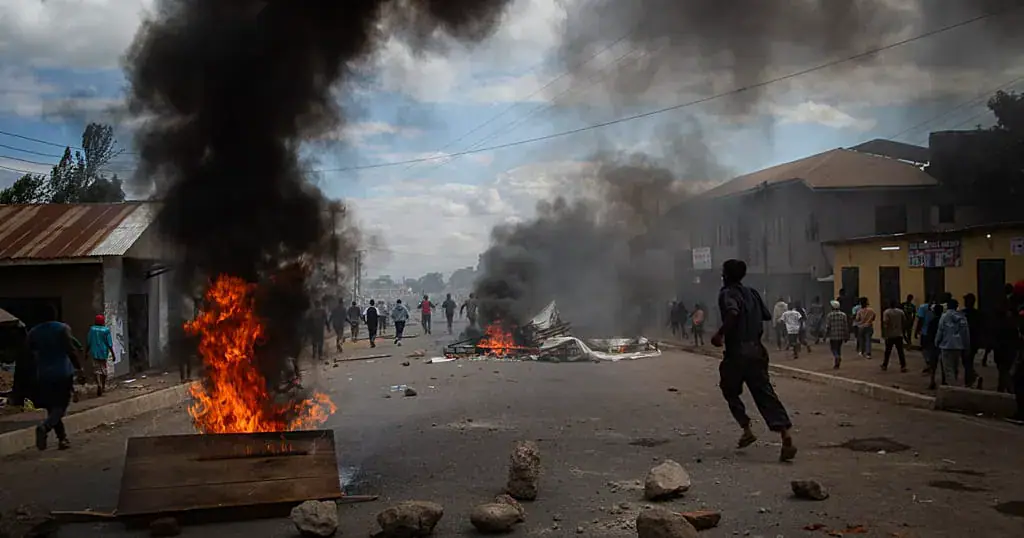
It's been a year since Tanzania's highly contested election, which saw President Samia Suluhu Hassan win with 98 percent of the vote amid opposition exclusion. The event triggered days of protests that security forces violently suppressed, resulting in significant bloodshed. According to rights groups and the opposition, thousands were killed, while a government-appointed commission reported 518 deaths. The violence left many traumatized and fearful of further repression.
For Twaha Bomeza, a 61-year-old resident of Dar es Salaam, life changed forever on election day when shrapnel lodged in his eye during a shootout between protesters and security forces. He now requires surgery he cannot afford and suffers from shortness of breath and constant headaches. Bomeza's experience is just one of many stories of victims still struggling to come to terms with the trauma they endured. His situation highlights the ongoing plight of those affected by the violence.
The Catholic Church held masses to honor the victims, while the main opposition party, Chadema, announced a seven-day mourning period. Chadema described Tanzania as a dictatorship that fails to uphold the rule of law or guarantee human rights. The party's statement reflects the concerns of many who feel that the government has not done enough to address the violence and its aftermath. The Church's commemoration serves as a reminder of the need for healing and accountability.
The streets of Dar es Salaam were quiet, with a heavy police presence, as the nation marked the anniversary of the election. Churchgoer Noela Kigosi expressed sadness, saying that Tanzania needs to learn that dialogue and negotiations are better than using massive force. Her sentiments echo those of many who believe that the government should prioritize peaceful resolution over repression. The somber mood in Dar es Salaam reflects the nation's ongoing struggle to come to terms with its recent past.
Tanzania has faced criticism from Western partners over the killings, with the US ambassador warning that they "will not be swept under the rug." President Hassan has responded by strengthening ties with Moscow, attending a Russia-Africa summit in Moscow this week. This diplomatic shift has raised concerns about Tanzania's relations with its Western partners and its approach to human rights. The government's response to criticism has been to emphasize its sovereignty and strategic interests.
The country is tense, with arbitrary arrests on the rise, and multiple analysts describe the situation as a "state of terror." The treason trial of opposition leader Tundu Lissu, whose verdict is due on November 6, is a potential flashpoint. Lissu began a hunger strike this week to demand access to his lawyer, highlighting the ongoing concerns about human rights and the rule of law. The case has significant implications for Tanzania's democratic future.
Critics argue that the government is trying to "deny and delete" its complicity in the massacre, using tactics such as silencing critics and instilling fear through counterterrorism laws. Amnesty International has criticized Tanzania for failing to hold those responsible to account, and many victims still carry visible reminders of the violence. The legacy of the election violence continues to haunt Tanzania, with many calling for justice and accountability.
Key points
- Many victims of the election violence remain traumatized and face continued repression.
- The government has been criticized for its response to the violence, including arbitrary arrests and silencing critics.
- The legacy of the election violence continues to haunt Tanzania, with many calling for justice and accountability.