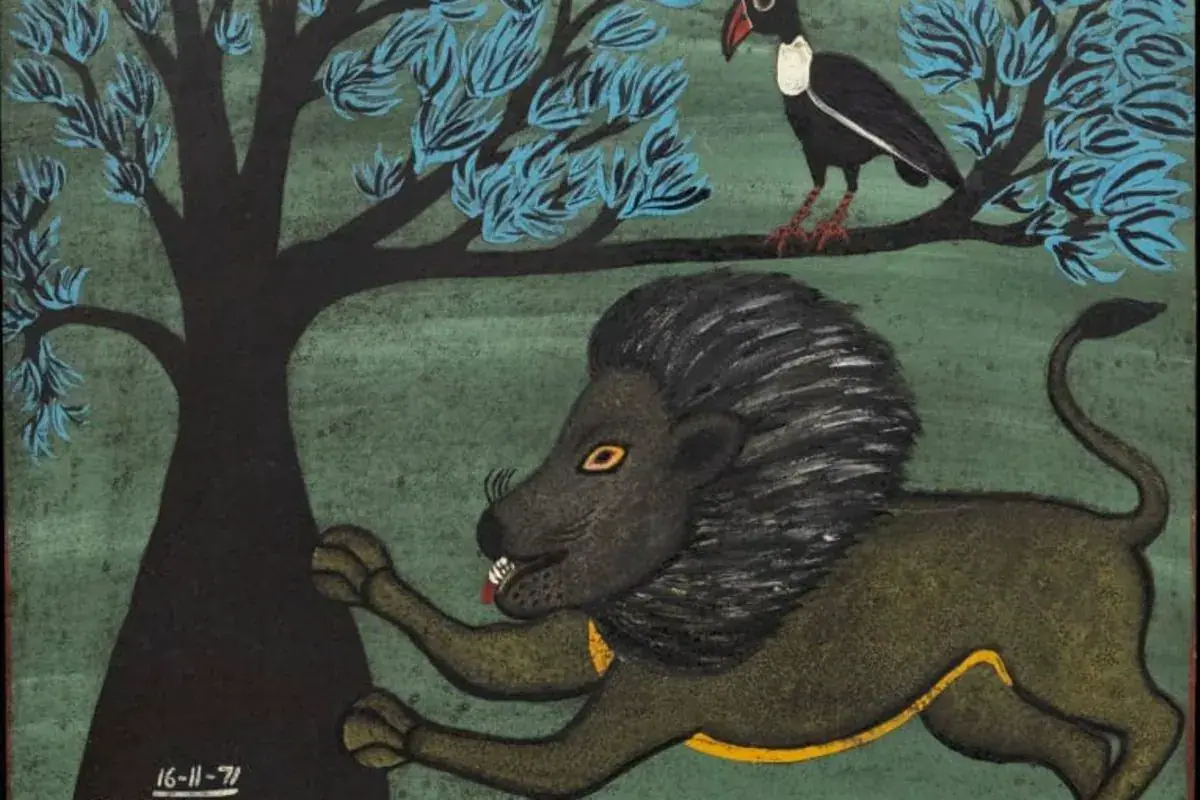
A painting created by one of Tanzania's most celebrated artists, Edward Saidi Tingatinga, has fetched millions of shillings at an auction in Nairobi. The artwork, titled Untitled (Landscape with Lion and Bird), was painted in 1971 and sold for KSh 7,631,000, approximately TSh 155 million, at the Art Auction East Africa sale held in Nairobi on October 28, 2026. The sale has put the spotlight on the growing financial value of Tanzanian art and the question of who benefits from it.
The painting was among the works featured in the 14th annual auction, organised by Art Auction East Africa in collaboration with South African auction house Strauss & Co. According to the auction catalogue, the square painting measures 58.5 by 58.5 centimetres, is made with enamel paint on board and bears the signature "E.S. Tingatinga 16-11-71". The work was offered from a private collection. Its final selling price was substantially above the pre-sale estimate of KSh 1.2 million to KSh 1.6 million.
Tingatinga's artistic career lasted only four years, from 1968 until his death in 1972, when he was shot dead at the age of 40. Yet, in that brief period, he developed a distinctive style that would become one of Tanzania's most recognisable artistic traditions. The auction house's catalogue recounts how Tingatinga initially used enamel bicycle paint on ceiling board to create affordable paintings that he could sell to make ends meet.
As Tingatinga's success grew, he trained friends and family members, first involving them in preparing painting boards and later teaching them to create their own works. The style subsequently developed into a wider art industry in Tanzania. Today, Tingatinga's name carries significance beyond the paintings themselves. It represents a recognisable artistic tradition that has travelled far beyond the country where it began.
Art Auction East Africa identifies Tingatinga as the most valuable artist in the sale's history. In 2019, one of his 1971 elephant paintings achieved KSh 5,635,200 at the auction, while the auction house says his animal paintings have appreciated more than sixfold over 13 years. The latest sale adds another chapter to that market history. However, the question remains about who benefits when the value of an artwork rises decades after its creation.
The growing value of an artist's work on the secondary market does not automatically mean that the artist, their family or the wider artistic community receives a share of that appreciation. The financial outcome depends on ownership, applicable rights and the terms of the transaction. For an artist whose influence helped shape a major Tanzanian art tradition, these questions extend beyond one painting and touch on how artistic legacies are documented and how rights are passed on.
The sale of Tingatinga's artwork raises broader questions about the relationship between private ownership and cultural heritage. As Tanzanian art appears in regional and international markets, questions arise about provenance, documentation, preservation and public access. Ensuring that the financial success of Tanzanian art also contributes to preserving the stories, rights and cultural heritage behind it has become a significant challenge.
Key points
- The painting sold for KSh 7.63 million at an auction in Nairobi.
- The artwork was created by Edward Saidi Tingatinga in 1971.
- The sale raises questions about who benefits from the growing value of Tanzanian art.