As the 2026 local government elections draw near, a sense of calm has settled over the country's political landscape. With just four editions of the Sunday Times remaining before the polls, it seems that the excitement and debate typically associated with elections are noticeably absent. Although posters are visible in some areas, they are not ubiquitous, and apart from a few staged events, there has been little discussion about the issues at stake.
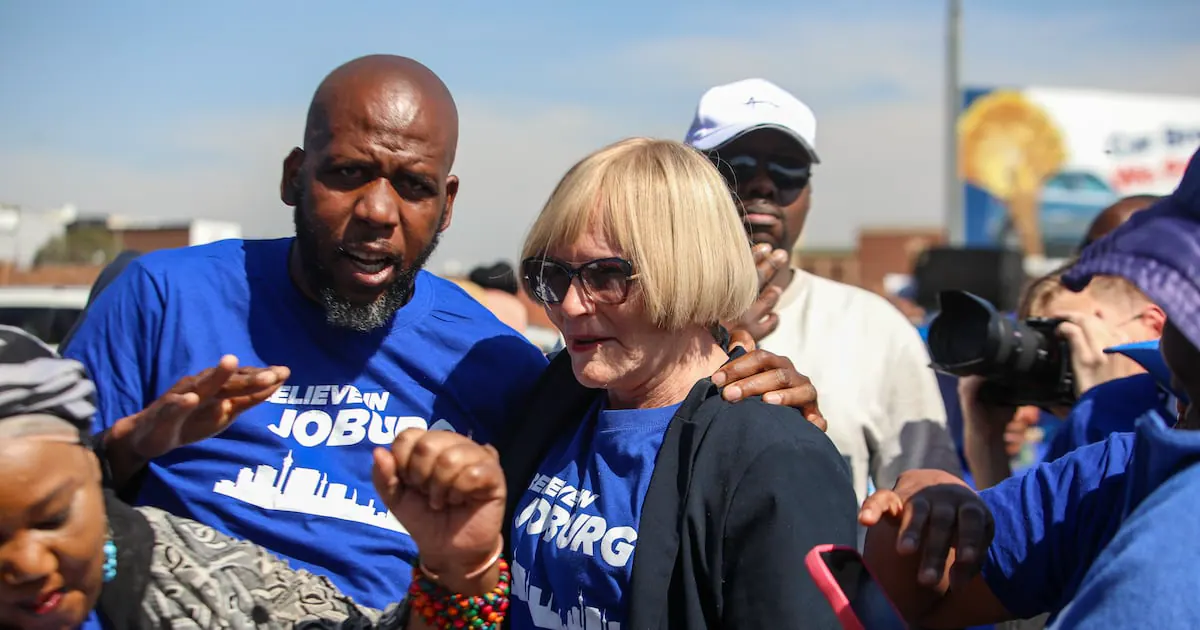
Helen Zille, a prominent figure in the Democratic Alliance (DA), has been a colourful presence in Johannesburg, but her efforts appear to be an isolated instance of energetic campaigning. This quiet atmosphere stands in contrast to the 2016 local government elections, which were seen as a referendum on the presidency of Jacob Zuma. The DA, led by Mmusi Maimane, secured its largest ever share of the national vote, garnering 26.9%.
This time around, with Geordin Hill-Lewis at the helm of the DA as mayor of Cape Town, there is little sense of the same level of enthusiasm or momentum. The country is currently led by President Cyril Ramaphosa, who is attempting to implement economic reforms but has struggled to unite his party. As a result, Ramaphosa has had to make concessions, leading to a chaotic situation, albeit one that lacks the intentional malfeasance of the Zuma era.
Despite the subdued atmosphere, there are still important questions to be answered in the upcoming elections. Will Zille succeed in winning Johannesburg for the DA, and if not, who will be her coalition partners? Can the ANC maintain its hold on cities like Bloemfontein or Nelson Mandela Bay? Additionally, will Zuma's MK party secure a significant victory in Durban (eThekwini), which would have significant political and economic implications?
The ANC's struggles under Ramaphosa have led to a wide-open race for the party leadership at the end of next year. Both Deputy President Paul Mashatile and ANC secretary-general Fikile Mbalula, who are seen as obvious candidates for the job, are currently facing challenges. Mashatile is reportedly unwell, while Mbalula has made a mess of registering ANC candidates for the November 4 elections, leading to a loss of support from his provincial backers.
Hill-Lewis, known for his relaxed leadership style, faces a significant test in the coming weeks. If he manages to achieve a respectable result, he may be well-positioned to succeed Ramaphosa in the future. Meanwhile, Mbalula, despite his occasional ineptitude, remains a popular and skilled operator within the ANC. The ANC that negotiates the creation of a new governing coalition after the 2029 general elections will be a very different entity from the one that exists today.
The ANC's national share of the vote has been trending downward, from 53.9% in 2016 to 45% in 2021. If this trend continues, the party may secure around 38% of the vote in the upcoming elections. The DA, which is standing in every ward in the country, needs to outperform Maimane's 26.9% share from 2016 to demonstrate its relevance and boost Hill-Lewis's prospects for the future. A strong showing by the DA could pave the way for a centrist coalition with the ANC, potentially bringing stability to the country's governance.
Key points
- The 2026 local government elections will be an important test for the DA and its leader, Geordin Hill-Lewis.
- The ANC's struggles under President Cyril Ramaphosa have created an opening for the party to reassess its leadership and direction.
- A centrist coalition between the ANC and DA could bring stability to South Africa's governance.