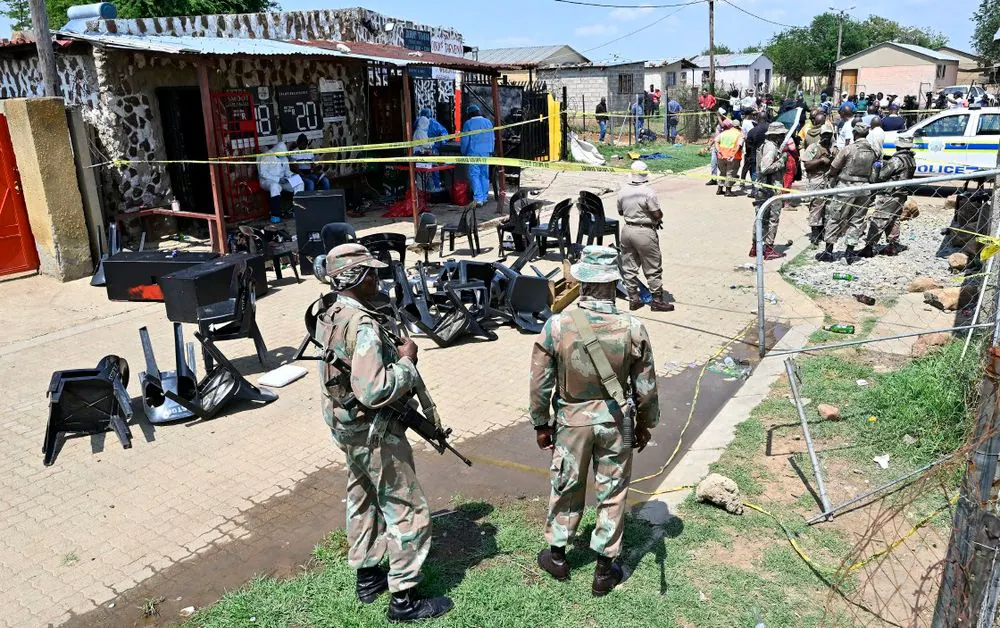
The recent mass shootings in Carletonville's Wedela township and Lwandle, Cape Town, that left 27 people dead within hours of each other, have once again exposed the state's inability to anticipate, prevent and respond effectively to violent crime. As the nation mourns, South Africans are confronted with a familiar cycle of condemnation, investigations, promises, and community participation. However, citizens are left asking why the state seems to arrive only after the blood has already been spilt.
The uncomfortable truth is that South Africa's violent crime crisis is increasingly becoming a failure of leadership, intelligence and accountability rather than simply a problem of criminality. Following the massacres, President Cyril Ramaphosa called for an "all hands on deck" approach, but crime prevention remains a constitutional responsibility of the state. Ordinary citizens do not become crime fighters when gunmen descend on a tavern or social gathering; they become victims.
The expectation that residents must compensate for weaknesses in policing, intelligence gathering and law enforcement capacity amounts to an abdication of state responsibility. The real question is not what happened after the gunmen opened fire, but what happened before the first shot was fired. This is where the spotlight must turn to Crime Intelligence, which is responsible for identifying threats before violence erupts.
Effective policing depends on intelligence systems that can identify threats before violence erupts. Mass shootings seldom occur in a vacuum and are often preceded by warning signs, threats, territorial disputes, retaliatory motives, gang rivalries, extortion, conflicts between organised crime groups, or information circulating through criminal networks. This raises uncomfortable but necessary questions about whether there were known disputes involving victims or suspects.
The purpose of intelligence is not merely to collect information, but to transform information into preventative action. Intelligence that does not prevent violence becomes little more than paperwork. South Africans are increasingly witnessing a model of policing that appears reactive rather than proactive, with criminals capable of identifying targets, planning attacks and evading capture with alarming ease.
The state should possess superior intelligence capabilities to criminal networks, but increasingly, the opposite appears true. The public is entitled to ask whether crime intelligence structures are sufficiently infiltrating criminal networks, analysing threats and converting information into operational interventions. The consequence is predictable: crime prevention gives way to crime reaction.
The failure is not confined to intelligence alone, but reflects a broader leadership crisis within the criminal justice system. Years of commissions of inquiry, oversight reports, and investigations have repeatedly exposed concerns about poor command decisions, political interference, corruption, fragmented intelligence structures, inadequate resource allocation, and declining operational discipline. Despite these recurring concerns, accountability remains elusive.
Key points
- South Africa's violent crime crisis is increasingly becoming a failure of leadership, intelligence and accountability.
- The state should possess superior intelligence capabilities to criminal networks.
- Meaningful accountability at senior levels remains rare in South Africa's criminal justice system.