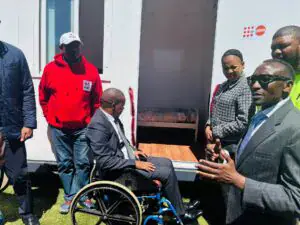
For decades, women in Masuoaneng, a rural community in Lesotho's southeastern highlands, woke up at 3 a.m. to fetch water from springs often contaminated by animals. The long and arduous journey, which sometimes ended in disappointment, has come to an end with the rehabilitation of a potable water system. The project, valued at M250 000, was made possible through the Lesotho Lowlands Rural Water Supply and Sanitation (LLRWSS) project.
The water crisis in Lesotho is a paradox. Despite being a water-rich country, with an average rainfall that far exceeds national demand, many communities lack access to clean water. The country exports approximately 780 million cubic meters of water to South Africa annually, but 97 percent of urban residents and only 80 percent of rural residents have access to improved water sources. National coverage for safely managed drinking water stands at just 31 percent.
The situation in Qacha’s Nek, where Masuoaneng is located, is particularly dire. The district is one of Lesotho’s most environmentally fragile and socio-economically disadvantaged. In 2024, local authorities launched a critical water assessment as shortages and rationing gripped several villages. The El Niño-induced drought of 2024 exacerbated the problem, drying up wells and devastating harvests.
The Regeneration of Landscapes and Livelihoods (ROLL) initiative, implemented by the Ministry of Environment and Forestry, aims to address the interconnected crises of land degradation, climate vulnerability, and rural poverty. The project’s development objective is to ensure that rural communities adopt transformational practices for regenerated landscapes and sustainable livelihoods.
The rehabilitation of the potable water system in Masuoaneng is part of ROLL’s efforts to provide reliable water access to rural communities. The project is underpinned by four outcomes, including changes in resource-use practices, reduction of environmental degradation, improved livelihoods, and the establishment of a facility and a fund to sustain integrated catchment management.
Community members in Masuoaneng have actively engaged in wetland conservation, deferred grazing, and gully stabilisation, which are essential for protecting the catchments from which their water flows. Minister of Environment and Forestry, Thabo Mofosi, stressed the importance of conserving and protecting pastures, which serve as vital water sources.
The handover of the rehabilitated water system marks a significant milestone in the journey towards water security in Masuoaneng. While progress has been made, much work remains to be done to address the water crisis in Lesotho, where millions of people still lack access to safe drinking water.
Key points
- The rehabilitation of the potable water system in Masuoaneng was made possible through the Lesotho Lowlands Rural Water Supply and Sanitation (LLRWSS) project.
- Lesotho exports approximately 780 million cubic meters of water to South Africa annually, despite having a significant domestic water gap.
- The Regeneration of Landscapes and Livelihoods (ROLL) initiative aims to address the interconnected crises of land degradation, climate vulnerability, and rural poverty in Lesotho.