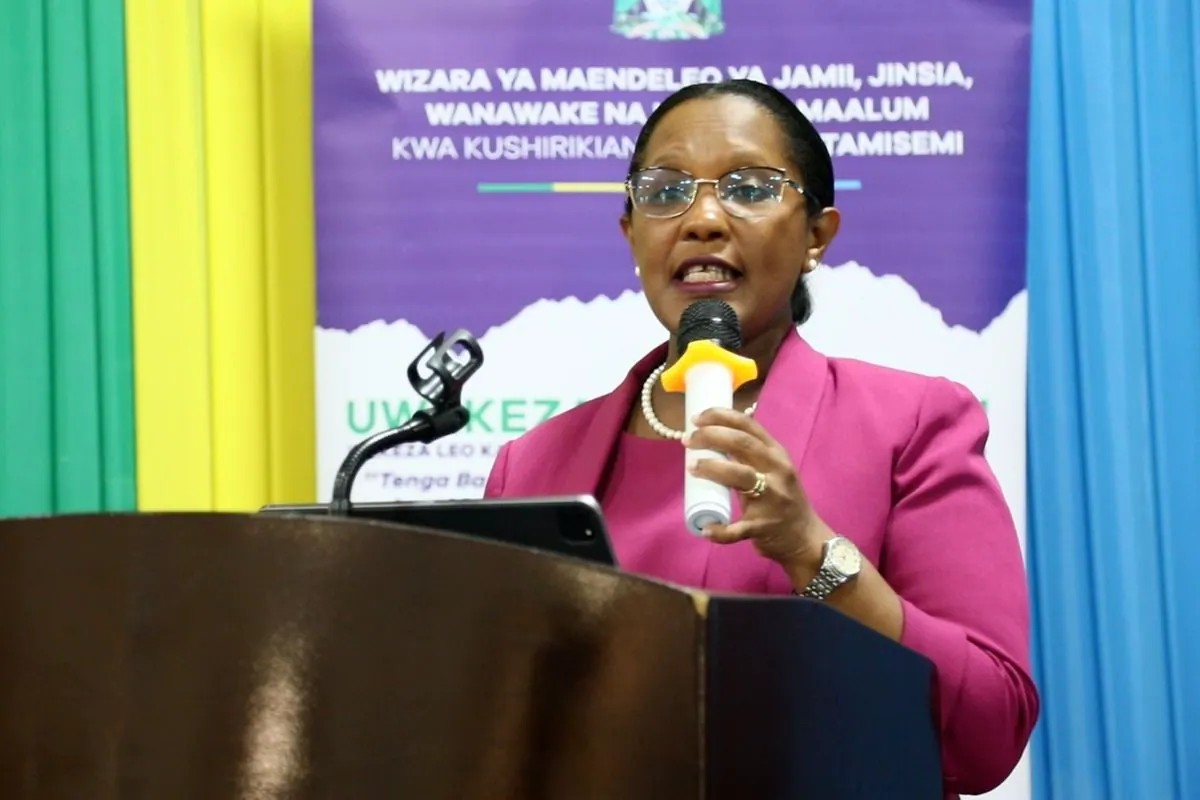
The Tanzanian government has raised concerns that approximately 8.5 million children in the country are at risk of failing to reach their full development potential. This warning was issued by Deputy Permanent Secretary in the Prime Minister's Office Regional Administration and Local Government (PMO-RALG), Prof Tumaini Nagu, in Dodoma on Friday, September 25, 2026. According to Prof Nagu, 53 percent of children aged two to four are at risk of impaired development, which could have long-term effects on their lives, including their future earning potential.
The 2022 TDHS-MIS survey revealed that 53 percent of children aged between two and four are at risk of failing to reach their full development. With an estimated 16 million children in Tanzania, representing 27 percent of the population, this issue is a significant concern for the government. Prof Nagu cited poverty, low levels of education, inadequate housing, and poor availability of care and early development services as key drivers of this challenge. She emphasized that the consequences of not meeting a child's needs in early stages can persist into adulthood, affecting their average income and increasing the likelihood of perpetuating the cycle of poverty.
Prof Nagu stressed that investment in early care, nurturing, and development is crucial and requires a collaborative effort from families, communities, the government, and various institutions. Citing a 2018 World Health Organization (WHO) study, she noted that every $1 invested in integrated early care and development interventions can yield up to $17. The Deputy Permanent Secretary urged parents to cooperate in providing safe environments and services that enable children to reach their potential, emphasizing that good parenting starts within the family.
Ms Felister Mdemu, Deputy Permanent Secretary in the Ministry of Community Development, Gender, Women and Special Groups, echoed Prof Nagu's sentiments, stating that robust investment in early childhood care, nurturing, and development is essential for implementing the National Development Vision 2050. She emphasized that cooperation should be measured by the number of children reached, the quality of services they receive, and the development they achieve, rather than just the number of meetings held.
Mr Lazaro Ernest, representing the Director of the Tanzania Early Childhood Development Network (TECDEN), noted that no single sector can raise a child alone, as a child's development involves health, education, nutrition, protection, and social welfare. He stressed the importance of a joint framework that enables various institutions to provide services from a broad perspective. The meeting discussed milestones achieved, existing challenges, and areas requiring strengthening to ensure children receive essential services in early life stages.
The mid-year review meeting on the implementation of the National Integrated Early Childhood Development Programme (NIECDP) brought together stakeholders to assess progress and identify areas for improvement. Prof Nagu represented the Minister of State in the PMP-RALG, Prof Riziki Shemdoe, in closing the meeting. The NIECDP aims to promote early childhood development and provide essential services to children.
The government is working to address the challenges facing early childhood development in Tanzania. Key stakeholders, including parents, communities, and institutions, must work together to provide children with safe environments and essential services. By prioritizing investment in early care and development, Tanzania can mitigate the risks of impaired development and ensure that its children reach their full potential.
Key points
- 53 percent of Tanzanian children aged two to four are at risk of failing to reach full development.
- Investment in early care and development can yield significant returns, with every $1 invested potentially yielding up to $17.
- Collaboration between families, communities, the government, and institutions is crucial for promoting early childhood development in Tanzania.