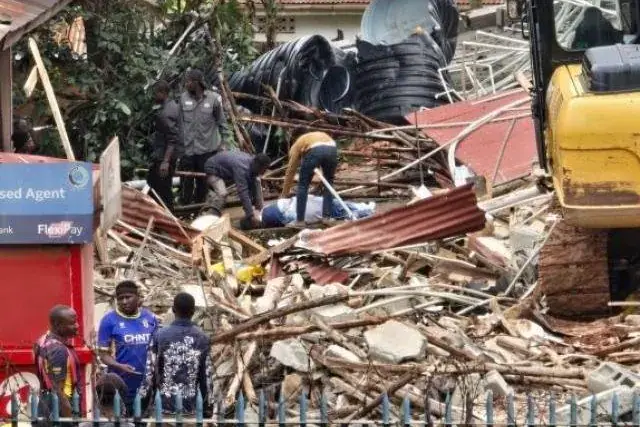
A recent report by the National Building Review Board (NBRB) has revealed that a significant majority of inspected buildings in Uganda fail to meet required construction standards. According to Eng. Flavia Gutto Bwire, NBRB Executive Secretary, only 25% of 11,492 building developments inspected across the country during the financial year ending June 30, 2025, complied with the required standards. This leaves 75% of inspected buildings non-compliant, raising concerns about public safety and the effectiveness of building regulation.
The low compliance levels are attributed to weak enforcement by local governments, inadequate staffing and funding, fragmented building approval processes, and the failure of local authorities to fully constitute building committees responsible for supervising construction activities. An assessment of 102 building committees established at district and urban local government levels found that only 12% were fully constituted, while 82% were partially constituted, and 6% had not been constituted at all.
The NBRB has been working to improve building regulation and safety in Uganda since its establishment in 2020. Despite progress, including a reduction in building collapses and associated deaths, fire outbreaks have emerged as a major challenge. Investigations by the Board indicate that 67% of fires were caused by arson, which is largely outside the scope of engineering regulation. Public awareness campaigns on safety measures have contributed to a reduction in fire-related deaths.
To improve compliance, the NBRB has developed a strategic plan focusing on digitizing building approval and inspection processes. The Board has onboarded 130 building committees onto its digital systems and audited 102 committees during the previous financial year. A geographical information system (GIS)-based compliance monitoring tool has also been developed to help authorities track construction activities across the country.
The NBRB is also developing smart inspection systems incorporating artificial intelligence and remote sensing technologies to monitor building developments. With over 12 million buildings in Uganda, the limited number of NBRB staff face significant challenges in effectively supervising construction activities. The Board refers cases involving poor-quality construction materials to the Uganda National Bureau of Standards (UNBS), while concerns about poor workmanship are referred to relevant engineering regulatory authorities.
The Committee on Commissions, Statutory Authorities and State Enterprises (COSASE) has questioned the Board about the safety and regulatory compliance of Parliament's ongoing construction projects, including the parliamentary chambers. COSASE Chairperson Muwada Nkunyingi insisted that the Board should independently inspect the parliamentary buildings, arguing that Parliament should not exempt itself from safety requirements imposed on other developers.
The NBRB is targeting zero building collapses and zero deaths arising from building-related incidents. Key factors contributing to building collapses include poor construction methods and the use of substandard materials. The Board's role is to identify violations and ensure that responsible institutions take action. With a new strategic plan in place, the NBRB aims to enhance building regulation and safety in Uganda.
Key points
- Only 25% of inspected buildings in Uganda meet required construction standards.
- Weak enforcement by local governments and inadequate staffing and funding contribute to low compliance levels.
- The NBRB is developing smart inspection systems incorporating artificial intelligence and remote sensing technologies to monitor building developments.
Reporting sources
- 75% of inspected buildings fail required standards, MPS told · The Independent magazine