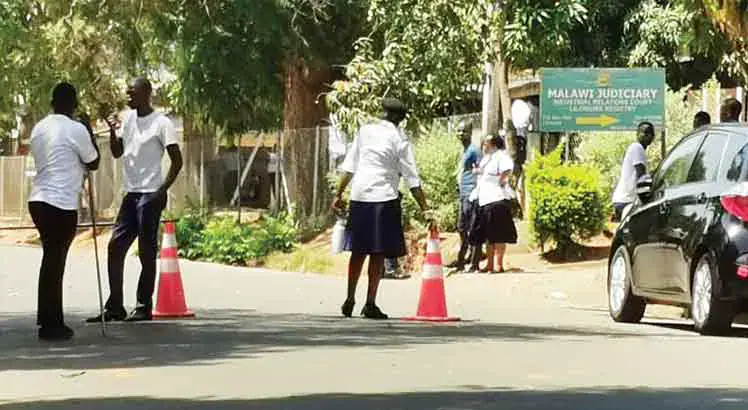
A commotion erupted at the Department of Immigration and Citizenship Services offices in Lilongwe as frustrated passport applicants protested against delayed processing. The unrest resulted in part of the offices being damaged and seven people being arrested. Police intervened, firing teargas to disperse the protesters shortly after the regional immigration offices opened for business. The incident left one immigration officer injured and office windows shattered.
The protest was sparked by applicants' growing frustration with repeated delays in passport processing. Eyewitnesses reported that applicants were told that network problems had disrupted passport printing, leading to a buildup of over 300,000 applications nationwide. The applicants had been repeatedly told to return due to network failures, ultimately leading to the violent reaction.
Immigration Department national spokesperson Pasqually Zulu attributed the disruption to a power supply failure at the regional office in Lilongwe's Area 4, compounded by a faulty solar-powered backup system. According to Zulu, the electricity problem persisted since Monday, affecting operations. He stated that immigration authorities had offered to engage the applicants in discussions, but the offer was rejected in favor of violence.
Zulu suggested that informal intermediaries, known as dobadobas, who help applicants navigate passport application processes, may have encouraged the unrest. He expressed concern that the violence would worsen the situation for people who genuinely need to travel abroad for medical treatment, education, and other pressing matters. The department's explanation points to a localized power supply problem in Lilongwe rather than a nationwide technical failure.
The incident occurs amid government efforts to review its passport supply contract with India-based Madras Security Printers Private Limited. The contract, valued at $29.975 million, was signed in February 2025 and runs until 2030. Under the agreement, Madras is required to supply 100,000 booklets annually over five years. However, Zulu indicated that the contracted volume was insufficient to meet demand.
The Nation investigations reveal that the current administration has paid $9 million towards the contract, while the preceding administration made no payment. The agreement required about $17.9 million, representing approximately 60 percent of its value, to be paid upfront. The Madras agreement followed the termination of earlier arrangements with technology firm Techno Brain and interim local supplier E-Tech Systems.
Since February 2025, the Immigration Department has printed and issued nearly 170,000 passport booklets supplied by Madras. The department continues to struggle with meeting demand amid a nationwide backlog of applications. The situation highlights the challenges faced by the Immigration Department in managing passport applications and the need for a more efficient solution.
Key points
- The protest in Lilongwe highlights the growing frustration with delayed passport processing in Malawi.
- The Immigration Department attributes the disruption to a localized power supply problem rather than a nationwide technical failure.
- The government is reviewing its passport supply contract with Madras Security Printers Private Limited amid struggles to meet demand.