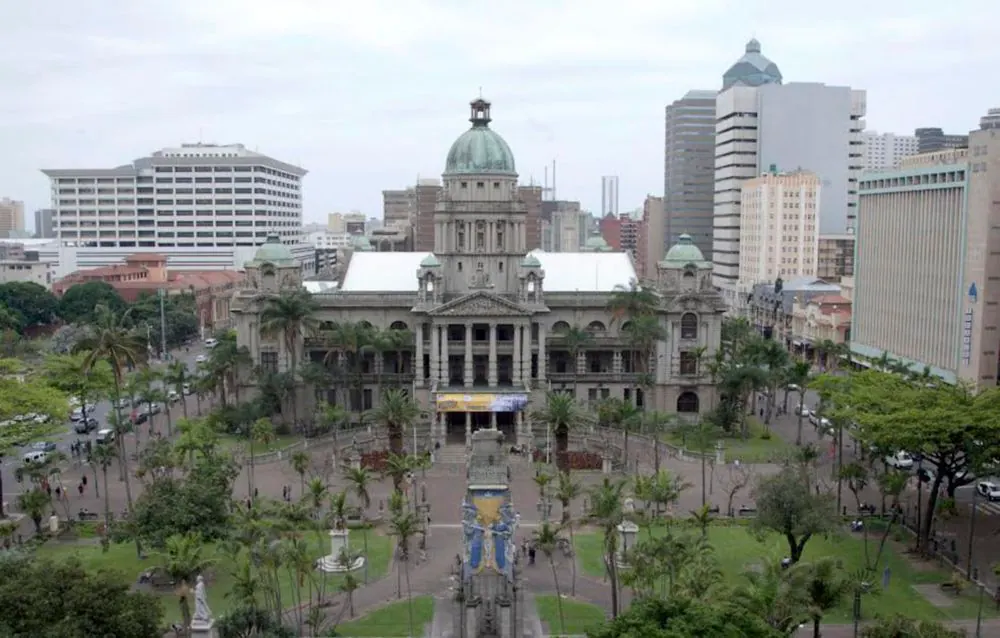
The Independent Electoral Commission of South Africa (IEC) has confirmed that 69 parties will contest the eThekwini Metro, along with 12 independent candidates, in the country's local government elections on November 4, 2026. This large number of parties and candidates may lead to significant vote-splitting, making it more difficult for parties to secure a decisive majority in the council. The eThekwini Municipality, located in the KwaZulu-Natal province, is one of South Africa's most important cities, with a major African port, King Shaka International Airport, tourism, manufacturing, logistics, beaches, a large business community, and millions of residents.
Among the parties contesting are the 1860 NIC Congress, A Shall X Party, Next Generation Government, and the Organism Humanity Movement. Other new parties include the Umkhumbi Wesizwe Organisation, Service Delivery Party, Truly Alliances, KZN Independence, the Justice and Employment Party, God's Justice and Development Party, and the eThekwini Ratepayers Political Movement (ERPM). These new parties have been established to contest the local government elections, with some citing dissatisfaction with the current political system and a desire to prioritize service delivery to communities.
The ERPM was formed by ratepayers to represent their interests after attempts to represent ratepayers outside the political system had failed. According to Rose Cortes, deputy chairperson of the ERPM, the party was established after several disputes with the municipality, including a case where a ratepayer withheld payment following a service-delivery dispute with the municipality. The ERPM's mission is to prioritize service delivery to all communities, formal and informal, and to ensure that the municipality's budget is used effectively.
ACDP eThekwini mayoral candidate MP Wayne Thring said the city had significant economic potential but needed stronger leadership. He emphasized that residents should be asking how the municipality's budget of about R75 billion was being spent. Thring said that eThekwini needed leadership that puts residents first, manages money properly, and takes responsibility for getting things done.
Political analyst Dr. Siyabonga Ntombela said that the large number of parties could lead to significant vote-splitting, which may make it more difficult for parties to secure a decisive majority in the council. He noted that parties such as the MK Party and the DA had loyal support bases, while parties such as the ANC, EFF, and NFP would be haemorrhaging votes.
Professor Musa Xulu said that the rise in the number of parties reflected the growing importance of political office as a full-time career. He noted that many smaller parties lacked clear policies and administrative experience, which could impact their ability to govern effectively. Xulu also suggested that opposition to the ANC could split the vote and allow the governing party to retain power despite the challenge from other parties.
The eThekwini Municipality's 2026/27 budget is about R75 billion, and residents will be watching closely to see how the municipality allocates its funds. With a large number of parties and candidates contesting the election, voters will have a range of choices to consider. Ultimately, the outcome of the election will depend on the voters' preferences and the ability of each party to persuade them to support their cause.
Key points
- The large number of parties contesting the eThekwini Metro in the 2026 local government elections may lead to significant vote-splitting.
- The eThekwini Ratepayers Political Movement (ERPM) was formed to prioritize service delivery to communities and to hold the municipality accountable.
- The election outcome will depend on the voters' preferences and the ability of each party to persuade them to support their cause.