Nigeria's inflation story has taken a complicated turn, with the National Bureau of Statistics reporting a decline in headline inflation to 15.39% year-on-year in August 2026. However, a survey by the Central Bank of Nigeria reveals that 68.4% of households earning below N70,000 reported high inflation, highlighting a sharp divide in the economy. The survey polled households and businesses across the country, providing insight into the perceived inflation rates.
The CBN survey shows that households earning above N450,000 reported a significantly lower inflation rate of 30.8%, resulting in a 37.6 percentage point gap between the two income groups. Rural respondents felt inflation more than urban dwellers, with 65.7% and 63.2% respectively reporting high inflation. Micro businesses reported the highest stress of all at 101.4%, compared to 57.4% for small and 63.1% for large businesses.
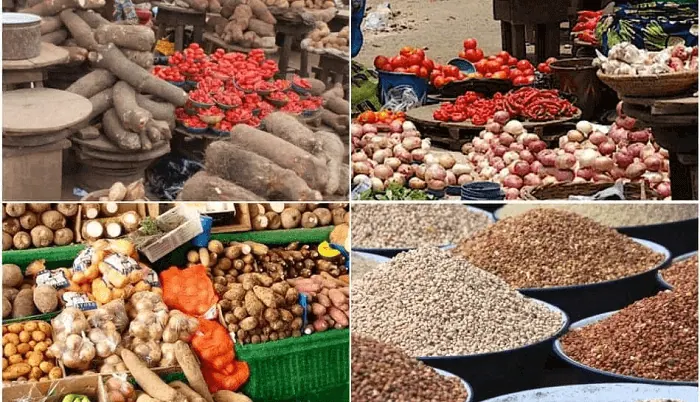
The drivers of inflation, according to respondents, are energy costs, insecurity, interest rates, and exchange rate movements. This explains the disconnect between the declining inflation rate and the high costs faced by low-income households. Food inflation, which slowed to 19.57% year-on-year, remains a significant concern, particularly for low-income households who spend over 60% of their income on food.
Analysts have called for cautious optimism, citing the fact that businesses are more hopeful than households. While only 16.9% of firms expect moderation in September, 29.4% expect it in six months. Among households, that figure is 23.2%. Business optimism often leads actual spending and hiring, providing a positive outlook for the economy.
Nigeria's inflation trend over the last decade has been highly volatile, driven by currency devaluations, border closures, subsidy removals, and global economic shocks. The inflation rate peaked at 18.72% in January 2017 and accelerated aggressively throughout 2024, peaking at an astronomical 34.8%. However, the CBN's aggressive interest rate hikes and structural policy changes have contributed to a decline in inflation.
The CBN, under the leadership of Olayemi Cardoso, has projected headline inflation to average 12.94% in 2026, with a medium-term target range of 6% to 9%. Many domestic market analysts view the inflation targets as a sign that the central bank is successfully returning to conventional monetary policy. The drastic cooling of inflation has been attributed to the CBN's aggressive rate hikes, which successfully reined in money supply and anchored market expectations.
Despite acknowledging the drop in inflation, some economic analysts highlight structural bottlenecks that make hitting a strict single-digit target highly complex. These economists point out that monetary policy tools cannot fix agricultural supply chain breakdowns, and underlying issues like agrarian insecurity and logistics deficits must be resolved to stabilize food inflation. The primary concern for investment analysts is the pressure of government spending, which has historically undermined central bank tightening.
Key points
- Low-income households in Nigeria continue to face high costs despite a decline in inflation rate.
- The CBN survey reveals a sharp divide in the economy, with 68.4% of households earning below N70,000 reporting high inflation.
- Structural bottlenecks, such as agricultural supply chain breakdowns, must be resolved to stabilize food inflation and achieve a single-digit target.