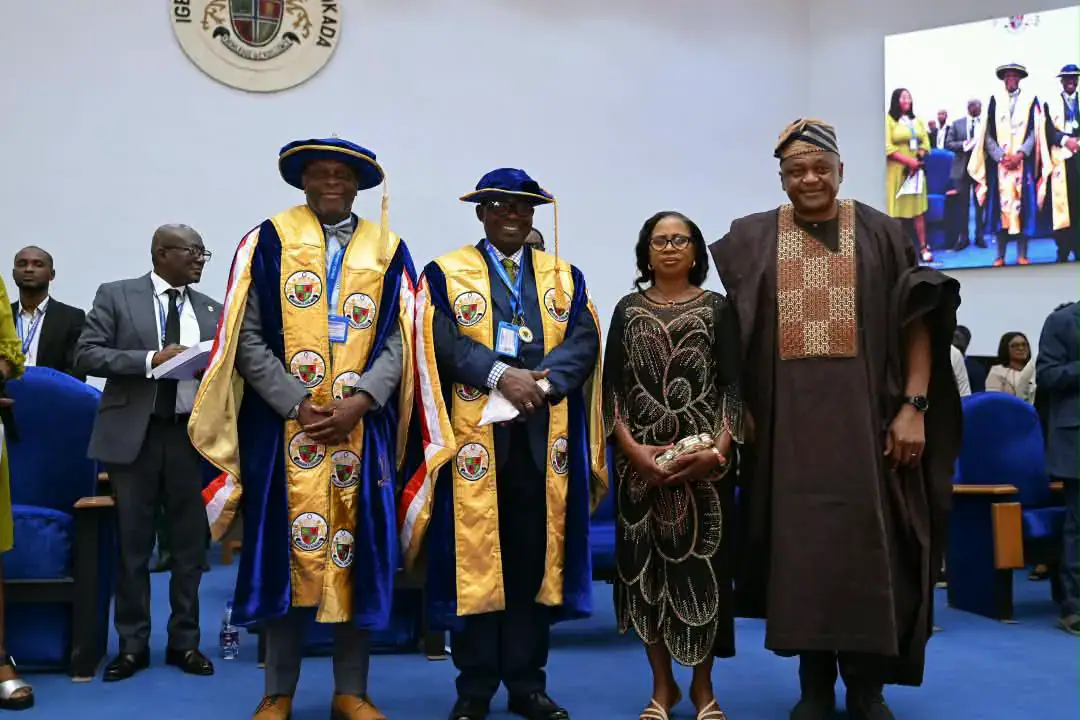
A recent lecture by Professor Osaretin George Izevbuwa, Deputy Vice-Chancellor (Administration) of Igbinedion University, Okada, has highlighted the dire state of Nigeria's justice system. Izevbuwa disclosed that approximately 66% of inmates in Nigerian correctional facilities are awaiting trial, citing 2024 statistics that show Nigeria's correctional population stands at 79,237, with 52,519 inmates awaiting trial. This situation is a troubling reflection of systemic weaknesses across the criminal justice institutions.
Izevbuwa identified several interconnected challenges undermining public confidence in the justice system, including arbitrary arrests, torture, coerced confessions, corruption, abuse of police powers in civil disputes, judicial delays, and prolonged remand. He cited the case of Giff Tobia, who was arrested in Port Harcourt in 2017 over a robbery incident despite having no connection with the crime. Tobia reportedly spent eight years and four months in detention without trial before securing his freedom through the intervention of a human-rights lawyer.
The professor stressed that meaningful reform requires fundamental changes in the conduct, accountability, and coordination of the four principal justice-sector gatekeepers: the police, prosecutors, judiciary, and Nigerian Correctional Service. He recommended the expedited passage of the National Policing Bill to establish a three-tier policing structure involving federal, state, and local government police services, supported by safeguards for funding, recruitment, training, and oversight.
Izevbuwa also advocated for independent civilian oversight, improved police investigations through forensic laboratories and digital capabilities, enhanced human-rights training, greater prosecutorial independence, and digitization of case files. For the judiciary, he recommended mandatory pre-trial case management, digital case administration, and stricter enforcement of procedural standards to eliminate unnecessary delays.
The professor further called for wider application of bail, probation, community service, and restorative justice, particularly for minor offenses, to address overcrowding in correctional facilities. He emphasized the need for an effective Justice Information Management System, which would track cases from arrest through prosecution and trial to conviction or discharge.
Izevbuwa maintained that reform must produce measurable outcomes, including suspects arraigned within 24 hours, credible investigations, timely trials, and pre-trial detention treated as an exception rather than the rule. He declared that public silence sustains institutional wrongdoing and urged Nigerians to speak out against injustices.
The lecture, titled “Institutional Pathologies and Systemic Reforms: The Gatekeepers’ Role in the Administration of Criminal Justice in Nigeria,” was part of the university’s 27th Inaugural Lecture series. Vice-Chancellor Professor Lawrence Ezemonye described Izevbuwa as a distinguished Nigerian legal scholar and university administrator, highlighting his contributions to the field of comparative criminal law.
Key points
- 66% of Nigerian inmates are awaiting trial.
- The justice system crisis is attributed to systemic weaknesses, including arbitrary arrests, torture, and judicial delays.
- Urgent reforms are needed to address the crisis, including the expedited passage of the National Policing Bill and improved police investigations.
Reporting sources
- 66% of Nigerian inmates await trial, Igbinedion University Don warns of justice system crisis · The Nigerian Observer