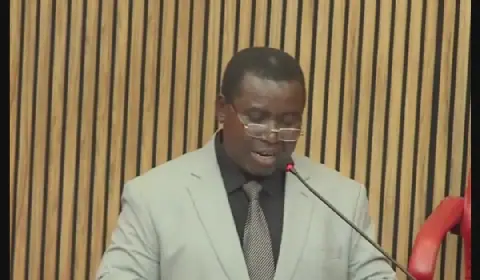
The Executive Chairman of Ilorin East Local Government Area of Kwara State, Mallam Garba Olayinka Lukman Agbelere, has disclosed that local governments in the state sometimes contribute money towards ransom payments to secure the release of kidnapped victims. This revelation was made during a telephone conversation with SaharaReporters, in response to allegations that he advised the family of four persons abducted in Abangbe Village to raise a ₦50 million ransom demanded by their captors.
The four victims, identified as Abike, Semiu, Sofiat, and Ramadan, were reportedly kidnapped by suspected bandits on October 25, 2026, in Abangbe Village, near Oke-Oyi, in Ilorin East Local Government Area. The family had told SaharaReporters that they sent a representative to the local government secretariat to seek government intervention and financial assistance but were allegedly advised to find a way to pay the ransom.
Agbelere denied discussing the ransom with the family during his visit to the community, insisting that the residents only appealed for improved security. He claimed he was not around when the attack occurred but sent a representative to commiserate with the victims' relatives before later visiting the community alongside Commissioner Ali Jimoh.
The chairman advised residents to take steps to protect themselves against attacks, arguing that the government could not provide security everywhere at the same time. He mentioned that in his own community, they contribute money to buy guns to protect themselves from bandit attacks, adding that the government cannot do everything.
Agbelere acknowledged that he intended to send the ward chairman to the affected family to provide financial assistance. He disclosed that local governments sometimes contribute towards ransom payments, although such interventions are not publicly announced, adding that they can't pay all the ransom; they can only contribute.
The chairman's disclosure raises questions about the extent to which public authorities in Kwara State and other parts of Nigeria provide financial assistance towards ransom payments, as well as the decision to keep such interventions away from public scrutiny. Paying ransom is a criminal offence in Nigeria under the Terrorism (Prevention and Prohibition) Act, 2022.
The legislation explicitly criminalises transferring funds, making payments, or colluding with kidnappers or terrorists to pay a ransom, with a minimum prison term of 15 years for those convicted. The revelation comes amid growing insecurity in parts of Kwara State, where residents have repeatedly raised concerns over attacks, abductions, and the increasing financial burden placed on families forced to negotiate with armed groups.
Key points
- Local governments in Kwara State secretly pay ransoms to bandits, says council chairman.
- The payments are made to secure the release of kidnapped victims, but are not publicly announced.
- Paying ransom is a criminal offence in Nigeria under the Terrorism (Prevention and Prohibition) Act, 2022.