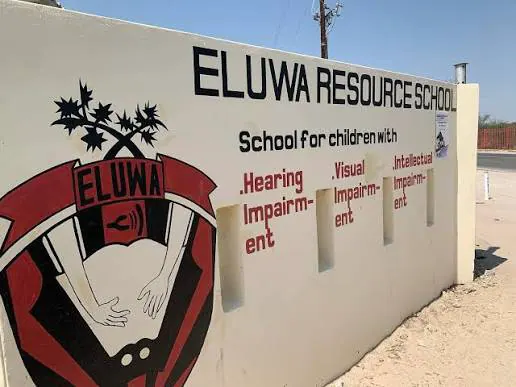
Eluwa Resource School in Namibia is facing a significant challenge in providing education to children with intellectual impairments. The school has a waiting list of 600 children, but only 64 places are available for the 2027 academic year. This means that a child who joins the waiting list today may have to wait up to 10 years for a place, potentially depriving them of crucial years of development.
The long waiting list is a result of various factors, including the limited number of specialised schools and resource units in the country. Eluwa principal Loide Shipopyeni explained that learners with intellectual impairments often stay at the institution throughout their school years, leaving few vacancies. This has resulted in a situation where children who need specialised education are being left behind.
The shortage of specialised education places is not unique to Eluwa. Other schools, such as Môreson Resource School in Windhoek, are also facing similar challenges. The Namibia Statistics Agency's 2023 census recorded 22,387 young people aged five to 19 with severe difficulties in at least one functional area. This highlights the need for more specialised schools and resource units to cater to the needs of children with disabilities.
The education ministry has acknowledged the shortage of specialised education places, citing limited capital funding. Proposals have been submitted for resource schools in six regions, while resource units at mainstream schools are being considered as an alternative. However, these efforts may not be enough to address the backlog of children waiting for specialised education.
The prolonged waiting list has severe consequences for children with intellectual impairments. Shipopyeni warned that children who wait at home do not simply start school later but start further behind, with gaps that are much harder to address at an older age. Many children remain at home, sometimes alone or with grandparents, with little stimulation or interaction, increasing their vulnerability to neglect, abuse, and exploitation.
Teachers at Eluwa also face considerable demands in providing specialised education to children with intellectual impairments. They require specialised teaching aids, sensory equipment, and assistive devices, which are often scarce. Despite these challenges, the school's staff is committed to providing quality education to their learners, celebrating small achievements and working together as a team.
Shipopyeni is calling for better data collection to determine the number of children needing specialised education, teachers, and support services in Namibia. She also wants additional classrooms, hostel accommodation, specialised teaching equipment, and continuous teacher development to support children with intellectual impairments. Furthermore, she advocates for community-based day-care centres to support children awaiting admission.
Key points
- A child who joins the waiting list at Eluwa Resource School today may have to wait up to 10 years for a place.
- The school has 600 children on its waiting list, but only 64 places are available for 2027.
- The shortage of specialised education places is a national issue, with 22,387 young people aged five to 19 recorded as having severe difficulties in at least one functional area.