Kenya is projected to have 6.4 million people aged 60 and above by 2045, according to a geriatrician and healthy ageing expert, Tasneem Yamani. This demographic shift requires the country to prepare its systems for longer lives, ensuring older persons remain healthy and receive necessary care. The 2019 Kenya Population and Housing Census recorded 2,740,040 people aged 60 and above, representing 5.7 per cent of the population.
The number of older persons in Kenya has been increasing steadily, from 1.93 million in 2009 to 2,740,040 in 2019, according to the Kenya National Bureau of Statistics. The census also found that 84 per cent of older persons lived in rural areas, compared with 16 per cent in urban areas. This distribution has implications for how services are delivered, with most older Kenyans being outside urban centres where specialist services are more concentrated.
Experts emphasize that healthy ageing is not simply about avoiding disease but also maintaining people's ability to function, remain independent, and live with dignity. Esther Muinga of the Ministry of Health's Division of Healthy Ageing, Palliative Care and Older Persons, said the response to ageing should begin much earlier in life, focusing on nutrition, immunisation, education, safe environments, and mental wellbeing.
The Ministry of Health has a Healthy Ageing and Older Persons Strategy for 2022-2026, aligned with the United Nations Decade of Healthy Ageing. The strategy aims to address the healthcare needs of older persons, including chronic diseases, disability, dementia, mental health conditions, rehabilitation, palliative care, and long-term care. Yamani suggests that geriatric care should be incorporated into primary healthcare, community health, and home-based care.
The economic role of older persons is also significant, with 1,518,340 people aged 65 and above employed in 2019, up from 886,850 in 2009. However, a member of the International Day of Older Persons planning committee, Maurice Omollo, notes that only 5.9 per cent of older persons have private insurance, while more than 40 per cent of people aged over 60 live in absolute poverty.
Social protection discussions should consider people who leave employment around the traditional retirement age but may not immediately have adequate financial support. Caregivers also need financial and psychological support as part of the country's response to an ageing population. Peninah Ndonye of the Ministry of Health's State Department for Medical Services, Division of Healthy Ageing, Palliative Care and Older Persons, asks, "The question is, who cares for the caregivers?"
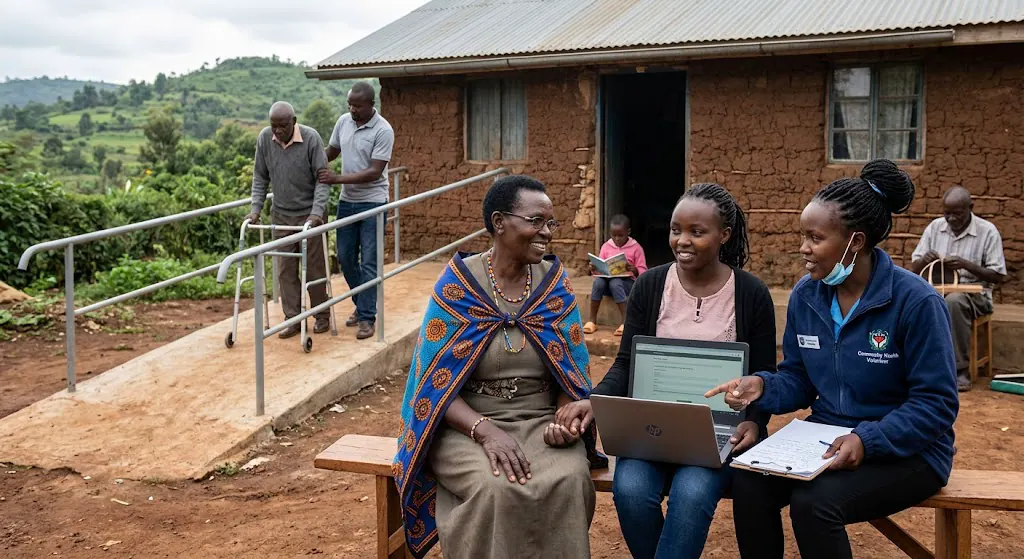
The discussion also considered the need for a suitable physical environment, intergenerational discussions, and changes in how older persons are represented. Jane Muita suggests that buildings, hospitals, transport systems, and communities should be designed with people at different stages of life in mind. Micheni Makena emphasizes the importance of intergenerational discussions to provide an opportunity for younger and older people to discuss retirement, leadership, caregiving, and the sharing of experience.
Key points
- Kenya will have 6.4 million people aged 60 and above by 2045.
- The country needs to prepare its systems for longer lives, ensuring older persons remain healthy and receive necessary care.
- Healthy ageing is not simply about avoiding disease but also maintaining people's ability to function, remain independent, and live with dignity.