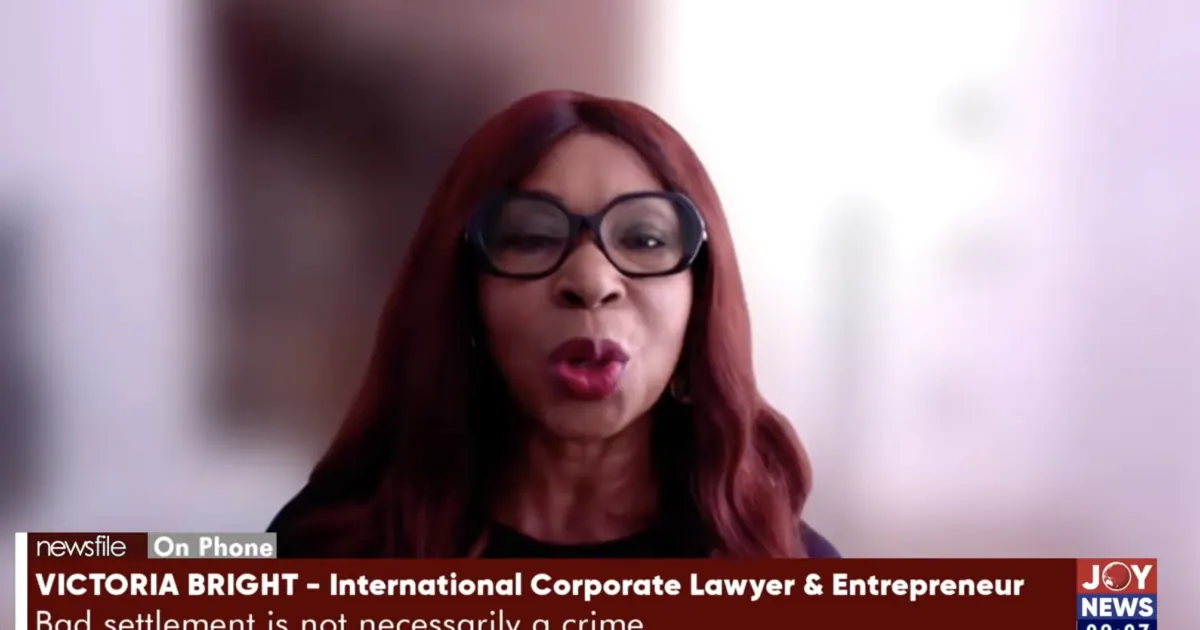
International corporate lawyer Victoria Bright has expressed concerns over the detention of Ghana's Manhyia South MP, Nana Agyei Baffour Awuah, by the Economic and Organised Crime Office (EOCO). She argues that the 48-hour constitutional detention period should not be treated as an automatic entitlement for investigators. Bright made these comments on JoyNews' Newsfile on October 3, following Baffour Awuah's detention after voluntarily reporting to EOCO on October 1.
Baffour Awuah's detention relates to alleged financial offences involving SIC Life Savings and Loans. EOCO had secured a High Court warrant for his arrest and searches of his office and residence. Bright emphasized that the MP is a sitting legislator with a known residence and constituency, who had voluntarily presented himself to investigators. These circumstances, she argues, should be considered when determining whether continued detention is necessary.
Bright stressed that if EOCO believes Baffour Awuah's continued detention is necessary, the agency should explain the specific investigative purpose being served and bring him before the court as soon as possible. Her comments have sparked debate over the necessity and manner of Baffour Awuah's detention. His lawyer, Samuel Atta Akyea, also questioned why the MP was kept overnight after voluntarily reporting to EOCO.
The MP's detention has raised concerns about the use of state power. Kofi Bentil, a lawyer, described Baffour Awuah's arrest as a political witch-hunt. In contrast, EOCO stated that it is working with the Attorney-General's Office to bring the MP before a weekend court, citing applicable constitutional timelines and procedural requirements governing bail.
Parliament has also weighed in on the issue, questioning the continued detention of Baffour Awuah and demanding due process. The debate highlights the tension between the need for investigations and the protection of individual rights. Bright's comments add to the growing discussion on the limits of state power in investigations.
The case has also drawn attention to the role of EOCO in investigating financial offences. The agency's actions have been defended as necessary to carry out its mandate, but critics argue that it must balance its duties with respect for individual rights. The outcome of the case is expected to have implications for the balance between state power and individual liberties in Ghana.
As the case unfolds, Baffour Awuah is expected to appear in court. The MP's lawyer and other stakeholders will likely continue to scrutinize EOCO's actions and argue for due process. The case will test the application of Ghana's constitutional protections against detention and the limits of state power in investigations.
Key points
- Victoria Bright questions EOCO's detention of MP Nana Agyei Baffour Awuah
- Detention not automatic entitlement for investigators, Bright argues
- Case raises concerns about state power and individual rights in Ghana