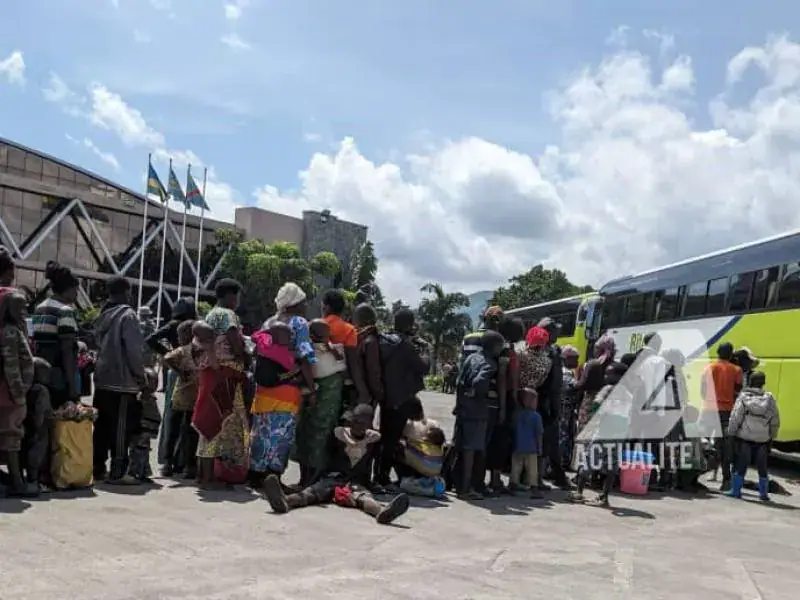
The United Nations Mission in the Democratic Republic of Congo (MONUSCO) announced on October 28 that it had facilitated the voluntary repatriation of 42 Rwandans to their home country. This operation was carried out in close coordination with the governments of the Democratic Republic of Congo and Rwanda. The repatriated individuals included 10 members of the Forces démocratiques de libération du Rwanda (FDLR), 8 members of associated armed groups, and 24 dependents.
The repatriation is part of MONUSCO's efforts to encourage the demobilization of FDLR combatants and their reintegration into Rwandan society. The mission's Disarmament, Demobilization, Repatriation, Reintegration, and Resettlement (DDRRR) program aims to facilitate voluntary returns with dignity, in coordination with concerned authorities. This operation is also part of MONUSCO's support to the Program for Disarmament, Demobilization, Community Revitalization, and Stabilization (P-DDRCS) in the Democratic Republic of Congo.
The FDLR is considered a "genocidal" force and a threat to Rwanda's internal security by the Rwandan government. The presence of this armed group on Congolese territory has been cited by Rwandan authorities to justify their military presence in the Democratic Republic of Congo. However, the Congolese government rejects this argument, accusing Rwanda of supporting the FRN rebellion and contributing to the illegal exploitation of natural resources in eastern Democratic Republic of Congo.
This repatriation operation follows a similar transfer of 120 FDLR members and their dependents to Rwanda on September 8. The MONUSCO mission has been working to facilitate the voluntary return of FDLR combatants and their dependents, in line with its mandate to stabilize the region. The situation in eastern Democratic Republic of Congo remains volatile, with persistent security tensions and diplomatic efforts to reduce the presence and activities of armed groups.
The repatriation of FDLR members is one aspect of the disarmament, demobilization, and reintegration mechanisms aimed at promoting a peaceful exit for combatants and contributing to regional stabilization. The issue of FDLR remains a point of tension in diplomatic and security relations between Kinshasa and Kigali. The two countries have signed agreements, including the Washington accords, which address the FDLR issue.
The MONUSCO mission continues to work towards stabilizing the region, including through its DDRRR program. The mission's efforts aim to support the voluntary disarmament and demobilization of combatants, as well as their reintegration into civilian life. The situation in the region remains complex, with multiple armed groups and ongoing security challenges.
The repatriation of the 42 Rwandans, including 10 FDLR members, marks a significant step towards regional stabilization. The MONUSCO mission will likely continue to play a key role in facilitating the disarmament and demobilization of combatants, as well as their reintegration into Rwandan society. The international community will be watching closely to see if this operation contributes to improved security and stability in the region.
Key points
- 42 Rwandans, including 10 FDLR members, were repatriated from DR Congo with MONUSCO support.
- The FDLR is considered a "genocidal" force and a threat to Rwanda's internal security by the Rwandan government.
- The repatriation operation is part of MONUSCO's efforts to encourage the demobilization of FDLR combatants and their reintegration into Rwandan society.