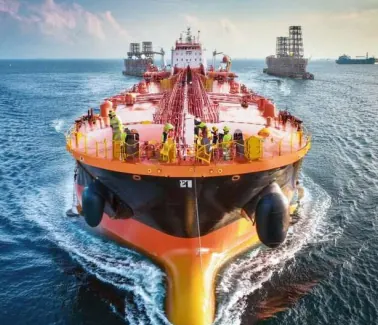
Nigeria has vast natural gas reserves, with over 208 trillion cubic feet, the largest in Africa. However, a significant portion of this gas is either flared, re-injected, or exported through a single, crowded corridor in Bonny. Several offshore fields, particularly in the shallow waters of Escravos and the deep waters of Akwa Ibom, remain undeveloped due to their relatively small size and distance from domestic pipelines.
On September 24, 2026, NIPCO Group announced plans to evaluate a Floating Liquefied Natural Gas facility, with an investment of over $3 billion and a capacity of 3 million tonnes per annum. The facility will be moored either off Escravos in Delta State or off Akwa Ibom, aiming to tap into the stranded gas reserves. This project marks NIPCO's entry into the LNG sector and reinforces its commitment to monetizing Nigeria's abundant gas resources.
The proposed FLNG facility will comprise an LNG production unit, associated marine and export infrastructure, and will serve both international LNG markets and growing domestic LNG demand. NIPCO is considering various development concepts, technology solutions, financing structures, and commercial options to establish a technically robust and commercially sustainable project. The company has been conducting a feasibility study for six to nine months, examining upstream gas supply, FLNG technology, production capacity, and other factors.
The two locations under consideration, Escravos and Akwa Ibom, offer ideal conditions for an FLNG facility, with access to upstream gas, marine logistics, and export routes. Escravos is a hub for shallow-water associated gas in the western Niger Delta, while Akwa Ibom is a center for deepwater non-associated gas. NIPCO's choice of locations reveals its upstream thinking and strategy to optimize the use of existing infrastructure.
NIPCO's proposed FLNG project signals a major shift in who can play in the LNG sector, positioning the company as the first indigenous challenger. For three decades, LNG in Nigeria has been dominated by NLNG on Bonny Island, a large-scale project built by international oil companies and NNPC. An FLNG facility offers a different approach, bringing the liquefaction plant to the gas field and enabling faster deployment and modular operations.
NIPCO's bid to develop an FLNG facility is built on its existing footprint in Nigeria's energy sector, with an extensive downstream platform covering various fuel types and a significant retail network. The company has invested approximately $2 billion in Nigeria's oil and gas sector and is expanding its infrastructure, including gas pipelines and CNG facilities. NIPCO's move into upstream gas production is seen as a perfect fit for vertical integration, leveraging its existing expertise in finding customers and delivering gas.
According to NIPCO's Group Executive Director, Abdulkadir Aminu, local FLNG production could reduce prices by eliminating overseas costs, such as freight, insurance, and exchange rate fluctuations. The company's pitch is that producing LNG locally would make it more affordable and competitive in the domestic market. With the feasibility study nearing completion, NIPCO is expected to make a final decision on the project soon.
Key points
- NIPCO Group plans to invest over $3 billion in a Floating Liquefied Natural Gas facility to tap into Nigeria's stranded gas reserves.
- The proposed FLNG facility will have a capacity of 3 million tonnes per annum and will be moored either off Escravos or Akwa Ibom.
- The project aims to monetize Nigeria's abundant gas resources, reduce prices, and promote local production.