The Federal Government of Nigeria, in partnership with the World Bank, has initiated a project to equip 38 federal and state technical colleges across the country with modern facilities. This initiative aims to expand access to free vocational training, providing beneficiaries with monthly stipends and business starter packs to promote self-employment and tackle youth unemployment. The project, known as the Innovation Development for Effective Acquisition of Skills (IDEAS) Project, has covered 20 federal and 18 state technical colleges, with investments in infrastructure, workshops, and equipment.
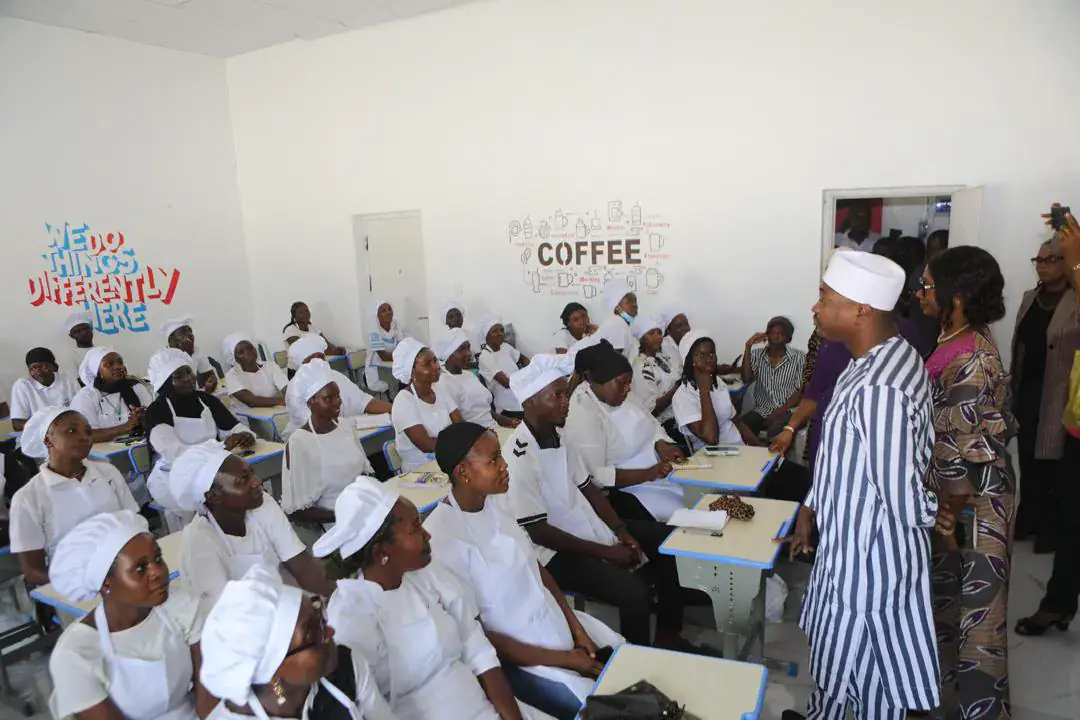
The National Project Coordinator of the IDEAS Project, Mrs Blessing Ehi Ogwu, disclosed this during an inspection of the IDEAS Project Centre at the Federal Science and Technical College (FSTC), Orozo, Abuja. According to her, the initiative is part of the Federal Government's strategy to reduce unemployment by giving young people practical competencies that could translate into sustainable livelihoods. Ogwu emphasized the government's interest in technical and vocational education and training (TVET), which has led to the funding and equipping of 38 technical colleges.
The participating institutions provide opportunities for formal and informal skills acquisition, while FSTC Orozo serves as the designated federal technical college for the Federal Capital Territory. Ogwu expressed optimism that the programme would be sustained under the present administration, urging Nigerians to support efforts to expand access to vocational education. She highlighted the importance of TVET education in equipping young Nigerians with practical, market-driven skills.
The National Project Monitoring Officer in the Minister's Office at the Federal Ministry of Education, Mr Olatunji Odewunmi, described the IDEAS Project and the Federal Government's broader TVET initiative as complementary efforts aimed at making practical skills education more accessible to Nigerians. He stressed that participation in the programme is entirely free, covering tuition, training fees, instructional materials, and other essential requirements, including accommodation for beneficiaries in boarding facilities.
Odewunmi added that participants receive monthly stipends to support them during training and will be given starter packs to enable them to commence business activities upon completing their programmes. He emphasized that every participant will receive a starter pack, even before the end of the training, and that biometric attendance monitoring has been introduced to track participation. Beneficiaries who fail to meet the prescribed attendance requirements risk losing their stipends and entitlement to starter packs.
The Principal of FSTC Orozo, Dr Stella Uhuegbu, said the institution had aligned its training structure with the Federal Government's revised TVET curriculum, which prescribes a 70 per cent practical and 30 per cent theoretical learning ratio. She highlighted that the college has provided the necessary equipment, instructional materials, and technical personnel to ensure that trainees acquire relevant hands-on experience. The available courses include information and communication technology, automobile mechanics, auto-electrical repairs, catering, garment making, and GSM repairs.
Some beneficiaries have begun translating the knowledge acquired into income-generating opportunities, even before completing their programmes. One of the trainees, Modupe Osundeyi, who is undergoing catering training, said she had acquired practical skills in baking and food production and had already secured an opportunity to supply baked products to a school close to her residence. Another beneficiary, Joy Genesis, said she had started earning money from baking barely four months after enrolling in the programme, producing different types of cakes, pastries, bread, and confectioneries.
Key points
- The Federal Government and World Bank have equipped 38 technical colleges in Nigeria with modern facilities to provide free vocational training.
- The programme provides beneficiaries with monthly stipends and business starter packs to promote self-employment and tackle youth unemployment.
- Some beneficiaries have begun earning income from the skills acquired, even before completing their programmes.