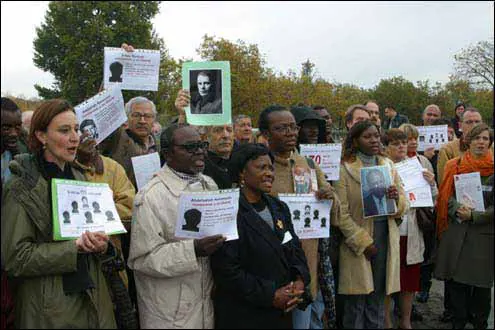
On September 19, 1989, a devastating tragedy struck when UT772, a DC-10 aircraft operated by French airline UTA, exploded mid-air over the Ténéré desert in Niger. The flight, which had departed Brazzaville and made a stop in N'Djamena, Chad's capital, was headed to Paris. All 170 people on board, comprising 156 passengers and 14 crew members, lost their lives in the disaster. The incident was caused by a bomb hidden in a suitcase, which led to the destruction of the aircraft and the loss of all lives on board.
The victims of the UTA DC-10 bombing were from 18 different nationalities, with 25 of them being Chadians. Among those who lost their lives were Izza Mana, 33, and her four children: Ibrahim Mana, 14, Abdel Hamid Mana, 12, Asta Kellou Mana, 10, and Haman Toukour Mana, 6. Other Chadian victims included Ali Abakar Midallal, 35, Christine Naodingar, 25, and Mireille Nehoul Mougnan, just 9 years old. The list of victims also included Ali Ouchard Mahamat, Abdelkerim Haggar Mahamat, Youssouf Adoum Ahmat, and several others.
An investigation led by French judge Jean-Louis Bruguière concluded that the Libyan intelligence services were responsible for the bombing. In 1999, a special court in Paris sentenced six Libyan officials, including Abdallah Senoussi, a high-ranking intelligence officer and brother-in-law of Muammar Gaddafi, to life imprisonment in absentia. The conviction marked a significant development in the case, but it was unclear whether the perpetrators would ever face justice.
In the years following the tragedy, the families of the victims continued to seek justice and compensation. In 2004, an agreement was reached with the Gaddafi Foundation, which provided an additional $170 million in compensation to the families of the victims. This amount worked out to $1 million per victim, providing some measure of solace to those who had lost loved ones.
In Chad, efforts to remember and honor the victims have been ongoing. In 2007, a memorial was built in the Ténéré desert, where the aircraft had crashed. Four years later, another memorial was erected in N'Djamena, the capital city of Chad, to commemorate the 170 people who lost their lives in the tragedy. These memorials serve as a reminder of the devastating impact of the bombing on the country and its people.
Thirty-seven years after the UTA DC-10 bombing, the incident remains a significant event in Chad's history. The tragedy serves as a reminder of the importance of promoting peace, security, and justice, both within the country and internationally. The memories of the victims will continue to be honored, and their stories will not be forgotten.
As Chad and the world remember the victims of the UTA DC-10 bombing, it is essential to reflect on the impact of such tragedies on individuals, families, and communities. The incident highlights the need for continued efforts to prevent such atrocities from occurring in the future and to ensure that those responsible are held accountable.
Key points
- The UTA DC-10 bombing on September 19, 1989, killed 170 people, including 25 Chadians, when a bomb hidden in a suitcase caused the aircraft to explode mid-air over the Ténéré desert in Niger.
- The bombing was attributed to the Libyan intelligence services, and six officials were sentenced to life imprisonment in absentia in 1999.
- The families of the victims received $170 million in compensation from the Gaddafi Foundation in 2004, providing some measure of solace to those who had lost loved ones.