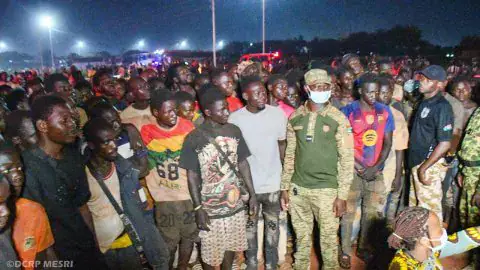
In the early hours of November 7, 2026, 3,400 Burkinabè expelled from Guinea arrived in Bobo-Dioulasso, a city in western Burkina Faso. The group, transported in 48 buses, was received by a government delegation at the city's omnisports stadium. The Burkinabè were forced to leave Guinea after the country's authorities suspended artisanal gold mining.
The returnees were provided with immediate assistance, including health checks, psychosocial support, and measures for socio-professional reintegration. The government has put in place a reception and support system, which includes a security check, medical screening, and psycho-social care. This initiative aims to help the expelled individuals readjust to life in Burkina Faso.
The Minister of Family and Solidarity, Lieutenant-Colonel Passowindé Pélagie Kaboré/Kabrè, expressed relief that the group had arrived safely. She stated that the government, under the instructions of the President of Faso, was committed to providing support for their reintegration. The minister assured the returnees that the government would do everything possible to ensure their well-being.
The government has proposed various solutions for the returnees, including education and vocational training. Children will be encouraged to return to school, while young adults will have the opportunity to pursue higher education or vocational training. The government also plans to provide assistance to help the returnees reintegrate into society and find employment.
According to the Minister of Solidarity, the government will provide support for the returnees' socio-professional reintegration. This includes opening university doors to young people with a high school diploma, enabling them to continue their studies. The government aims to help the returnees rebuild their lives and become productive members of Burkinabè society.
The reception and support system put in place by the government includes profiling and providing basic necessities for the returnees. The system also caters to minors, who will be accommodated separately from young adults. The government has set up a mechanism to ensure that each returnee is accounted for and can reconnect with their families.
The Burkinabè government's efforts to support the returnees have been commended by various stakeholders. The initiative demonstrates the government's commitment to providing assistance to its citizens in need. As the returnees begin the process of rebuilding their lives, they will have access to various resources and support systems to help them integrate back into Burkinabè society.
Key points
- The Burkinabè government has provided a comprehensive support system for the 3,400 returnees, including health checks, psychosocial support, and socio-professional reintegration measures.